
The Southern and Middle Belt Leadership Forum (SMBLF) has demanded that the 2026 Electoral Amendment Bill retain the provision mandating real-time electronic transmission of election results, warning that any attempt to remove it would seriously undermine Nigeria’s democracy.
In a statement issued on Monday, the forum insisted that Clause 60 of the bill, as passed by the House of Representatives and harmonised by the National Assembly’s Joint Conference Committee, must remain intact.
The statement was jointly signed by the Leader of the SMBLF and Afenifere leader, Oba Oladipo Olaitan; President of the Middle Belt Forum, Dr Bitrus Pogu; President-General of Ohanaeze Ndigbo Worldwide, Senator John Azuta-Mbata; and National Chairman of PANDEF, Ambassador Godknows Igali.
According to the statement made available to journalists in Kaduna, the forum stressed that free, fair and transparent elections are the foundation of democratic governance and that weakening electoral safeguards amounts to an attack on the sovereignty of Nigerians.
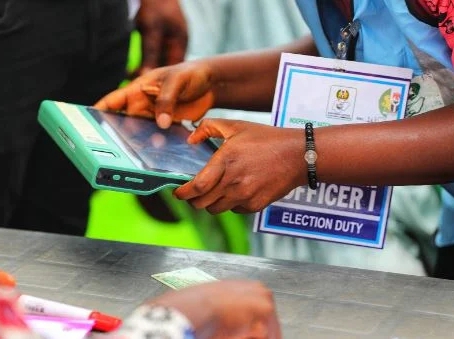
The SMBLF anchored its position on the Independent National Electoral Commission (INEC) Result Viewing Portal (IReV), which it said was designed to allow citizens to view polling unit results in real time, thereby eliminating manipulation and post-election disputes.
“When properly backed by law, IReV removes secrecy, manipulation and post-election confusion,” the statement said, adding that compulsory electronic transmission of results would restore public confidence in Nigeria’s electoral process.
However, the forum expressed deep concern over reports that the Senate allegedly altered the final version of the bill by removing the clause mandating real-time transmission of election results.
According to the group, several senators publicly affirmed—both during executive sessions and plenary—that they voted in favour of compulsory electronic transmission, only for a different version of the bill to later emerge.
The SMBLF cited the Senate Minority Leader, Senator Enyinnaya Abaribe, who had publicly stated that the Senate passed a bill mandating electronic transmission. “What later surfaced was not what the Senate approved,” the group quoted Abaribe as saying.
Describing the development as “unacceptable in a democratic legislature,” the forum warned that Nigerians would resist any attempt to impose an altered law on the electorate.
The group recalled the 2023 presidential election petition, noting that the Supreme Court relied on Section 60(5) of the 2022 Electoral Act, which made electronic transmission optional.
According to the forum, the apex court’s ruling—affirming that result transmission was at INEC’s discretion—exposed a loophole that must not be repeated.
“The law must be clear, firm and mandatory,” the statement stressed.
The SMBLF dismissed arguments that poor telecommunications coverage could hinder electronic transmission, noting that INEC had previously explained that the BVAS device can store results offline and upload them once network connectivity is restored.
“This was demonstrated during the 2023 general elections, until the system was deliberately sabotaged during the presidential poll, as most Nigerians believe,” the forum said.
It argued that mandatory real-time electronic transmission of election results would prevent vote manipulation, protect votes in vulnerable communities, reduce post-election violence, and compel political leaders to respect the will of the people.
Linking flawed elections to Nigeria’s growing insecurity, the forum cited the recent massacre of over 100 people in Woro, Kaiama Local Government Area of Kwara State, alongside widespread killings and kidnappings across the country.
“If leaders were certain that votes truly counted, such reckless, negligent and indifferent governance would not thrive,” the statement said.
The forum demanded justice for victims of electoral violence and renewed its call for state police, restructuring, and the full implementation of the 2014 National Conference recommendations.