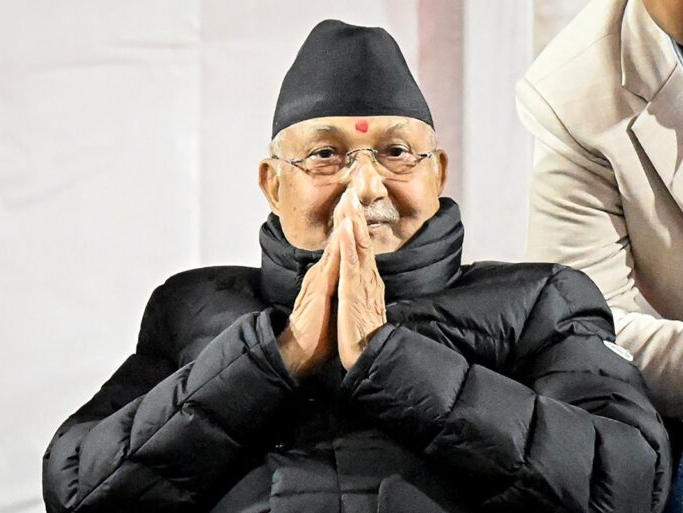
Oli stepped down on September 9, 2025, after weeks of anti-corruption demonstrations that left at least 77 people dead. The protests were initially sparked by his government’s controversial ban on social media but quickly escalated into broader outrage over economic stagnation and entrenched corruption.
During the unrest, mobs torched Oli’s residence, parliament buildings, and government offices, intensifying pressure on his administration.
In his resignation letter, Oli said his decision was meant to help “move towards a political solution and the resolution of the problems.”
In January, he testified before a commission established by Nepal’s interim government to investigate the deadly crackdown. Oli denied authorising security forces to open fire on protesters.
“I did not give any orders to shoot,” he said in an audio statement shared on social media.
Instead, he blamed “infiltrators” and “anarchic forces” for triggering the violence, though he offered no specific evidence.
Direct Challenge from Balendra Shah
Oli’s comeback bid faces stiff opposition, particularly in his home constituency, where he is being challenged by 35-year-old rapper-turned-mayor Balendra Shah.
Shah has positioned himself as the face of youth-driven political reform, capitalising on growing frustration among younger voters who played a key role in last year’s protests.
With campaigning officially beginning Monday, analysts say the race could symbolise a broader generational shift in Nepali politics.
A Veteran of Nepal’s Turbulent Political History
Oli’s political career spans nearly six decades — a period that includes Nepal’s decade-long civil war and the 2008 abolition of the monarchy.
He was arrested in 1973 at age 21 for campaigning to overthrow the king and spent 14 years in prison, including four years in solitary confinement. During his imprisonment, he wrote poetry, often on cigarette boxes when paper was unavailable.
After his release in 1987, he joined the CPN-UML and steadily rose through party ranks, eventually becoming prime minister for the first time in 2015. He later returned to office in 2018, briefly in 2021, and again from 2024 until his ouster in 2025.
Despite criticism of what some describe as his authoritarian leadership style, Oli was re-elected as CPN-UML party chief in December by a landslide, brushing aside speculation about his political decline.
Changing Political Landscape in Nepal
Oli’s previous coalition government included the Nepali Congress, historically one of Nepal’s most influential political parties.
However, Congress has since undergone its own leadership shake-up. Veteran five-time prime minister Sher Bahadur Deuba was replaced in January by 49-year-old reformist leader Gagan Thapa.
The leadership changes on both sides suggest Nepal’s March elections could mark a turning point in the Himalayan nation’s political trajectory.
Foreign Policy and India-China Balancing Act
Nepal, a nation of roughly 30 million people, often finds itself navigating delicate diplomatic ties between regional giants India and China.
During his time in office, Oli attempted to balance relations between the two powers, though he also fuelled nationalist rhetoric against India, which is sometimes portrayed domestically as an overbearing “big brother.”
Observers say foreign policy positioning could again become a campaign issue as voters weigh stability against reform.
Can KP Oli Regain Parliament?
The March 5 elections are shaping up to be a referendum on Oli’s leadership, governance record, and handling of last year’s unrest.
While his loyal base within the CPN-UML remains strong, rising youth activism and reformist candidates like Balendra Shah present a formidable challenge.
As campaigning begins, Nepal stands at a crossroads — between political continuity under a seasoned strongman and the promise of generational change driven by a restless electorate.