By our correspondent
National News — The Movement for the Survival of the Izon Ethnic Nationality in the Niger Delta (MOSIEND) has said Nigeria’s marine and blue economy holds enormous opportunities for job creation, economic diversification and revenue generation if fully harnessed.
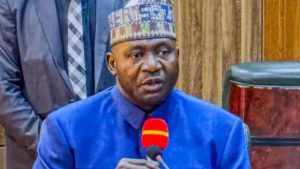
National President of MOSIEND, Amb. Kennedy Tonjo West, stated this in an interview with newsmen in Abuja on Thursday.
West noted that although the Federal Ministry of Marine and Blue Economy has begun laying policy foundations, the sector is yet to unlock its full potential, particularly in coastal and riverine communities.
According to him, the blue economy remains one of Nigeria’s most underutilized sectors capable of creating large-scale employment, boosting maritime businesses and strengthening state economies.
“There are several untapped potentials and opportunities within the littoral states that have not been fully taken advantage of. The essence of the blue economy is diversification, which will bring efficiency in maritime businesses, raise revenue for states and create employment opportunities,” he said.
Huge Opportunities in Ports, Fisheries and Maritime Services
West identified key areas where opportunities exist, including port modernization, fisheries, aquaculture, maritime services and coastal infrastructure development.
He explained that investments in these sectors would create sustainable livelihoods for youths and stimulate economic activities across coastal states.
According to him, proposed port projects such as the Agge Deep Seaport, Bonny Deep Seaport, and the Akwa-Ibom port represent promising opportunities capable of transforming regional economies.
“These are very promising steps that can help create robust economies within those states and open up new economic frontiers,” he added.
Early Signs of Progress
The MOSIEND President acknowledged that the ministry has begun making progress at the federal level through policy coordination, port reforms and renewed focus on maritime revenue generation.
However, he noted that visible impact at the grassroots level remains limited, particularly in coastal and riverine communities.
“I can see early signs of impact at the federal level, particularly in policy coordination and port reforms. But real development in coastal communities such as improved livelihoods, infrastructure and security is still emerging and needs to be accelerated,” he said.
Collaboration Key to Unlocking Opportunities
West emphasized the need for stronger collaboration between federal and state governments to unlock marine and blue economy potentials.
He noted that states like Bayelsa State already have marine and blue economy ministries, adding that stronger engagement could accelerate development.
“There is collaboration, but it is not yet robust or fully institutionalized. Stronger alignment and active participation between federal and state governments will unlock economic opportunities,” he stated.
Expanding Job Creation and Security Benefits
West further explained that fully developing the blue economy would not only create employment but also help tackle oil theft, illegal bunkering and pipeline vandalism.
According to him, engaging youths in fisheries, maritime services and other blue economy activities would reduce restiveness and improve security in coastal areas.
“When people are engaged and have access to economic opportunities, issues like oil theft and vandalism will drastically reduce,” he explained.
Optimism Over Emerging Initiatives
West expressed optimism that ongoing initiatives under the ministry would soon translate into large-scale job creation and measurable grassroots economic benefits across coastal states.
He noted that although employment opportunities are still developing, current reforms and strategic collaborations indicate that the sector is gradually positioning itself to deliver meaningful impact.
He particularly commended the recent collaboration between Nigeria and the United Kingdom to refurbish and expand ports in Lagos, describing it as a major step toward unlocking employment opportunities for thousands of youths.
According to him, the initiative would expand international maritime activities, strengthen port operations and generate significant revenue for both federal and state governments.
“That collaboration will create employment for thousands of youths, open up the ports for larger international activities, and generate substantial revenue for the federal government and the states,” he said.
Key Priorities for Real Impact
Speaking on priorities for sustainable impact, the MOSIEND President emphasized the need for domesticated, home-driven initiatives that directly benefit coastal and riverine communities.
He noted that development of coastal infrastructure would significantly enhance economic activities, while job creation through fisheries, aquaculture and maritime services would provide practical opportunities for local populations.
West also stressed the importance of strengthening maritime security and deepening engagement with states and host communities, noting that such measures would help curb oil theft, illegal bunkering and pipeline vandalism.
He explained that ongoing federal government efforts, including engagement of local contractors for pipeline surveillance and regulatory roles by inland waterways agencies, are already laying the foundation for broader blue economy participation.
West added that new policy structures emerging from the Ministry of Marine and Blue Economy would further create opportunities for unemployed youths and constructively engage them in productive ventures.
Commends Oyetola
Despite the challenges, West commended the Minister of Marine and Blue Economy, Adegboyega Oyetola, for initiating reforms and creating awareness about the blue economy.
He urged the minister to deepen engagement with states and local communities to unlock untapped opportunities and accelerate development.
“For me, I commend the Minister. He is working, creating awareness and laying foundations. With deeper engagement at the state and community levels, the opportunities will expand and the benefits will become more visible to the people,” he concluded.
West maintained that with proper implementation, the blue economy could become a major driver of economic growth, employment and sustainable development in Nigeria’s coastal regions.