By Our Correspondent
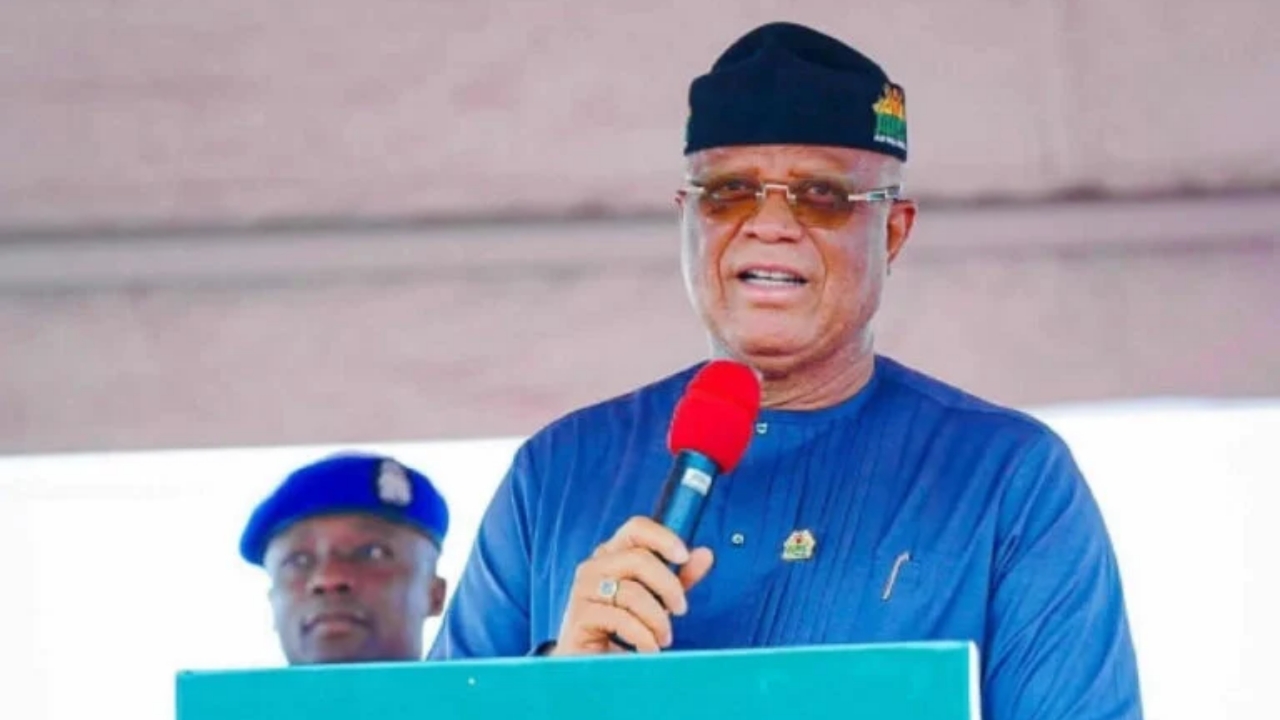
National News – Umo Eno has cautioned critics against politicising the long-awaited Ibom Deep Seaport, insisting that his administration remains committed to delivering the project despite concerns about its pace.
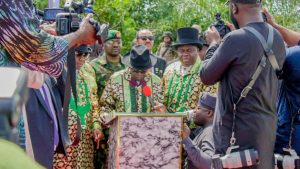
The governor spoke on Wednesday in Uyo while receiving the latest feasibility report on the port project, which has been under development discussions for more than two decades.
Eno explained that the seaport project is a strategic infrastructure initiative aimed at expanding Nigeria’s maritime capacity and boosting economic growth in the region.
According to him, deep seaport development anywhere in the world requires long-term planning, heavy investment, and coordinated partnerships, noting that such projects are “a marathon, not a sprint.”
The governor also linked his administration’s closer cooperation with the All Progressives Congress-led Federal Government to efforts to accelerate the project.
He said alignment with the central government would help attract investors, strengthen institutional collaboration, and speed up implementation of the seaport plan.
Eno acknowledged the role of previous administrations in advancing the initiative.
He credited former Akwa Ibom leaders, including Victor Attah, Godswill Akpabio, and Udom Emmanuel, for laying key foundations for the project.
The governor outlined steps already taken by his administration to move the project forward.
These include funding a full feasibility study, preparing investor fact sheets, constructing access roads, conducting geophysical and geotechnical investigations, and setting up a dedicated project office to coordinate implementation.
He added that the government is integrating the seaport plan with wider infrastructure development across land, air, and maritime sectors.
The state has reportedly developed over 1,300 kilometres of roads, expanded Ibom Air operations, upgraded Victor Attah International Airport, and initiated maritime investments in the Oron coastal corridor.
Meanwhile, the chairman of the project’s steering committee, Mfon Usoro, said the port is designed to operate under a Public-Private Partnership model.
She explained that once completed, the deep seaport will integrate with the Ibom Industrial City Free Trade Zone, strengthen Nigeria’s port capacity, and position the state as a major trans-shipment hub in West Africa.
Usoro urged patience from the public, noting that complex port developments worldwide often take up to 20 years from conception to commissioning due to regulatory, engineering, and financing requirements.