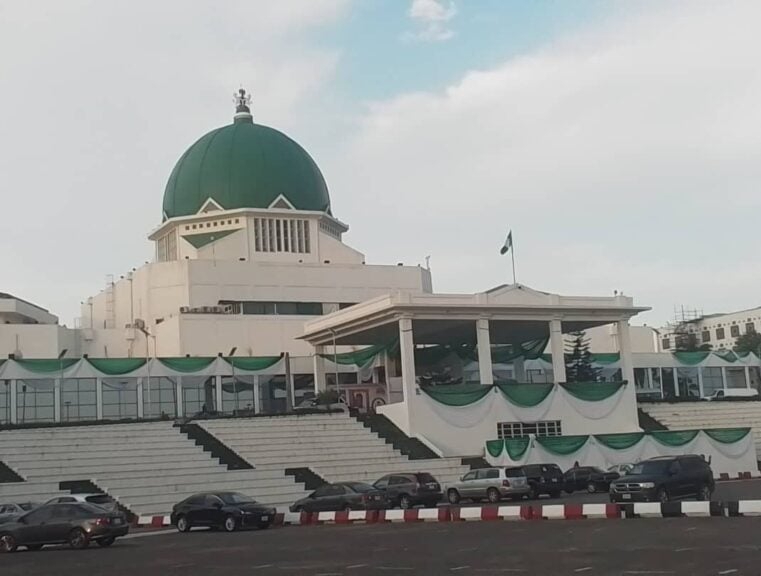
The National Assembly of Nigeria has announced an emergency plenary session scheduled for Tuesday, February 17, 2026, cutting short its recess amid strong indications that lawmakers may shift the 2027 presidential election to February 13.
According to a notice signed by the Clerk to the National Assembly, Kamoru Ogunlana, senators and members of the House of Representatives are to resume at 11 a.m., as “very crucial decisions” are expected to be taken by both chambers.
2027 Presidential Election Date Under Review
Sources within the legislature revealed that the extraordinary session is primarily focused on reviewing the date for the 2027 presidential election, currently fixed for February 20, 2027.
A senior lawmaker disclosed that the move is aimed at providing legislative backing to the Independent National Electoral Commission (INEC), which has faced mounting pressure over the election timetable coinciding with Ramadan.
“If all goes according to plan, the presidential poll may be brought forward to February 13 from the previously announced February 20,” a Senate insider revealed.
Lawmakers say the proposed shift is intended to ensure inclusivity and protect the credibility of the 2027 general elections.
Ramadan Concerns and Stakeholder Pressure
INEC had earlier scheduled:
Presidential and National Assembly elections: February 20, 2027
Governorship and State Assembly elections: March 6, 2027
However, the February 20 date falls within the Ramadan period (February 7 – March 8, 2027), prompting objections from Muslim groups and political stakeholders.
Former Vice President and 2023 PDP presidential candidate, Atiku Abubakar, publicly called for reconsideration, describing Ramadan as a sacred period that could affect voter participation.
INEC, through its National Commissioner and Chairman of the Information and Voter Education Committee, Mohammed Haruna, acknowledged the concerns and indicated that it may seek legislative intervention if necessary.
Electoral Act Amendment and Electronic Transmission Debate
The emergency plenary also follows intense public debate over amendments to the Electoral Act (Repeal and Re-enactment) Amendment Bill, 2026.
Last week, the Senate approved electronic transmission of election results to INEC’s Result Viewing Portal (IReV) but stopped short of making “real-time” uploads compulsory. Manual collation using Form EC8A will remain valid in areas where technology fails.
Senate President Godswill Akpabio presided over the vote, urging dissenting lawmakers to formally challenge the amendment.
Defending the exclusion of the “real-time” clause, Senate Leader Opeyemi Bamidele cited poor broadband penetration, limited internet access, and inadequate electricity supply as major constraints.
According to him, broadband coverage stands at 70 per cent, internet penetration at 44.53 per cent, and about 85 million Nigerians still lack access to grid electricity — realities he said make mandatory real-time transmission impractical at this stage.
Harmonisation Committee Meets
Meanwhile, the Joint National Assembly Conference Committee is set to reconcile differences between the Senate and House versions of the Electoral Amendment Bill. The harmonised document will be transmitted to President Bola Tinubu for assent.
The panel has been given one week to resolve contentious provisions, including election timing, electronic transmission requirements, and other reforms aimed at strengthening Nigeria’s electoral framework ahead of 2027.
Broader Electoral Reforms Under Consideration
The proposed adjustments are part of broader constitutional and electoral reforms, including:
Conducting presidential and governorship elections at least 185 days before the expiration of current terms
Reducing timelines for election petition tribunals and appellate rulings
Introducing early voting for security personnel, journalists, and INEC officials
Political analysts say Tuesday’s emergency plenary could significantly shape the 2027 political landscape, especially if lawmakers formally move the presidential poll to February 13.
If approved, the shift would represent a historic adjustment driven by religious sensitivity, public pressure, and concerns over voter turnout — while also testing INEC’s preparedness to conduct credible elections under a compressed schedule.
As the National Assembly reconvenes, attention now turns to whether lawmakers will prioritise inclusivity and electoral credibility in what is already shaping up to be a defining moment for Nigeria’s democratic process.