European leaders have called for a reset in US-Europe relations at the annual Munich Security Conference, as transatlantic tensions deepen under pressure from US President Donald Trump.
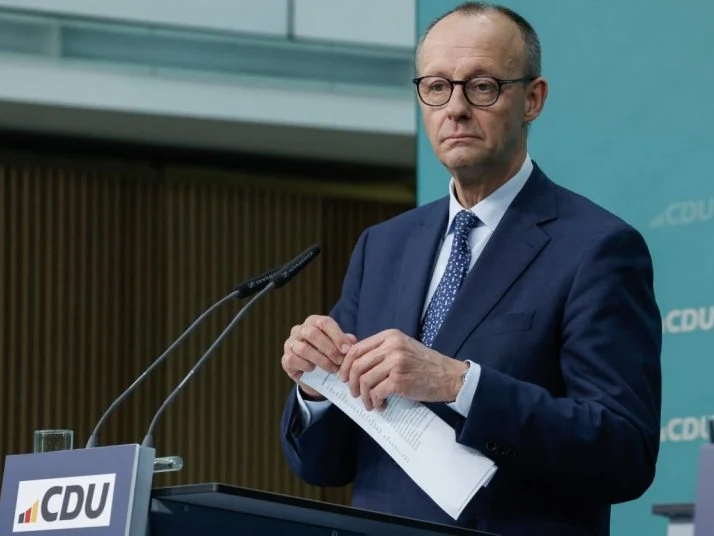
German leader Friedrich Merz on Friday urged “a new transatlantic partnership,” stressing that both sides must repair strained diplomatic ties and rebuild strategic trust.
The high-level security talks come at a critical moment for NATO, European defence spending, and the ongoing Russia-Ukraine war, now approaching its fifth year.
Europe Seeks Stronger Transatlantic Partnership
Speaking at the conference, Merz said Europe remains committed to NATO but emphasized that Washington and Brussels must restore mutual confidence.
“Being a part of NATO is not only Europe’s competitive advantage. It’s also the United States’ competitive advantage,” he said. “Let’s repair and revive transatlantic trust together.”
Trump has repeatedly criticised European nations for what he describes as weak defence commitments and insufficient NATO funding. He also stirred controversy by threatening to take over Greenland, further straining diplomatic relations.
European leaders insisted they are increasing military spending and strengthening defence capabilities in response to growing security threats from Russia.
Ursula von der Leyen: Europe Ready to Take Responsibility
European Commission President Ursula von der Leyen said the European Union is prepared to shoulder more responsibility for its security.
The EU chief reiterated that Europe is boosting defence budgets in line with NATO commitments, countering Trump’s claims that allies are not contributing enough.
NATO Secretary-General Mark Rutte echoed that sentiment, stating that Europe is “stepping up” and taking greater leadership within the alliance.
“A strong Europe in a strong NATO means that the transatlantic bond will be stronger than ever,” Rutte said.
Macron Defends Europe Against Criticism
French President Emmanuel Macron strongly defended Europe’s security and political policies.
“Everyone should take their cue from us, instead of criticising us,” Macron declared, pushing back against claims that Europe is weakening.
The conference follows months of diplomatic friction, particularly after Trump described some European nations as “decaying” and “weak.”
Ukraine War Dominates Security Talks
Russia’s war against Ukraine remains high on the conference agenda.
Ukrainian President Volodymyr Zelensky attended the gathering, holding talks with European leaders on continued military support and long-term security guarantees.
Zelensky stressed the importance of developing an independent European defence industry while maintaining strong US ties.
“It’s good to have a strong partnership with Americans… but Europe needs an independent defence industry, very strong,” he said.
Ukraine’s Foreign Minister Andriy Sybiga also met Chinese Foreign Minister Wang Yi, as Kyiv explores diplomatic channels to end the conflict. Beijing reportedly expressed willingness to provide additional humanitarian aid.
US Diplomacy: Rubio Meets European and Chinese Officials
US Secretary of State Marco Rubio attended the summit and met with Merz to discuss Ukraine, negotiations with Russia, military assistance, and NATO cooperation.
Rubio also held discussions with Denmark’s Prime Minister regarding Greenland’s sovereignty, after Trump renewed calls to annex the Arctic territory. Danish leader Mette Frederiksen described the talks as “constructive.”
On the sidelines, Rubio met Chinese Foreign Minister Wang Yi amid rising Washington-Beijing tensions.
Greenland Tensions Add to Strained US-Europe Relations
Trump’s renewed threats to annex Greenland — an autonomous territory of Denmark and a NATO ally — have sparked diplomatic protests across Europe.
The issue has heightened concerns about US commitment to European sovereignty and alliance unity.
Security Experts Warn of New Cold War
Russian opposition figure Mikhail Khodorkovsky warned of the risk of a “new Cold War” between Europe and Russia if diplomatic channels are not reopened.
Meanwhile, German intelligence officials cautioned about possible Russian interference in upcoming elections.
Merz signaled openness to dialogue with Moscow but questioned Russia’s seriousness in peace negotiations.
“If it makes sense to talk, we are willing to talk,” he said. “But Russia is not yet willing to talk seriously.”