By Alagoa Morris, Yenagoa
Introduction
Tamazo community is part of the Koluama Kingdom in Southern Ijaw Local Government Area of Bayelsa State.
The kingdom hosts several oil companies, including NEPLC (formerly Chevron), Continental Oil and Gas Limited (Conoil), First E/P, Nigdel, and Renaissance Africa Energy Company Limited (operators of the HB Buko Field, OML 77 and OML 86).
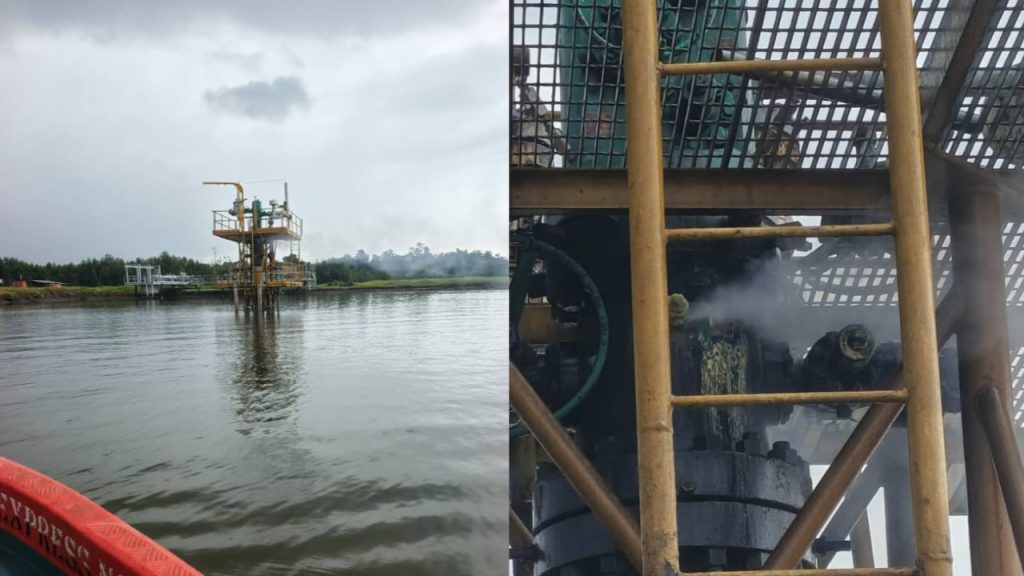
While the Koluama Kingdom co-hosts offshore operations with the KEFFES communities, the Ango Field (OML 59) is solely operated by Conoil Producing Limited. It is the only field located onshore, within the swampy area of Tamazo.
Like most communities in the kingdom, the residents of Tamazo depend primarily on fishing for their livelihood.
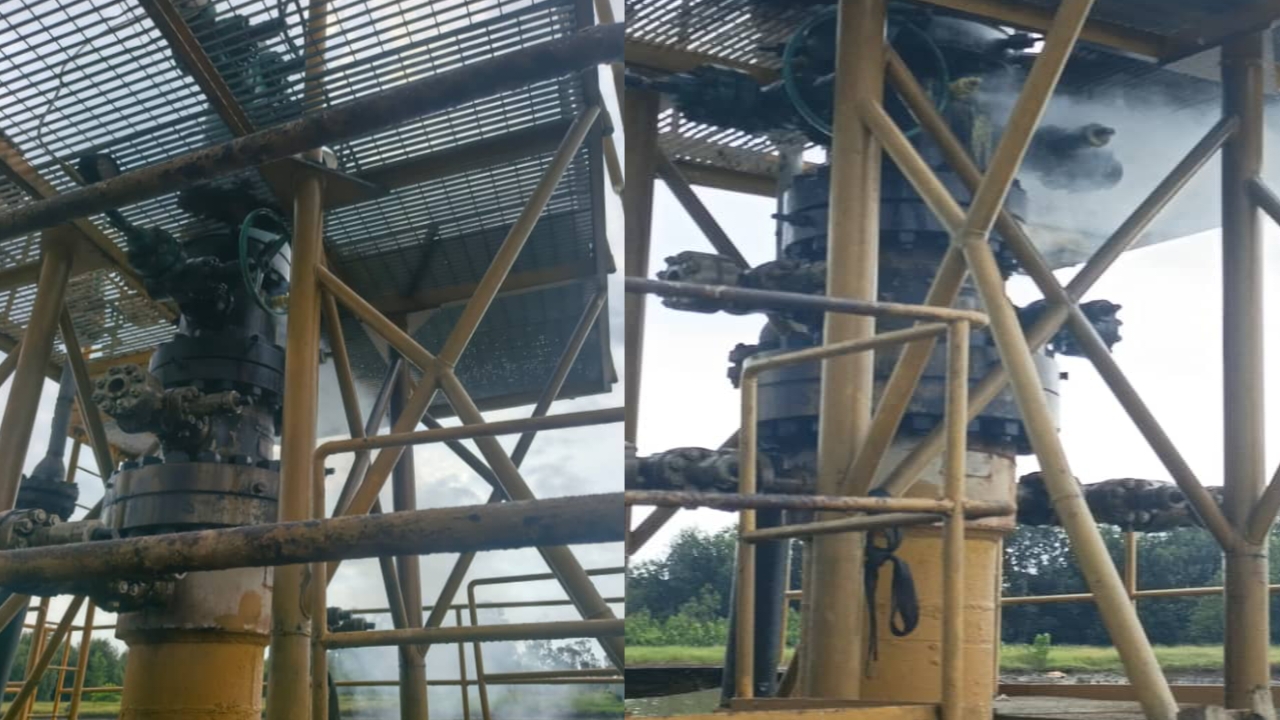
Because Conoil’s Ango Field is closest to Tamazo, the community has repeatedly suffered oil spills and gas leaks from the company’s wellheads situated on and around the Tamazo River.
Information about the latest incident was first received on Friday, February 20, 2026, in a message that read:
“I’m Barr. Kingsley Ikporo, from Koluama 1. I called you earlier today about a gas wellhead leakage that occurred a few weeks back at the Conoil operation base in Tamazo community, Koluama Clan.”
Following this report, EDEN promptly conducted verification. This field report confirms that the leakage occurred, as attested by Tamazo community leaders.
Environmental Testimonies
Violet Nelson, the Women Leader of Tamazo community, stated “This gas leakage is really worrying us — both health-wise and in our fishing activities.”
“We sometimes see dead fish floating in the water. When it happened about two months ago, it nearly caused deaths from suffocation.”
“Now, the gas is leaking seriously, spewing into the air. The atmosphere becomes unbearable, especially when the wind blows towards our community.”
“Breathing becomes difficult. Our fishing activities are disrupted, and we appeal for help. A medical team should be sent to check and treat us because inhaling this gas has health effects. Our natural drinking water is also contaminated, and we are suffering without any help.”
Iti Ebigbeye-emi Godgift, former Youth President and current Secretary of the Community Development Committee (CDC), added “The gas has been leaking seriously for about a month. We sometimes feel a peppery sensation on our faces, irritation, and scratching.”
“Part of our community lies directly opposite the leaking wellhead, and since it affects the river, even the fish we eat are contaminated — we can perceive crude oil in them.”
“An engineer from Conoil visited recently and confirmed that the faulty section of the wellhead must be uncoupled and recoupled to fix the problem. This requires a total shutdown of the facility, which they haven’t yet done. We are still waiting for Conoil to give approval for the repair.”
Soberekon Sylvanus Nelson, CDC Chairman of Tamazo, also shared his frustration: “You know better than us the dangers of gas leaking into the atmosphere. It pollutes the environment, affects humans, fish, and all living things. This company is making us suffer. If this continues, we may demand that they leave our environment.”
“The leakage causes serious health and livelihood problems. Anyone inhaling the gas now has health issues — from catarrh to other complications. We are helpless. Please help us take this matter up and fight for our rights.”
In his remarks, Nathan Nowei Francis, Esq., Chairman of the Koluama Host Community Development Trust (HCDT), Bayelsa State, confirmed the incident and noted: “This has been happening repeatedly, even before this latest one.”
“Often, crude oil drips from the leaking wellhead, and workers use plastic drums to collect it. When the drums are full, the oil flows directly into the river. Despite our repeated complaints, Conoil merely replaces the drums instead of fixing the faulty equipment.”
“This ongoing leakage poses serious environmental hazards. We have demanded a lasting solution, but the company discourages us from reporting to authorities or environmental groups.”
“We told them this violates the Petroleum Industry Act (PIA) and the country’s environmental policies. If this negligence continues, we will consider legal action, because the leakage endangers our people’s health and livelihood.”
Observation / Conclusion
The leakage involves both gas and crude oil. Under the Petroleum Industry Act (PIA), host communities are held accountable for third-party oil spills; therefore, it is only just that Conoil takes full responsibility for allowing this leakage to persist for nearly a month.
Such negligence is unacceptable in any civilized society or where regulatory agencies perform their duties effectively.
EDEN has documented several similar pollution incidents from Conoil’s Ango Field in past years.
One such report, dated February 1, 2022, titled “Cunning Conoil Facility Sprayed/Flooded River with Crude Oil”, recorded a spill that occurred on January 30–31, 2022. Even then, Tamazo residents lamented the company’s environmental recklessness.
Nigeria recognizes the African Charter on Human and Peoples’ Rights, and Article 24 states: “All peoples shall have the right to a general satisfactory environment favourable to their development.”
This right is being violated by Conoil’s continued environmental negligence, which endangers the health, livelihoods, and environment of the people of Tamazo and the wider Koluama Kingdom.
Conoil’s failure to promptly address the faulty wellhead reflects gross negligence and disregard for environmental safety.
Prioritizing profits over people’s welfare and ecological well-being is unethical and must not be tolerated.
EDEN Demands
Immediate Regulatory Action:
Relevant industry regulators must urgently compel Conoil to mobilize to the site and stop the ongoing gas and oil leakage without further delay.
Legal Redress for the Community:
The people of Tamazo and the entire Koluama Kingdom should initiate appropriate legal steps to obtain environmental justice.
If the situation were reversed, under the PIA, Conoil and regulators would have swiftly sanctioned the community. The same standard should apply here.
Stakeholder Involvement:
Environmental organizations, legal advocates, and civil society groups should collaborate to ensure accountability and justice for the victims of Conoil’s continued environmental abuse in a supposedly regulated industry.
This Report was Concluded on Monday, February 23, 2026.