
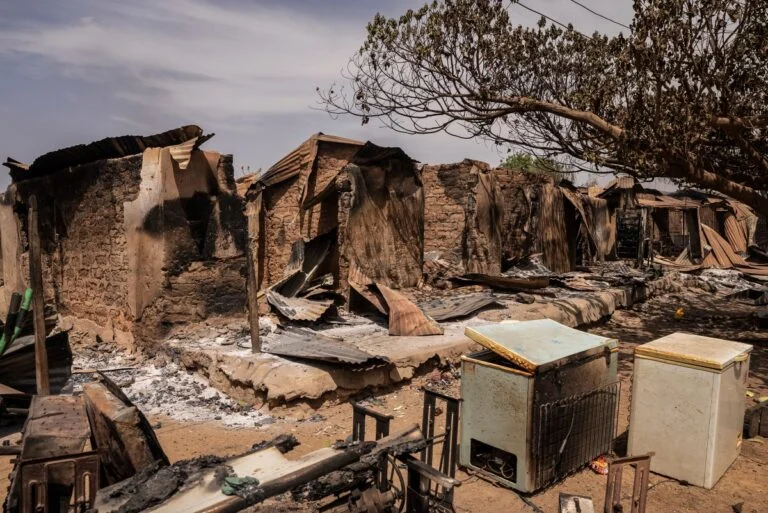
Rising Security Concerns After Kwara Massacre
Security strategists are warning of a potential spillover of terrorist activity into Nigeria’s South-West following the deadly attacks on Woro and surrounding communities in Kaiama Local Government Area, Kwara State.
Reports confirm at least 176 residents were killed in one of the most brutal assaults in the state’s history.
The attackers struck after villagers resisted militant demands, highlighting the expanding reach of Boko Haram factions and allied armed groups beyond the North-East. Analysts say this represents a dangerous shift in Nigeria’s terror geography, bringing insurgent threats closer to major population and economic centers.
Kainji National Park: From Wildlife Sanctuary to Terror Base
Located just 90 km from Ilorin and under 400 km from Lagos, Kainji National Park has transformed from a protected ecological zone into a sprawling hideout for insurgents, bandits, and organized criminal networks.
Spanning 5,340 square kilometers of dense forest and savannah, the park now shelters militants displaced by military operations in the North-West and North-East, including Boko Haram-linked factions.
Security sources attribute the deadly attacks to insurgent commander Abubakar Saidu (Sadiku), noting that casualty figures rival major Boko Haram assaults in the North-East in 2025. Experts warn that without urgent, intelligence-driven military operations across the Kwara–Kogi–Niger corridor, militants could entrench themselves, establish sleeper cells, and exploit forest routes to advance toward South-West states.
Military Experts Raise Alarm
Maj.-Gen. Peter Aro (retd.), former Troop Commander at the Nigerian Army Signals Headquarters, stressed that terror groups advance gradually, establishing sleeper cells and testing governance weaknesses before striking. He flagged Ondo State as particularly vulnerable due to its forests and limited rural surveillance.
Maj.-Gen. Ishola Williams (retd.) criticized the military’s long-standing counter-terrorism strategy, highlighting repeated failures despite years of international assistance from the US, UK, and Multinational Joint Task Force.
A former Assistant Commissioner of Police, Segun Onifade, called for permanent joint military, police, and intelligence bases within Kainji National Park, alongside armed ranger services, drones, and satellite surveillance. “Protected forests can no longer be neutral ecological zones—they are now frontline security areas,” he said.
Air Force and Surveillance Questions
Reports reveal that the 407 Air Combat Training Group in Kainji, home to A-29 Super Tucano fighter jets, is located just 10 minutes by air from Woro. Analysts question why air power was not deployed to prevent or counter the attack, suggesting gaps in aerial surveillance and rapid response.
Civil society groups, including the Foundation for Peace Professionals, raised concerns over missed opportunities to deploy the Air Force, citing the Kainji corridor as a low-risk operational zone that insurgents exploit to strike and withdraw safely
South-West States Strengthen Security
In response, Lagos State has intensified intelligence collection via the Lagos Neighbourhood Safety Corps, planning to recruit 1,500 additional operatives, and deploying new Rapid Response Squad vehicles funded by public-private partnerships.
Osun State has fortified boundaries with Kwara, stationing soldiers, police, and civil defense personnel while sensitizing communities to report suspicious activity.
Kwara State Governor Abdulrahman Abdulrazaq confirmed that senior security officers are coordinating Operation Savannah Shield to tackle insurgent threats.
Authorities in Ogun, Ondo, and Oyo states have not yet provided updates, raising questions about regional preparedness against potential spillover.