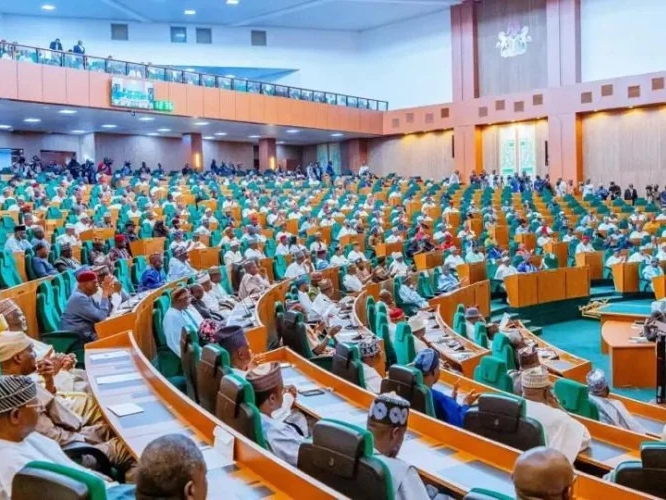
The House of Representatives Committee on Agricultural Colleges and Institutions has issued a 24-hour ultimatum to agencies under its supervision to submit detailed records of their internally generated revenue (IGR), warning that failure to comply could lead to the suspension of their 2026 budget defence.
The directive was delivered on Tuesday during a budget defence session, following the adoption of a motion raised by a member of the committee.
2026 Budget Defence at Risk
Chairman of the Committee, Abiodun Akinlade, stated that any agricultural institution that fails to provide verifiable IGR documentation within the stipulated timeframe would have its 2026 budget proposal withheld or suspended.
He emphasized that budget defence is not a ceremonial routine but a constitutional accountability process central to Nigeria’s democratic governance.
“Budget defence is a universal democratic practice where ministries, departments and agencies present their financial proposals for legislative scrutiny and approval. Until parliament approves, MDAs cannot spend public funds. The power of the purse rests with the legislature,” Akinlade said.
The committee insisted that institutions must present full implementation reports of their 2025 budget performance, alongside comprehensive revenue data and projections tied to their 2026 budget estimates.
Concerns Over Transparency and Revenue Accountability
Lawmakers reiterated longstanding concerns about transparency, revenue leakages, and the persistent failure of some government agencies to disclose accurate internally generated revenue records.
According to the committee, incomplete or undisclosed IGR data makes it difficult for the National Assembly to:
Assess actual funding needs of agencies
Detect revenue leakages
Prevent under-reporting of earnings
Ensure proper accountability of public funds
Over the years, several ministries, departments and agencies (MDAs) have reportedly appeared before National Assembly committees without submitting full IGR documentation, despite statutory obligations.
In some instances, agencies have been accused of under-reporting revenue to justify larger budgetary allocations.
Agric Institutions Hit by Zero Capital Release in 2025
The committee also raised serious concerns about the non-release of capital funds to agricultural institutions throughout the 2025 fiscal year, describing the development as detrimental to institutional performance.
“The capital released to these agencies was zero throughout 2025, and this has significantly affected their operations. We appeal to the executive to ensure adequate capital releases so these institutions can function effectively,” Akinlade said.
Agricultural colleges and training institutions typically generate revenue through:
Tuition and student fees
Consultancy services
Farm produce and commercial ventures
Research grants
Agricultural training programmes
The committee stressed that transparent disclosure of IGR is critical to strengthening fiscal discipline and enhancing legislative oversight ahead of deliberations on the 2026 national budget.
Strengthening Legislative Oversight Ahead of 2026 Budget
The House Committee maintained that submission of detailed IGR records is essential to determining the true financial standing of agricultural institutions and ensuring that public resources are managed responsibly.
Lawmakers warned that failure to comply within the 24-hour deadline would attract sanctions, including possible suspension of budget defence proceedings.
The move comes amid broader efforts by the National Assembly to tighten financial oversight, improve public sector accountability, and curb revenue leakages across federal institutions.