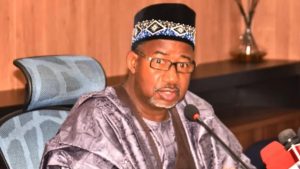
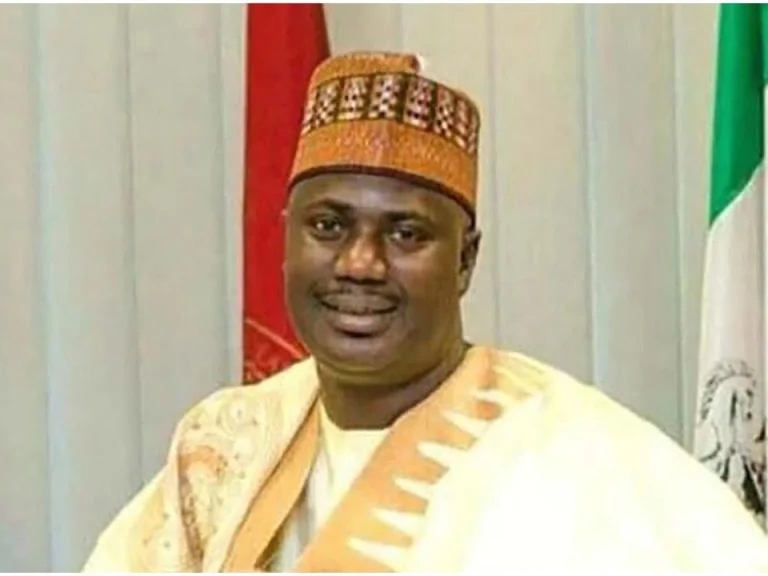
Federal lawmakers have queried the Minister of State for Agriculture and Food Security, Senator Sabi Abdullahi, over the whereabouts of 2,000 tractors unveiled by President Bola Tinubu seven months ago to boost agricultural production and strengthen food security in Nigeria.
The minister faced questions on Tuesday when he appeared before the Joint Senate and House of Representatives Committees on Agricultural Production to present an appraisal of the ministry’s 2025 budget performance and defend its 2026 budget estimates.
Concerns Over Undistributed Tractors
President Tinubu had launched the 2,000 tractors and other agricultural equipment on June 23, 2025, under the Renewed Hope Agricultural Mechanisation Programme, a key component of the administration’s food security strategy.
However, lawmakers expressed concern that more than seven months after the high-profile unveiling, the tractors have yet to be distributed to farmers nationwide.
A lawmaker representing Rivers State, Awaji Inombek, demanded clarification on why farmers had not received the equipment despite the urgent need to scale agricultural output.
Minister Explains Mechanisation Framework
Responding to the concerns, Abdullahi said the tractors were procured under a three-component mechanisation strategy, including the Belarus Mechanisation Programme.
According to him, the Federal Government acquired:
2,000 tractors (75HP and 85HP capacities)
Combined harvesters
Over 9,000 agricultural implements
12 mobile workshops
He described the lawmakers’ concerns as “very pertinent,” noting that the government is determined to avoid past mistakes where tractors were allocated to non-farmers, abandoned, or left in disrepair.
Shift From Direct Allocation to Service Model
The minister revealed that the Tinubu administration has abandoned the previous model of directly allocating tractors to individuals — a system that reportedly left Nigeria with over 7,000 dysfunctional tractors.
Instead, the government is establishing Agricultural Mechanisation Service Centres across the six geopolitical zones to ensure tractor services are accessible to farmers at affordable rates.
Under the new structure:
The Bank of Agriculture is managing the process.
The programme targets youths, women in agriculture, and agricultural practitioners.
Thousands of applicants are currently undergoing screening.
Operators will handle maintenance and repairs.
This service-based approach, Abdullahi explained, will allow farmers with small landholdings — even half a hectare — to access mechanisation services without owning tractors.
He added that spare parts have been supplied and young Nigerians are being trained for maintenance to ensure sustainability.
Gradual Rollout Ahead of Rainy Season
The minister assured lawmakers that rollout would begin gradually as the rainy season approaches, aligning with planting cycles.
“Our target is to ensure that as the rainy season approaches, we begin a gradual rollout,” Abdullahi stated.
He stressed that the mechanisation drive aligns with President Tinubu’s declared food security emergency, aimed at increasing agricultural productivity, promoting import substitution, and strengthening farmers’ resilience despite economic constraints.
Budget Implementation Challenges
On the ministry’s 2025 budget implementation, Abdullahi disclosed that while personnel costs were largely implemented, capital project execution suffered due to delayed fund releases.
Approximately 30% of the ministry’s capital allocation — about N18 billion — remains unreleased.
Lawmakers Warn Over Declining Agricultural Funding
Chairman of the House Committee on Agricultural Production and Services, Bello Ka’oje, warned that inadequate funding could derail Nigeria’s food security ambitions and economic recovery.
He emphasized that legislative oversight is grounded in transparency and accountability, ensuring public funds translate into measurable improvements for Nigerians.
Similarly, Senate Committee Chairman Saliu Mustapha expressed concern over declining budget allocations to the agriculture ministry, noting:
Agriculture allocation dropped from N2.22 trillion in 2025
To N1.45 trillion proposed for 2026
Despite total national expenditure projected to rise to N58.47 trillion in 2026
Mustapha cautioned that insufficient funding and poor capital project implementation could worsen food insecurity and hinder productivity growth.