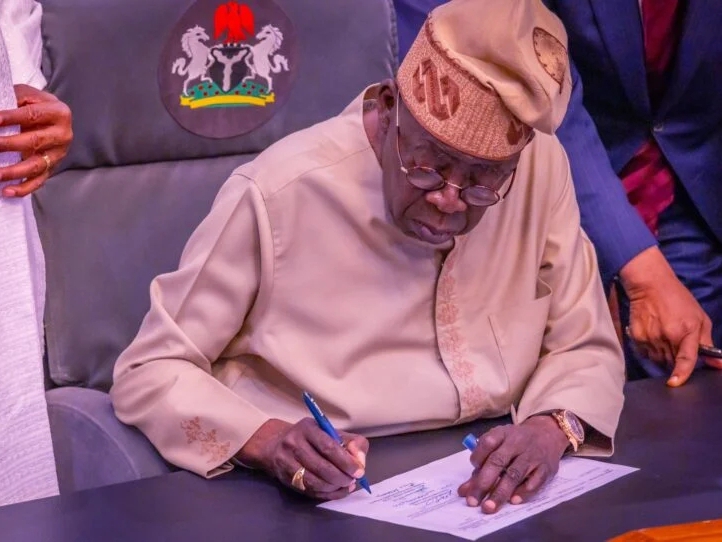
President Bola Tinubu on Wednesday signed the Electoral Act 2026 (Amendment) into law, setting the stage for the 2027 general elections and reigniting debate over the electronic transmission of election results.
The signing ceremony took place at the Presidential Villa in Abuja around 5:00 pm, with principal officers of the National Assembly in attendance. The National Assembly had passed the amendment bill a day earlier, paving the way for swift presidential assent.
The development comes just days after the Independent National Electoral Commission (INEC) released the official timetable for the 2027 general elections. According to INEC, presidential and National Assembly elections will hold on February 20, 2027, while governorship and State Houses of Assembly elections are scheduled for March 6, 2027.
Electronic Transmission of Results Back in Focus
A major highlight of the amended Electoral Act 2026 is its implications for electronic transmission of election results. Civil society organisations and opposition figures have consistently advocated for real-time transmission of results from polling units to INEC’s central server, arguing that it enhances transparency, reduces manipulation, and strengthens electoral credibility.
The debate intensified following the 2023 general elections, when technical issues with INEC’s Results Viewing Portal sparked widespread allegations of irregularities. Just last week, protesters stormed the National Assembly complex, demanding mandatory live transmission of results in future elections.
While the ruling All Progressives Congress supports the adoption of technology to modernise Nigeria’s electoral system, some stakeholders caution that limited telecommunications infrastructure in certain regions may require a phased or hybrid approach, allowing manual collation where electronic systems fail.
With the amended Electoral Act now in force, attention shifts to INEC’s implementation strategy as Nigeria prepares for a crucial 2027 electoral cycle.