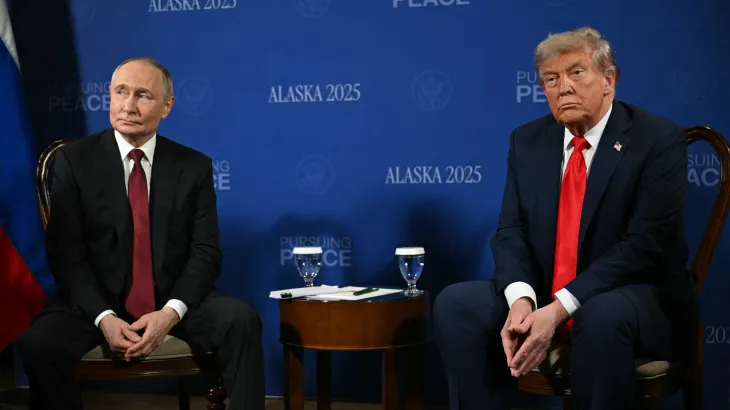
Washington, D.C. – United States President Donald Trump has rejected a proposal from Russian President Vladimir Putin to voluntarily extend limits on strategic nuclear weapons deployments, leaving the New START treaty expired and raising concerns about a potential nuclear arms race.
Trump stated on Thursday that instead of extending the old agreement, negotiators from both countries should meet to create a new, modernized nuclear arms control treaty. He called the existing deal “badly negotiated” and emphasized the need for an updated approach to US-Russia nuclear weapons agreements.
“Rather than extend ‘NEW START’ (a badly negotiated deal by the United States that, aside from everything else, is being grossly violated), we should have our Nuclear Experts work on a new, improved, and modernized Treaty that can last long into the future,” Trump said on his social media platform, Truth Social.
Trump has also suggested involving China in future nuclear arms negotiations, though Beijing has shown little interest in participating.
The expiration of the New START treaty, originally signed in 2010 under President Barack Obama and Russian President Dmitry Medvedev, removes limits on the nuclear arsenals of the US and Russia. This development has fueled global concerns over nuclear proliferation and the stability of international nuclear arms control agreements.
Last year, Putin offered to extend the treaty for one year, conditional on the US agreeing to the same. The US has ignored Russia’s offer, citing concerns that the treaty restricted its ability to deploy missiles against Russia and China.
Kremlin spokesman Dmitry Peskov expressed regret over the treaty’s expiration, reaffirming Russia’s commitment to a “responsible, thorough approach to nuclear stability” while prioritizing national interests.
According to Al Jazeera correspondent Shihab Rattansi, US and Russian delegations, meeting in Abu Dhabi to discuss the Ukraine conflict, also reportedly discussed a potential six-month extension of New START. However, the treaty itself does not legally allow further extensions. Rattansi noted that any temporary deal would serve as a precursor to formal negotiations on a new nuclear weapons treaty.
Experts warn that recent conflicts between nuclear-armed nations such as India and Pakistan highlight the urgency of maintaining robust nuclear non-proliferation agreements. Observers also note that Putin’s earlier threats to use nuclear weapons in response to Western support for Ukraine have further increased global nuclear security concerns.
The New START treaty originally limited the US and Russia to 1,550 deployed nuclear warheads and 700 deployed missiles and bombers. The treaty was extended in 2021 for five years after negotiations between President Joe Biden and Vladimir Putin, but now its expiration marks a critical turning point in US-Russia nuclear relations.
With tensions rising and nuclear arms control agreements under strain, international experts stress the importance of negotiating a new strategic arms treaty to prevent escalation and ensure global nuclear stability.