
US House lawmakers have voted to rescind former President Donald Trump’s tariffs on Canadian goods, marking a rare bipartisan challenge to one of his signature economic policies.
In a 219–211 vote on Wednesday, six Republicans joined Democrats to approve the measure rejecting Trump’s tariffs on Canada. While largely symbolic, the vote signals growing concerns within Congress over the impact of Trump’s trade policies on American consumers and businesses.
Trump Issues Election Warning to Republicans
As the vote unfolded, Trump issued a direct political warning to members of his Republican Party.
“Any Republican, in the House or the Senate, that votes against TARIFFS will seriously suffer the consequences come Election time,” Trump posted on Truth Social.
He defended the tariffs as essential to US economic strength and national security, arguing that dismantling them would harm the country’s strategic advantage.
Why the Vote Is Mostly Symbolic
Although the House has the authority to consider measures ending national emergencies declared by the president to justify tariffs, overturning Trump’s Canada tariffs faces significant hurdles.
For the measure to take effect, it must:
Pass the US Senate
Receive the president’s signature
Even if approved by the Senate, Trump is expected to veto the resolution. Overriding a presidential veto would require a two-thirds majority in both chambers — a threshold widely seen as unattainable.
Internal GOP Divisions Emerge
The vote followed the expiration of a procedural rule that had blocked debate on tariff-related measures in the House.
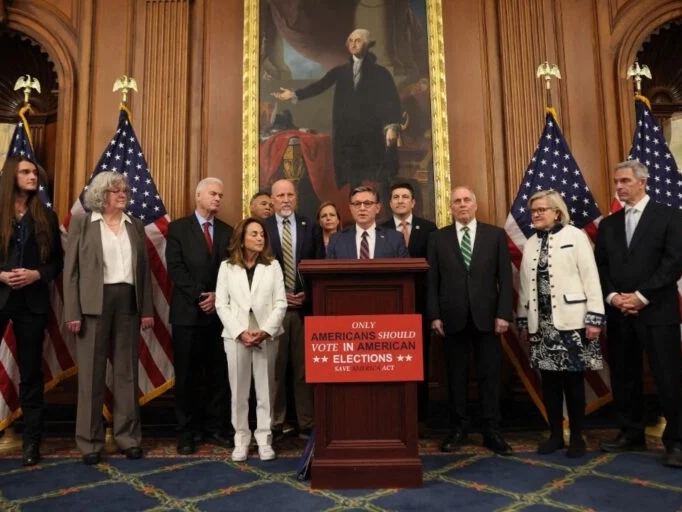
House Speaker Mike Johnson attempted to renew the restriction but failed after three Republicans sided with Democrats to block it.
Republican Congressman Don Bacon publicly criticized the tariff strategy, stating:
“We cannot and should not outsource our responsibilities. As an old-fashioned Conservative, I know tariffs are a tax on American consumers.”
His remarks underscore a growing debate within the Republican Party about whether tariffs ultimately function as consumer taxes rather than protective economic tools.
Impact of Trump Tariffs on Canada
Since returning to office last year, Trump has imposed multiple waves of tariffs on US trading partners, including Canada, using emergency economic powers.
Key details of the Canada tariffs include:
A 35% tariff on many Canadian products
Lower tariff rates on Canadian energy imports
Broad exemptions under the US-Mexico-Canada Agreement (USMCA)
Sector-specific tariffs on autos, steel, and aluminium
Despite the aggressive trade stance, more than 85% of US-Canada trade remains tariff-free under USMCA provisions.
However, sector-based tariffs have significantly affected Canadian industries, particularly automotive manufacturing and metal exports.
Legal Challenges and Supreme Court Review
Trump’s use of emergency powers to justify country-specific tariffs is also under legal scrutiny. The US Supreme Court is expected to rule soon on the legality of these measures — a decision that could reshape US trade policy.
Public Opinion Turns Against Higher Tariffs
While Trump continues to promote tariffs as beneficial for economic growth and national security, public sentiment appears divided.
A recent Pew Research Center survey found that 60% of Americans disapprove of higher tariffs, reflecting concerns about rising consumer prices and trade tensions.