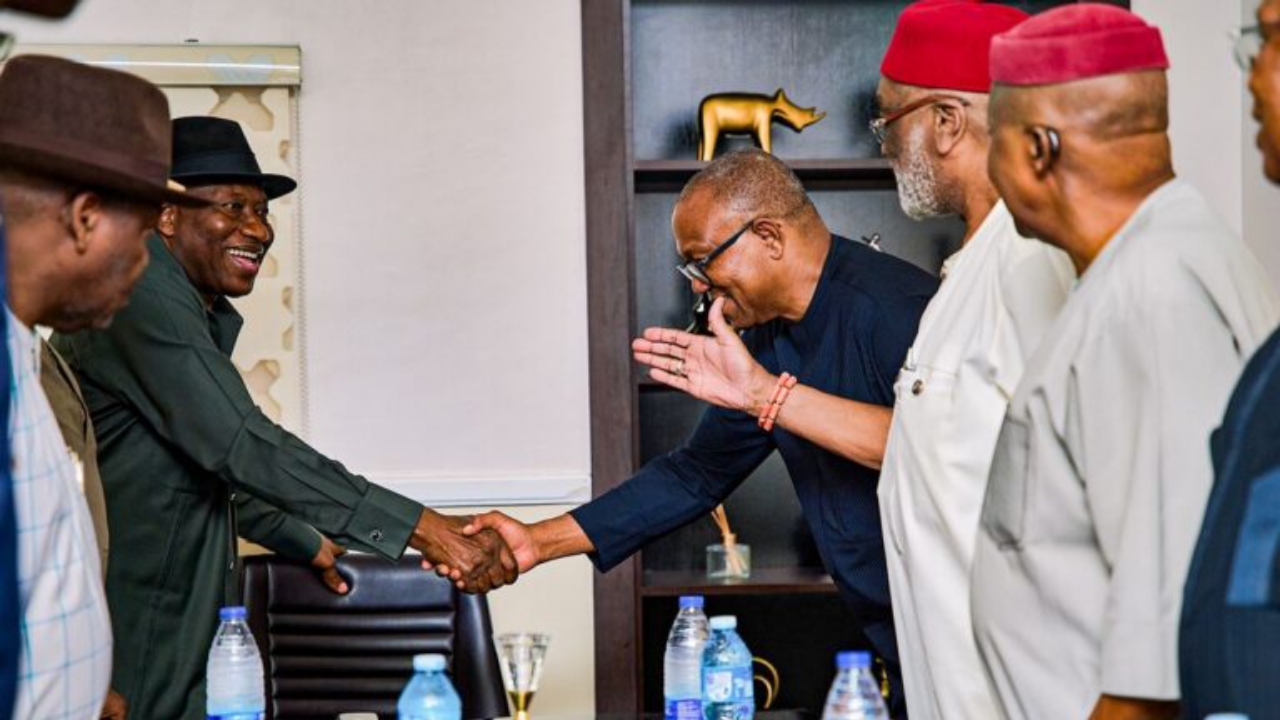
National News – Fresh political maneuvering ahead of the 2027 elections came into focus on Monday as Peter Obi held a closed-door meeting with former President Goodluck Jonathan, a move insiders say is part of a widening consultation strategy aimed at building a national coalition.
The meeting, which took place amid rising opposition talks, was later explained by Obi’s ally, Yunusa Tanko, who said the outreach is designed to secure elite backing and reflect what he described as growing youth support for Obi’s candidacy.
According to Tanko, the engagement is not an isolated visit but part of a deliberate nationwide effort targeting influential figures across regions.
He linked the move to long-standing concerns about political inclusion, particularly in the South-East, and argued that bridging perceived leadership gaps could strengthen national unity.
The timing also suggests a calculated attempt to consolidate momentum before formal campaign structures emerge.
Obi’s camp confirmed that the former Anambra governor has similarly met past leaders such as Olusegun Obasanjo and Ibrahim Babangida, reinforcing a pattern of high-level consultations.
While Jonathan reportedly emphasised credible elections and rejected any notion of a one-party system, he stopped short of endorsing Obi—highlighting the cautious stance many political heavyweights are maintaining at this early stage.
The development comes against the backdrop of broader opposition realignments involving figures like Rabiu Kwankwaso and Atiku Abubakar, as well as a recent Ibadan summit hosted by Seyi Makinde.
Discussions there reportedly centred on forming a united front capable of challenging the ruling party with a consensus candidate.
Local reactions remain mixed. While many young Nigerians on social media view Obi’s outreach as a sign of strategic maturity, critics argue that elite endorsements alone may not translate into electoral victory without grassroots consolidation.
Analysts note that the success of such consultations will depend on how effectively they convert dialogue into a cohesive political structure.
Looking ahead, the meeting underscores a key question shaping 2027: whether Nigeria’s fragmented opposition can overcome internal rivalries to present a single, credible alternative—and whether figures like Jonathan will eventually move from neutral observers to decisive power brokers.