By Friday Temitope Eugenia
National News
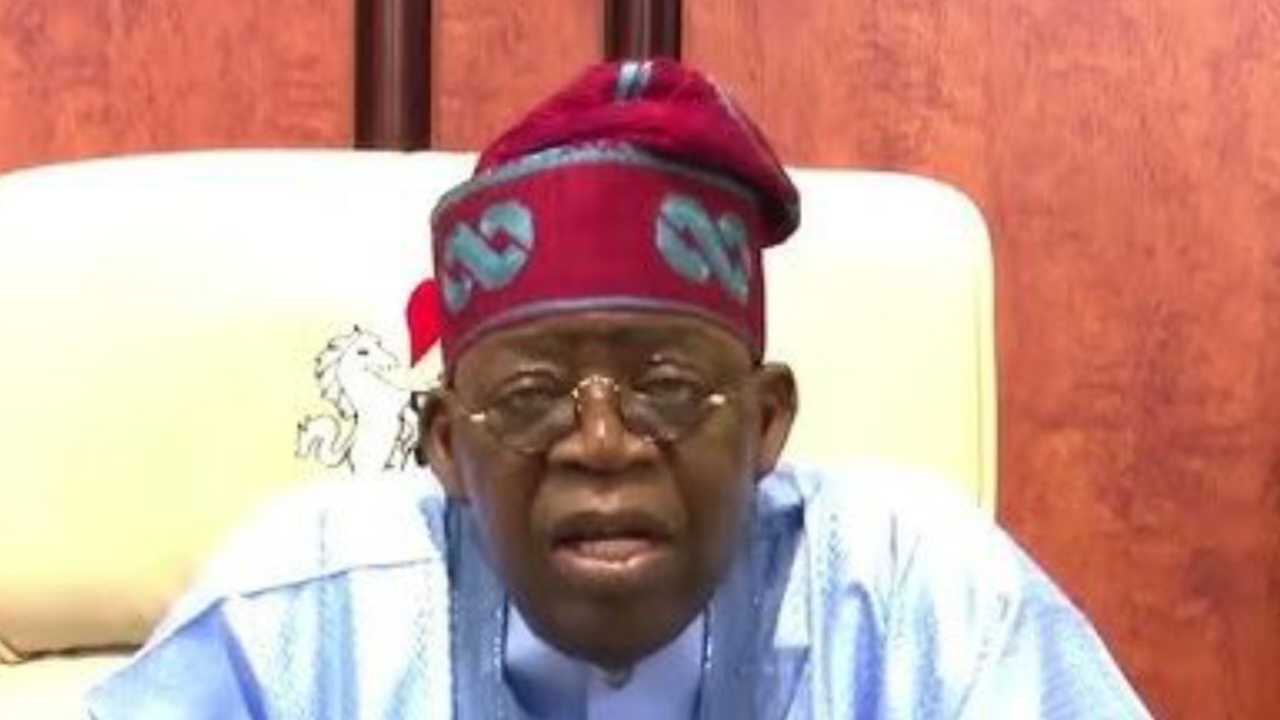
President Bola Ahmed Tinubu has reaffirmed the Federal Government’s policy of refusing to negotiate with terrorists, kidnappers and other violent criminal groups, insisting that his administration will neither pay ransom nor release detained criminals in exchange for abducted victims.
The President made the declaration on Thursday while receiving a delegation of traditional rulers from Oyo State, led by the Olubadan of Ibadanland, Oba Rashidi Ladoja, at the Presidential Villa in Abuja. He revealed that kidnappers responsible for the recent abduction of schoolchildren and teachers in Oriire Local Government Area of Oyo State demanded both ransom and the release of members of their gang already in government custody, but the Federal Government rejected the demands.
“We refuse to negotiate with criminals. They wanted us to release members of their criminal gangs already in detention in addition to demanding money, but we said no deal. We will not negotiate with murderers and terrorists,” Tinubu said.
According to the President, the successful rescue of the victims demonstrated that Nigeria’s security agencies were becoming more effective through improved intelligence gathering, better coordination and continuous review of operational strategies. He commended members of the Armed Forces and other security agencies for their courage and professionalism in confronting insecurity across the country.
Tinubu disclosed that his administration was implementing major reforms to strengthen the country’s security architecture, including expanding the Nigerian Army from eight to 12 divisions to improve operational coverage and reduce response time to security threats. He added that the Federal Government was also strengthening forest security and supporting the creation of state police with constitutional safeguards to prevent abuse.
“There will be state police, but with guardrails against abuse. Traditional rulers will also have greater roles to play. We are equally enhancing the capacity of forest guards, not to chase animals, but to pursue criminals and deal decisively with them,” the President stated.
He urged traditional rulers and community leaders to intensify intelligence gathering by encouraging residents to monitor suspicious activities and promptly report strange movements within their communities. According to him, intelligence remains one of the most effective tools in the fight against terrorism, banditry and kidnapping.
The President also expressed concern over the worsening security situation in neighbouring Mali, Burkina Faso and the Niger Republic, noting that instability in the Sahel region had contributed to increased cross-border criminal activities in Nigeria. He disclosed that some of those involved in the recent Oriire abduction were foreign nationals, highlighting the need for stronger border security and closer collaboration among security agencies.
While acknowledging that Nigeria still faces significant security challenges, Tinubu maintained that ongoing reforms were beginning to yield positive results.
“I asked for this responsibility and I accept both its assets and liabilities. I can assure Nigerians that the security situation is improving. Whenever you see our soldiers and police officers, encourage them because they are making tremendous sacrifices to keep our country safe,” he said.
The President also urged state governors to prioritise the construction of strategic roads capable of boosting economic activities and improving access for security agencies, rather than focusing resources on projects with limited public value.
According to him, improved road networks would make it easier for security personnel to respond swiftly to emergencies and extend government presence to remote communities vulnerable to criminal attacks.
Earlier, the Olubadan of Ibadanland, Oba Rashidi Ladoja, commended the President and security agencies for the successful handling of the recent kidnappings in Oyo State, describing the refusal to pay ransom as a major turning point in Nigeria’s fight against kidnapping. He also called for sustained security operations across the forests stretching through Oyo, Niger and Kwara states, warning that criminal groups could continue to exploit the vast forests if left unchecked.
The monarch further praised the Federal Government’s ongoing infrastructure projects in Oyo State, expressing confidence that improved road networks would stimulate economic growth while strengthening security across the region.