By Friday Temitope Eugenia
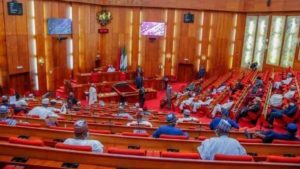
Abuja – Momentum is building for the proposed establishment of state police following widespread endorsements from governors, speakers of the 36 State Houses of Assembly, the Labour Party and the Forum of APC Speakers after the Senate passed the Constitution Alteration Bill seeking to decentralise policing in Nigeria.
The constitutional amendment, approved by the Senate after a clause-by-clause consideration, now requires ratification by at least 24 state Houses of Assembly before it can be transmitted to President Bola Tinubu for assent.
The proposed legislation seeks to establish a dual policing system, allowing states to create their own police services while the Federal Police Service retains responsibility for national security matters, including terrorism, cybercrime, border security and other federal offences.
Several state governments and legislatures have welcomed the development, describing it as a major step toward addressing the country’s growing security challenges.
Benue State Governor, Rev. Fr. Hyacinth Alia, described the bill as a landmark reform capable of strengthening Nigeria’s security architecture. He said state police would improve intelligence gathering and enable quicker responses to local security threats because officers would possess better knowledge of their communities.
In Kano State, the House of Assembly commenced consultations with Governor Abba Kabir Yusuf and other stakeholders on the implications of the proposed amendment, while the Gombe State House of Assembly said it would subject the bill to committee review, public hearings and stakeholder consultations before taking a final position.
The Akwa Ibom State House of Assembly said it would study the bill thoroughly before making its decision, while the Bayelsa State House of Assembly expressed readiness to fast-track consideration of the proposal upon receipt from the National Assembly.
The Conference of Speakers of State Legislatures in Nigeria, led by Delta State House of Assembly Speaker Emomotimi Guwor, reaffirmed its support for the legislation, describing community-based policing as essential to tackling insecurity at the grassroots.
Similarly, the Forum of Progressive Speakers of State Legislatures under the APC, led by Jigawa State Speaker Haruna Dangyatin, described the Senate’s action as a historic breakthrough that would strengthen community policing and improve public safety.
The Labour Party also endorsed the bill, urging governors and state lawmakers across the federation to support the constitutional amendment. The party acknowledged concerns over possible abuse of state police by governors but maintained that constitutional safeguards contained in the bill would ensure accountability and prevent misuse.
Former Senator Ayodele Arise also backed the initiative, saying multi-layered policing had proved effective in other federal systems, while stressing the need for strong checks and balances to prevent abuse.
The Plateau and Ondo State Houses of Assembly likewise pledged support, expressing confidence that state policing would help address persistent insecurity across the country.
However, the Peoples Redemption Party opposed the proposal, arguing that the current administration lacks the credibility to implement such a far-reaching security reform. The party urged Nigerians to reject the initiative and recommended postponing any decision on state police until after the next general election.
The proposed amendment introduces several safeguards to prevent political interference. Under the bill, governors would be prohibited from directing state police commissioners to target individuals, political parties or groups unlawfully. It also provides that state commissioners of police can only be removed through recommendations by the National Police Council and approval by a two-thirds majority of the relevant State House of Assembly.
The bill further expands the composition of the National Police Council to include representatives of the Nigerian Bar Association, Nigeria Labour Congress, National Human Rights Commission, Public Complaints Commission, retired senior police officers and all state attorneys-general to strengthen civilian oversight.
In addition, the legislation empowers the Federal Government to intervene in state police operations only under clearly defined circumstances, including breakdown of public order, threats to national security, systemic human rights abuses or upon request by a state governor.
Supporters argue that the reform will improve intelligence gathering, strengthen community policing and enhance rapid response to security threats, while critics continue to express concerns about possible political abuse by state governments.
With endorsements increasing across the country, attention has now shifted to the 36 State Houses of Assembly, whose ratification will determine whether the constitutional amendment proceeds to the President for assent.