Kogi State has taken a significant step toward industrial revival with the official licensing of the Ajaokuta Economic City Free Trade Zone, approved earlier by President Bola Tinubu in November 2025.
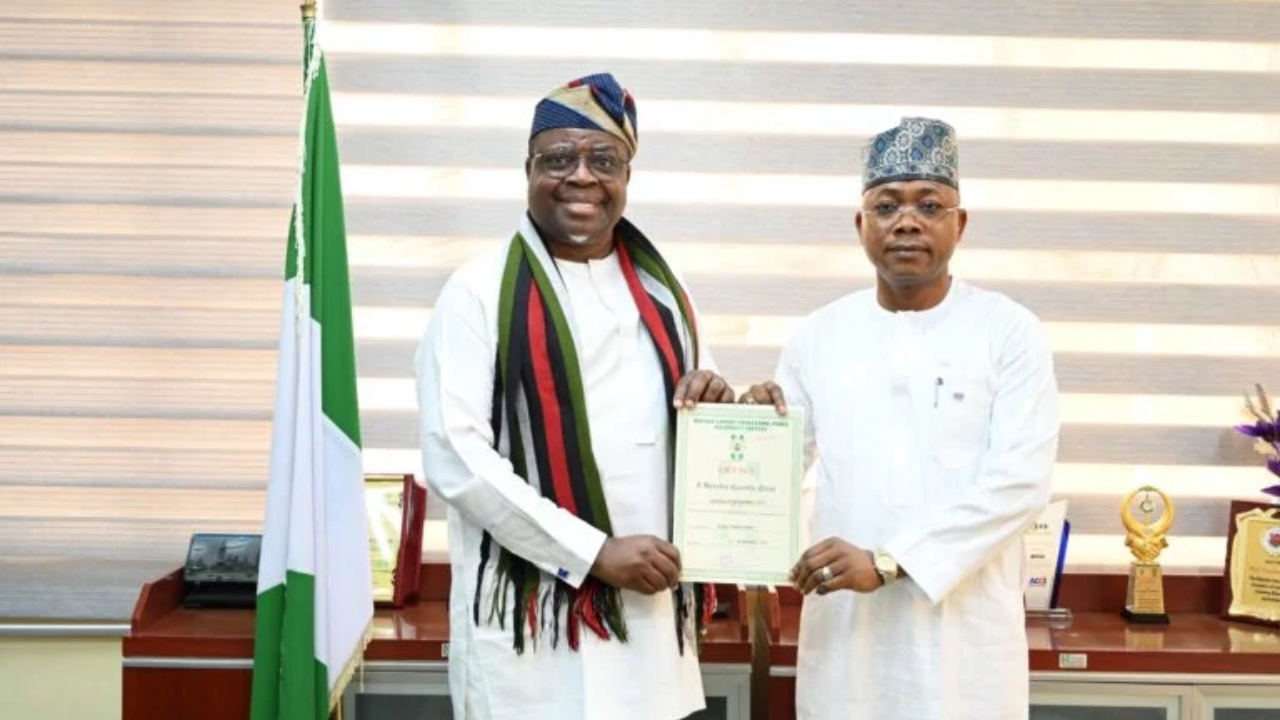
The license was presented in Abuja to Governor Usman Ododo by Dr Olufemi Ogunyemi, Managing Director of the Nigeria Export Processing Zones Authority (NEPZA).
Governor Ododo described the development as a “historic turning point” for both the state and Nigeria’s industrialisation efforts.
He emphasized that the free trade zone would position Ajaokuta as a leading economic hub in West Africa, leveraging Kogi’s strategic location and rich mineral resources, including coal, iron ore, lithium, gold, and beryllium.
“The Ajaokuta Free Trade Zone will serve as a catalyst for economic transformation, attracting both local and foreign direct investment while creating jobs and promoting industrial growth,” Ododo said.
He highlighted Kogi State’s proximity to multiple commercial centers, including the Federal Capital Territory, as a unique advantage for investors.
The governor also revealed plans for an international airport to support the economic zone, accommodating overflow from Abuja and boosting regional trade and logistics.
Ododo stressed that this initiative would form part of his administration’s legacy, complementing the long-delayed Ajaokuta Steel Complex and supporting downstream industries such as steel fabrication, mining, and manufacturing.
Dr Ogunyemi noted that the NEPZA license marks the beginning of a multi-sectoral journey. “The free trade zone model is globally recognized, designed to promote exports, attract investment, and create sustainable employment,” he said.
NEPZA will provide regulatory oversight and operational support to ensure the zone’s success.
With the Ajaokuta Economic City, Nigeria now has 46 licensed free trade zones, strengthening the country’s special economic zones framework.
This initiative aligns with ongoing reforms to improve the investment climate, leverage solid mineral resources, and drive industrialization across Nigeria.