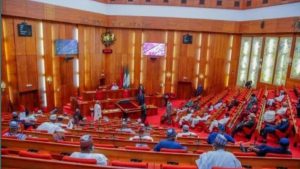
The Nigerian House of Representatives has begun efforts to recover more than $7 billion owed by foreign airlines operating in the country, as lawmakers intensify oversight to improve government revenue and reduce reliance on borrowing.
The move was disclosed by Abiodun Faleke, Chairman of the House Committee on Finance, during the launch of the 2023–2025 revenue monitoring exercise of the Federal Airports Authority of Nigeria (FAAN) in Abuja.
Faleke expressed concern about the growing aviation sector debt owed by both international and domestic airlines to the Federal Government.
According to him, the unpaid charges accumulated over several years and have significantly reduced funds that should have been paid into the Federation Account.
FAAN Revenue Shortfall Raises Concerns
During the meeting, FAAN Managing Director Olubunmi Kuku revealed that airline operators owed the agency N25.86 billion in 2023.
Out of this amount, only N8.08 billion (31.25%) was recovered, leaving an outstanding balance of N17.78 billion.
Documents submitted to lawmakers also showed that FAAN generated N191.43 billion out of its approved revenue target of N292.93 billion, resulting in a shortfall of N101.5 billion within the review period.
Kuku explained that the debts were owed by both active and defunct airlines.
She also noted that payments from foreign airlines are sometimes delayed because they are processed through international clearing systems managed by global aviation bodies such as the International Air Transport Association (IATA).
Lawmakers Demand Full Debt Records
Members of the House committee expressed dissatisfaction with FAAN’s explanations and demanded detailed records of all airline debts.
Faleke directed the agency to provide a comprehensive breakdown of airline indebtedness between 2023 and 2025, including flight manifests, passenger records, and the total number of airlines operating in Nigeria during the period.
According to the committee, accurate aviation data will help ensure transparency and improve revenue collection.
Why Aviation Charges Matter for Nigeria’s Economy
Airlines operating in Nigeria are required to pay several statutory charges to aviation agencies, including landing fees, parking charges, passenger service fees, and terminal navigation levies.
However, delayed remittances and unpaid obligations have remained a recurring challenge in the aviation industry.
With Nigeria facing rising public debt and widening fiscal pressure, lawmakers say recovering aviation sector debts and plugging revenue leakages is critical for strengthening the country’s finances and funding infrastructure without excessive borrowing.