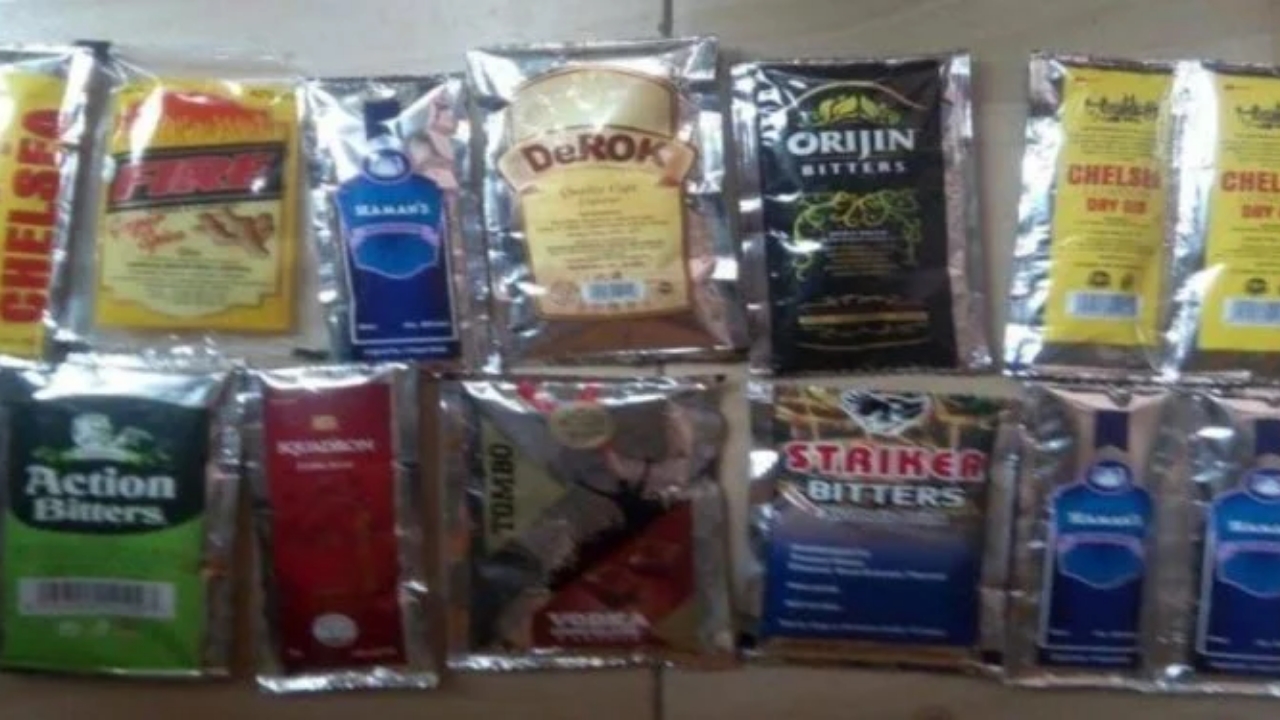
Employees of distilling companies in Nigeria have announced plans to protest the Federal Government’s enforcement of the nationwide sachet alcohol ban.
The demonstration is expected to take place at the Lagos office of the National Agency for Food and Drug Administration and Control (NAFDAC).
According to a notice issued by industry workers, protesters will gather at the NAFDAC office in Oshodi at 8:30 a.m. to express their dissatisfaction with the government’s decision to ban alcoholic beverages packaged in sachets and bottles smaller than 200 millilitres.
The protest is being organised by members of the Distillers and Blenders Association of Nigeria and industry employees who argue that the policy could lead to massive job losses across the country.
Industry representatives claim the ban may affect up to five million workers involved in alcohol production, distribution, and retail.
The Federal Government recently launched a nationwide enforcement and awareness campaign targeting sachet alcohol and small PET bottles below 200ml.
The campaign involves multiple agencies, including NAFDAC, the National Orientation Agency (NOA), and the Federal Competition and Consumer Protection Commission.
The sachet alcohol ban, which officially took effect on January 1, 2026, aims to reduce underage drinking and curb harmful alcohol consumption patterns in Nigeria.
Authorities say the easy availability and concealment of small alcohol packages have contributed significantly to rising alcohol use among minors.
NAFDAC’s Director-General explained that discussions about regulating high-strength sachet alcohol began in 2018 when industry stakeholders raised concerns about the potential economic impact.
At the time, the government granted manufacturers a five-year transition period to restructure their businesses.
Following additional extensions, the government has now resumed strict enforcement of the ban.
Officials say national surveys revealed alarming levels of alcohol consumption among Nigerian youths.
The study found that more than half of minors could easily obtain alcohol, often purchasing sachet or small bottled drinks from local retailers.
Authorities believe restricting small, easily concealed alcohol packages will reduce youth access and help address the growing problem of underage drinking in Nigeria.