By Our Correspondent
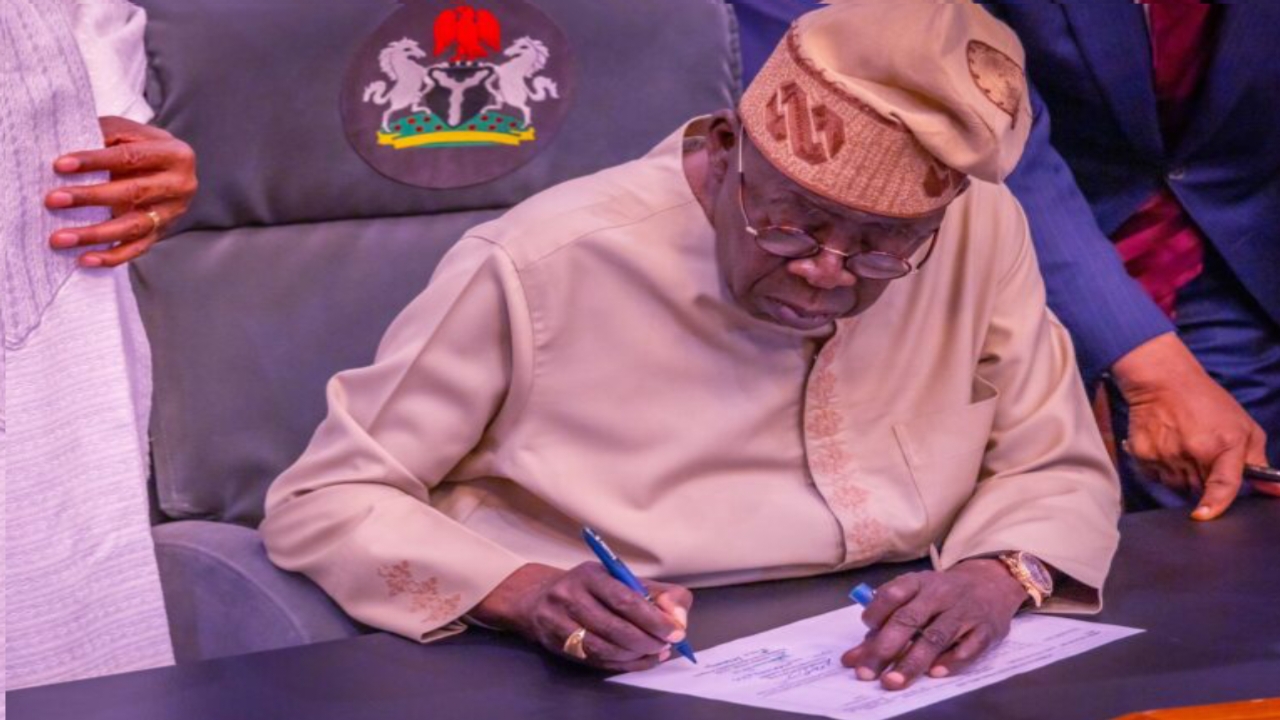
National News – Bola Ahmed Tinubu has signed Nigeria’s 2026 Appropriation Bill into law, approving a record ₦68.32 trillion budget aimed at boosting economic stability, infrastructure, and national security.
The signing took place on April 17, 2026, in Abuja, with the presidency confirming the move in an official statement.
The budget outlines how government spending will be distributed, why reforms are ongoing, and how the administration plans to drive growth under its Renewed Hope Agenda.
The approved budget allocates ₦4.799 trillion for statutory transfers, ₦15.8 trillion for debt servicing, ₦15.4 trillion for recurrent expenditure, and ₦32.2 trillion for capital projects.
According to the presidency, this structure reflects a strategic balance between obligations and development priorities.
Nearly 50 per cent of the total spending is dedicated to capital expenditure, signaling a strong focus on infrastructure and long-term economic productivity.
In addition, Tinubu signed an amendment extending the 2025 budget implementation deadline from March 31 to June 30, 2026.
This decision is intended to ensure the full utilisation of funds, especially for ongoing infrastructure projects nearing completion.
Ministries, Departments, and Agencies have been directed to prioritise transparency, efficiency, and value for money in executing the budget.
The 2026 budget, originally proposed at ₦58.47 trillion in December 2025, was increased to ₦68.32 trillion after legislative review by the National Assembly.
Key sectors benefiting from the allocation include defence and security (₦5.41 trillion), infrastructure (₦3.56 trillion), education (₦3.52 trillion), and healthcare (₦2.48 trillion).
Lawmakers also projected a 3.98% GDP growth rate, reduced inflation at 14.45%, and improved foreign reserves.
Tinubu emphasised that the budget represents a decisive step toward fiscal discipline, ending the practice of overlapping budgets.
He reaffirmed his administration’s commitment to reforms, job creation, and improved living standards for Nigerians.