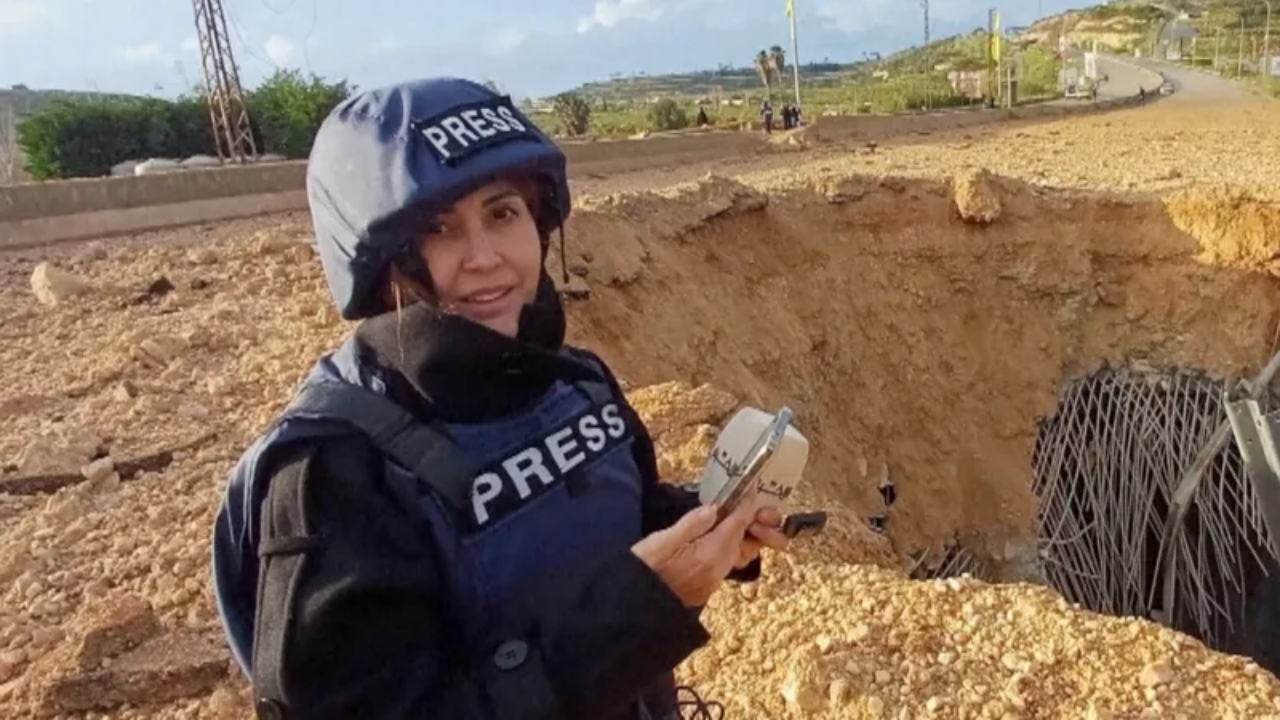
National News – Lebanese authorities have accused Israel of a deliberate air strike that killed journalist Amal Khalil and wounded freelance photographer Zeinab Faraj on Wednesday in southern Lebanon, escalating tensions around press safety in the ongoing Israel–Hezbollah conflict.
The incident took place in the village of Tayri, where officials say the journalists were caught in a sequence of strikes while covering the aftermath of earlier attacks in the area.
The case has intensified debate over civilian protection, media safety, and compliance with international humanitarian law amid continued cross-border hostilities.
According to Lebanese officials, Khalil, a reporter for Al-Akhbar, was travelling with Faraj when their vehicle was struck near Tayri. Two men in the first hit were killed.
Survivors reportedly sought shelter in a nearby house, which was later hit again, while emergency teams attempting rescue said an ambulance marked with the Red Cross was fired upon or deterred by warning fire and a stun grenade, delaying access.
Israel’s military rejected claims it targeted journalists, stating it identified vehicles leaving a structure it described as used by Hezbollah and judged one as an immediate threat after crossing a forward defence line.
The Israel Defense Forces said it struck the vehicle and later the site, adding it does not deliberately target media workers and seeks to minimise civilian harm.
Lebanon’s Prime Minister Nawaf Salam condemned the strike as a possible war crime, accusing Israel of repeatedly endangering journalists in the south.
Press freedom groups including the Committee to Protect Journalists and Reporters Without Borders raised concern over repeated incidents affecting reporters and delayed medical access, warning of violations of international humanitarian law.
Colleagues in Lebanese media described Khalil as a committed field journalist, and reactions online reflected growing fear among reporters working near the border.
Analysts say the incident underscores escalating risks for journalists covering the Israel–Hezbollah conflict, where air strikes, disputed targeting claims, and contested ceasefire conditions have blurred the line between combatants and civilians.
The case also intensifies diplomatic pressure as Lebanon seeks international legal action while both sides trade accusations over ceasefire breaches.
With at least several journalists already killed in recent months, the strike is likely to renew debate over protection of media workers in active war zones and accountability for attacks near civilian shelters and emergency responders.