National News – The global energy shock triggered by heightened US-Iran tensions is reshaping industrial priorities, and China’s electric vehicle sector is moving quickly to capitalise on the uncertainty.
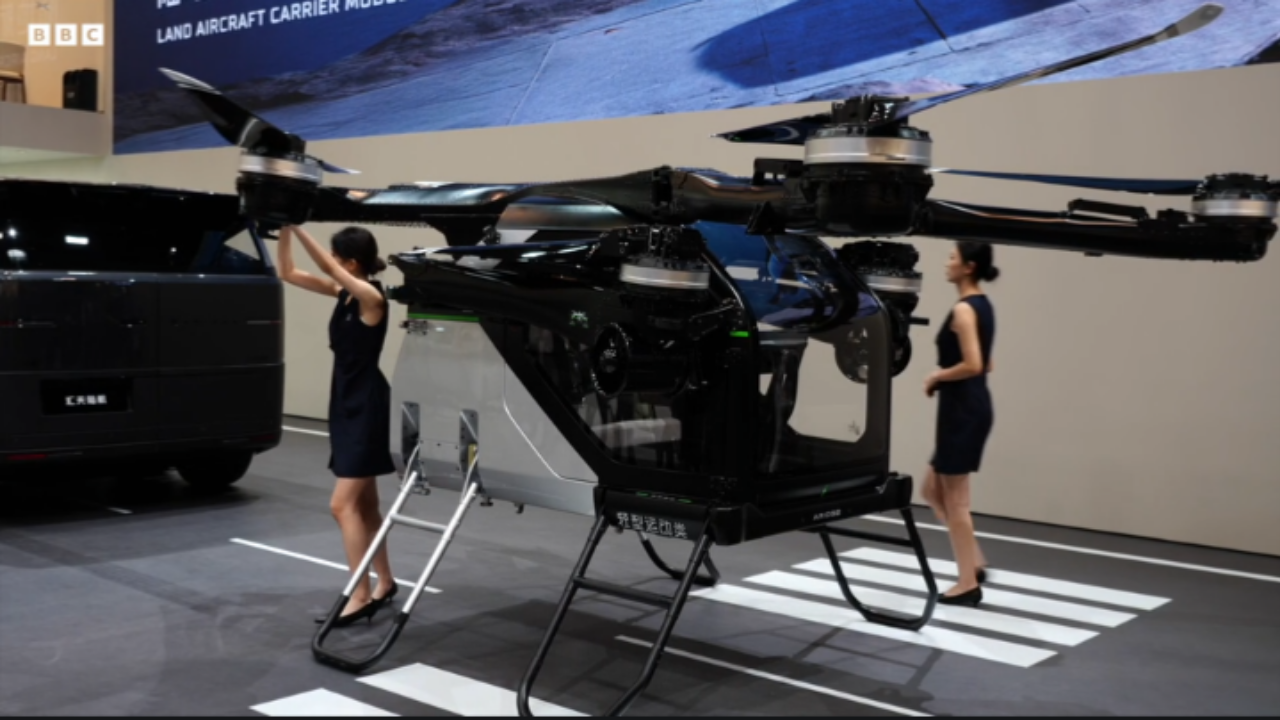
At the Beijing Auto Show, manufacturers showcased advancements in autonomous driving, battery efficiency, and experimental flying-car prototypes, signalling a shift from traditional auto competition to tech-driven mobility ecosystems.
Industry analysts note that China’s EV dominance strategy is increasingly tied to energy geopolitics, where reducing dependence on imported oil becomes both an economic and security advantage.
Local reaction in Nigeria reflects cautious optimism.
With fuel price volatility still affecting transport costs, observers believe China’s EV breakthroughs could eventually lower import costs for affordable electric mobility solutions in African cities like Lagos.
However, concerns persist about sustainability, data privacy in autonomous systems, and whether flying-car concepts will move beyond demonstration into real-world infrastructure within the next decade.
Experts also argue that the geopolitical shock is accelerating supply chain realignment, pushing automakers to localise battery production and secure rare earth materials essential for EV manufacturing.
In Beijing, visitors expressed excitement at the pace of innovation, though some questioned affordability and whether such technologies will remain limited to premium markets.
Overall, the trend signals a broader transition where energy security, climate policy, and technological competition are converging into a single global industrial race led in part by China’s EV ecosystem.
Nigerian policymakers are also watching the shift closely, as improved EV affordability could reduce reliance on petrol imports and ease pressure on foreign exchange reserves, especially in urban transport systems.
Still, the adoption curve will depend on infrastructure readiness, including charging networks, regulatory frameworks, and consumer trust in autonomous mobility technologies across emerging markets.
This convergence of innovation and geopolitical pressure suggests a new era for global transport, where electric mobility is not just an environmental choice but a strategic necessity shaping international competition.
For markets like Nigeria, this may redefine future mobility planning and investment priorities over the next decade.
Industry momentum continues to build rapidly.