
Did You Know?
In the early years of aviation experimentation, ambition often blurred the line between innovation and fatal risk.
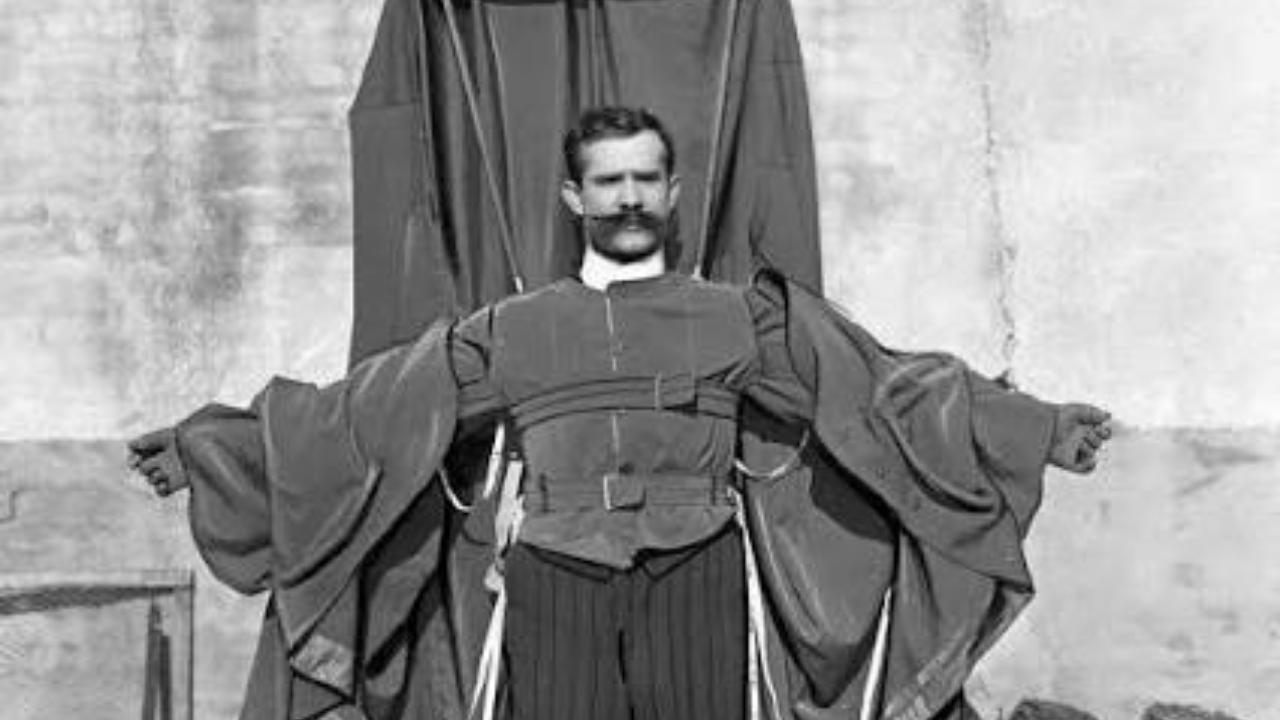
One of the most haunting examples is the 1912 attempt by French tailor and inventor Franz Reichelt, who believed he had created a wearable parachute suit capable of saving pilots.
Reichelt, originally a tailor by profession, was fascinated by the possibility of making aviation safer at a time when aircraft technology was still primitive and accidents were common.
He designed a fabric-based suit intended to function like a parachute, gradually refining it through small-scale tests on mannequins.
Encouraged by early impressions and convinced of its potential, Reichelt chose to demonstrate the invention himself.
In February 1912, he arrived at the Eiffel Tower and requested permission to test the suit from its lower platform.
Witnesses expected a controlled experiment, but what followed shocked onlookers as he leapt into open air wearing the prototype.
The suit failed to deploy as intended, offering no meaningful resistance to his fall. Reichelt died instantly upon impact.
The incident became an early symbol of the dangers of unchecked experimentation during the formative years of aviation engineering, where safety standards were still evolving and often absent.
Locally, the event reportedly left spectators in Paris deeply shaken, turning what was expected to be a public demonstration into a tragic spectacle.
Modern commentators often reference the episode as a cautionary tale about innovation without rigorous testing, especially in fields where human life is directly at risk.
Today, Franz Reichelt’s story is remembered not only for its tragic outcome but also for its enduring lesson: that technological ambition must always be balanced with careful validation.
It remains a stark reminder of how early aviation pioneers pushed boundaries, sometimes at the ultimate personal cost.
Historians note that the Eiffel Tower test also reflects the era’s limited understanding of aerodynamics, where many inventors relied on intuition rather than scientific validation.
The episode continues to be studied in engineering ethics discussions as an example of experimental risk without safeguards.
Now, you know.
National News