The Federal Government has restated its commitment to stop state governments from interfering with funds allocated to Nigeria’s 774 local government areas (LGAs) from the Federation Account, signalling a renewed push for local government financial autonomy.
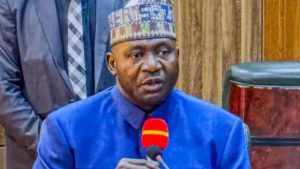
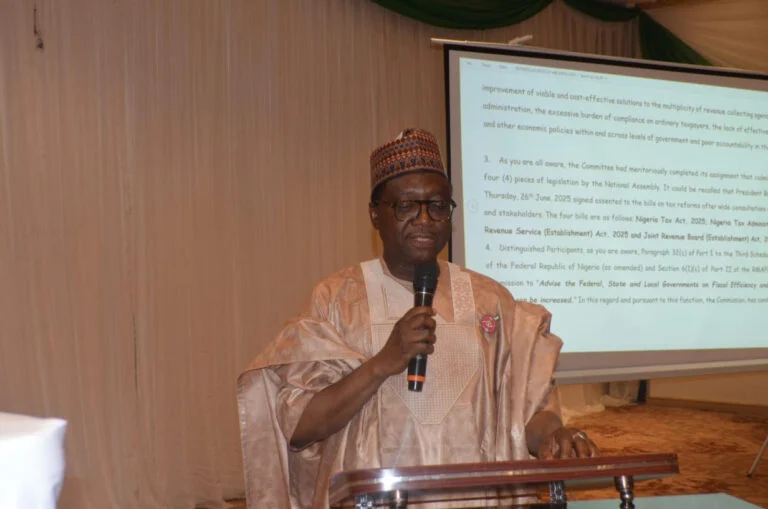
The assurance was given on Thursday in Abuja by the Chairman of the Revenue Mobilisation Allocation and Fiscal Commission (RMAFC), Mohammed Shehu, during the 2025 budget performance appraisal and 2026 budget defence organised by the House of Representatives Committee on Finance.
Shehu decried the persistent diversion and control of local government allocations by state governments, describing it as a major obstacle to grassroots development and effective governance. He said the commission was ready to take decisive action to ensure transparency and accountability in local government finances.
According to him, RMAFC plans to re-establish a Local Government Monitoring Committee to oversee the finances of councils nationwide.
“The Commission would like to establish a Local Government Committee again, as we used to do before. This time, we will monitor every single local government in Nigeria,” Shehu said.
He revealed that President Bola Tinubu had personally warned state governors against undermining local government autonomy, stressing that the Federal Government was prepared to issue an Executive Order if states fail to comply.
“Mr President has made it clear that if local government autonomy is not allowed, he will issue an Executive Order. The Commission fully supports the President on this,” he added.
Shehu attributed many of Nigeria’s development challenges to the collapse of functional local government administration, noting that councils were more effective even during the military era.
“The crisis Nigeria is facing today is largely due to non-functional local governments. Everyone knows this,” he said.
RMAFC Commends House Committee on Finance
The RMAFC Chairman also praised the House Committee on Finance, led by Abiodun Faleke, for strengthening the commission’s institutional standing and improving collaboration with key revenue-generating agencies.
He noted that agencies such as the Nigerian Customs Service and the Nigerian Upstream Petroleum Regulatory Commission (NUPRC) now engage proactively with RMAFC, helping to resolve long-standing revenue issues.
Shehu further disclosed that the commission had completed an audit of oil and gas assets across the Niger Delta, a move aimed at boosting national revenue and plugging leakages in the extractive sector.
New Revenue Allocation Formula Near Completion
On fiscal reforms, Shehu announced that work on a new revenue allocation formula for the federal, state and local governments was nearing completion, alongside a revised remuneration structure for political office holders.
“We are at the final stage of data analysis. Very soon, we will present the new revenue allocation formula to the National Assembly,” he said.
He added that the review of political office holders’ remuneration had been submitted to the President through the Secretary to the Government of the Federation and was awaiting transmission to the legislature.
After the budget defence session, Faleke commended RMAFC’s leadership for its role in enhancing revenue mobilisation and fiscal discipline.
Long-Standing Dispute Over Local Government Autonomy
Interference in local government finances has remained a contentious issue in Nigeria’s federal system for decades. Although the 1999 Constitution recognises local governments as a tier of government, state governors have historically controlled council funds through the State–Local Government Joint Account system.
This practice has enabled states to withhold, deduct or redirect local government funds, weakening grassroots governance, service delivery, primary healthcare, education and rural development.
Civil society groups, labour unions and policy experts have repeatedly linked the lack of local government financial independence to poor development outcomes nationwide.
Recent Supreme Court rulings and renewed federal pressure have brought the issue back into focus, with the Federal Government signalling a tougher stance — including possible executive action — to enforce financial autonomy for Nigeria’s local councils.