
By Rita Amaechi
National News – The Federal Government has intensified efforts to end open grazing across the country, identifying 470 gazetted and legally protected grazing reserves for the rehabilitation and resettlement of pastoralists.
Minister of Livestock Development, Idi Maiha, disclosed this during an interview on Arise News while discussing the implementation of the National Dairy Policy Framework and broader reforms aimed at transforming Nigeria’s livestock sector.
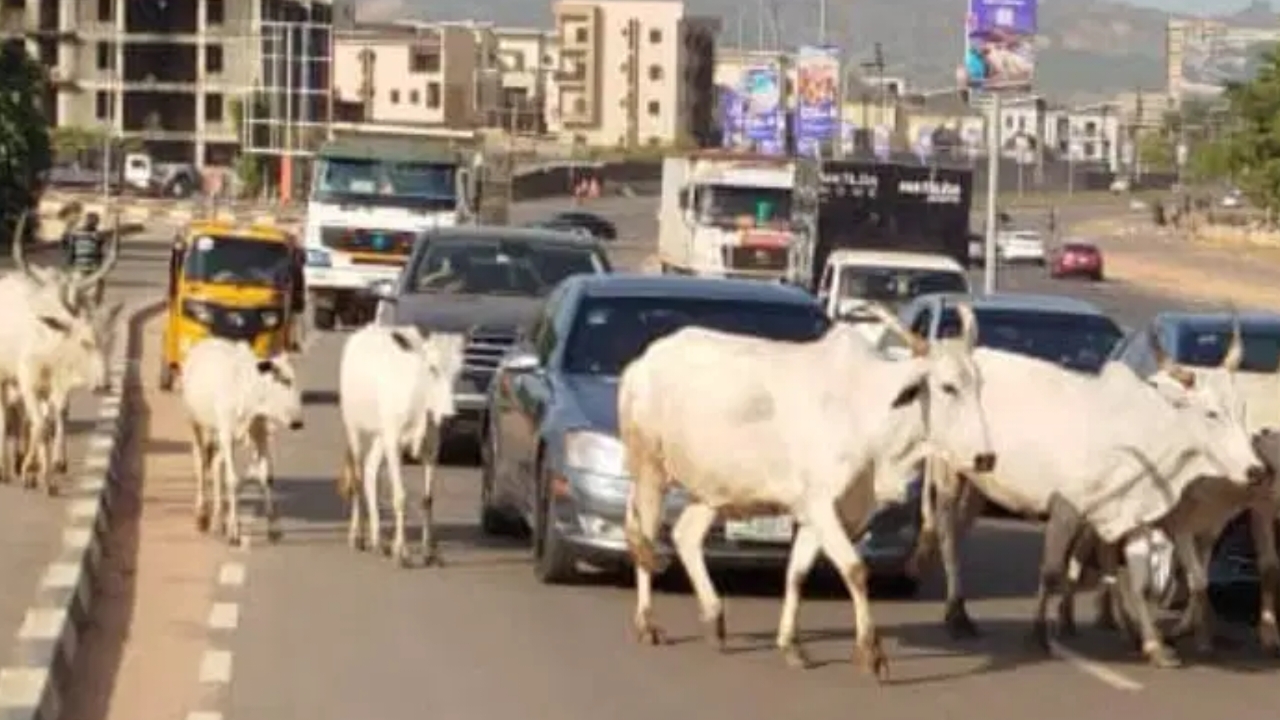
Maiha said the initiative is designed to curb the movement of cattle on roads and within major cities such as Abuja and Lagos, while improving livestock productivity and management.
According to him, relocating herders to designated reserves will enhance disease surveillance, animal health services, breed improvement programmes and overall livestock management.
He noted that open grazing has become unsustainable, stressing that long-distance movement of cattle contributes significantly to low productivity and hampers efforts to meet the nation’s dairy requirements.
“We are sensitising pastoralists to adopt a sedentary lifestyle. Once they settle in designated reserves, all the interventions required to improve productivity become easier to implement,” the minister said.
Maiha revealed that the government plans to introduce electronic tracking through jaw-tagging of cattle. He explained that the system would trigger an alert whenever an animal strays beyond its designated area, enabling authorities to quickly locate and return it.
On dairy production, the minister lamented Nigeria’s low milk yield, stating that the average cow currently produces between 1.2 and 2 litres of milk daily, far below the output recorded in countries such as Kenya, where yields can reach up to 30 litres per day.
He attributed the gap to poor livestock genetics, inadequate feeding systems and weak disease management practices.
Despite Nigeria’s estimated population of about 270 million ruminants, including cattle, sheep, goats and camels, Maiha said the country has failed to modernise its livestock genetics over the years.
He observed that while several African countries have deliberately improved their livestock breeds, Nigeria continues to rely largely on traditional cattle with relatively low productivity.
The minister further noted that although the country has research institutes and veterinary faculties capable of driving genetic improvement, such innovations have not been implemented on a large scale.
He said the government is pursuing a comprehensive strategy focused on improved feeding, disease control and genetic enhancement under the National Dairy Policy Framework to boost local milk production and reduce dependence on imports.
The initiative forms part of ongoing efforts to modernise the livestock sector, improve food security and address longstanding concerns associated with open grazing across the country.