By Ogadinma Wokoma, Port Harcourt
National News – As the world commemorates this year’s World Environment Day, the Quest for Growth and Development Foundation has called on Nigerians to embrace renewable energy and tree planting as practical ways to mitigate the effects of climate change.
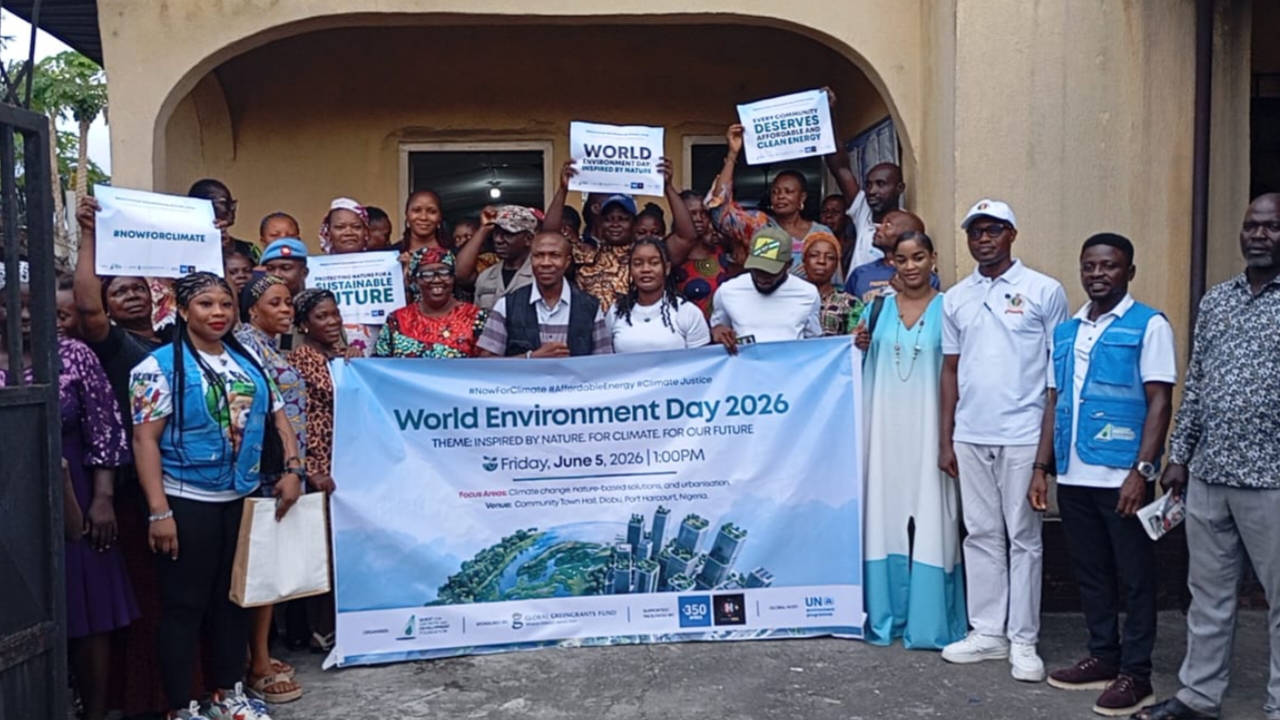
The Executive Director and Coordinator of the foundation, Mr. Smith Nwokocha, made the call while addressing stakeholders and women in the Mile 2 area of Diobu, Port Harcourt, during a World Environment Day event organised in partnership with Global United Nations, Global Green Graft and 350 Africa.
According to him, the impact of climate change is becoming increasingly evident, making it necessary for everyone to intensify efforts to protect and preserve the environment.
“Why we are doing this is to further emphasise the shift to renewable energy. The theme for today is Inspired by Nature, For Climate and Our Future. We are also advocating that governments hold polluters accountable so that we can all enjoy a healthier environment,” he said.
Nwokocha also called on the Rivers State Waste Management Agency (RIWAMA) to tackle the growing problem of environmental pollution in the Diobu axis of Port Harcourt by increasing waste collection services, enforcing environmental laws and partnering with non-governmental organisations to improve sanitation.
“Diobu is a critical community in Rivers State. The state of the environment here speaks for itself because it is one of the busiest urban areas of Port Harcourt. That is why we came to sensitise residents and emphasise that environmental cleanliness is essential for human existence,” he added.
Nwokocha reiterated that climate change affects everyone and called on residents to take responsibility for protecting their environment.
“Our message is simple: everyone should take environmental issues seriously because climate change is here with us. This is the time to act, educate others and carry out environmental campaigns. A safer future begins with individual action,” he said.
Speaking at the event, environmentalist Era Theophilous stressed that tree planting remains one of the most effective ways of combating climate change.
“Everyone should learn to plant a tree. Tree planting should become a regular habit because we are all experiencing the effects of climate change. It also helps reduce diseases and contributes to a longer lifespan,” she said.
She also cautioned against the use of firewood for cooking, noting that global reports have linked it to severe health challenges.
“It has been likened to smoking 20 packs of cigarettes during a cooking session. According to the World Health Organization, exposure to household air pollution causes about 3.2 million deaths annually. Traditional firewood cooking is one of the leading causes of preventable deaths among women in Nigeria. We must embrace renewable energy and plant more useful trees such as scent leaf, bitter leaf and pepper. When we do this, we improve our quality of life,” she added.
National Youth Service Corps members, Bala Abraham Achor and Ogarekpe Benita Onori, noted that the health of every living organism depends largely on the environment and that climate change continues to affect lives in many ways.
“One of the effects is on agriculture. Climate change reduces soil productivity and crop yield. Whatever comes from the soil eventually gets to our tables, so protecting the environment is also about protecting ourselves,” they said.
A Peace Corps environmental advocate, Joseph Joseph, discouraged the indiscriminate disposal of waste, including human waste, into drains and gutters.
“It is our collective responsibility to keep our environment clean,” he said.
Participants appealed to the Rivers State Government to create a cleaner environment by increasing waste evacuation services and implementing stricter laws to punish environmental offenders.
They also urged residents to end the practice of dumping refuse in drains, clear stagnant water, properly bag and sort waste, and dispose of it only at approved sites.
Some participants further called on the government to invest in waste recycling rather than maintaining dumpsites within residential communities, citing the refuse dump along the Airport Road axis as an example that requires attention.
Students from the University of Agriculture, Rivers State, discouraged the excessive use of chemical and genetically modified fertilisers, maintaining that organic manure, particularly animal dung, remains more beneficial for soil health and sustainable food production.
They urged residents of Diobu to adopt healthier environmental practices, stressing that reducing pollution would also reduce health challenges.
“Once we leave this programme, residents should avoid littering the environment and support efforts aimed at keeping the surroundings clean. Every tree planted and every waste item properly managed will help protect the environment for the future,” they said.
To encourage the adoption of renewable energy, the Quest for Growth and Development Foundation distributed solar bulbs and solar-powered fans to participants.
Speaking on behalf of the beneficiaries of the solar bulbs and fans, Mrs. Eno-Obong Udofia described the awareness campaign as enlightening, saying it had changed her perception of environmental issues.
She noted that many people have unknowingly contributed to environmental degradation and commended the organisers for their efforts in promoting a cleaner and healthier society.