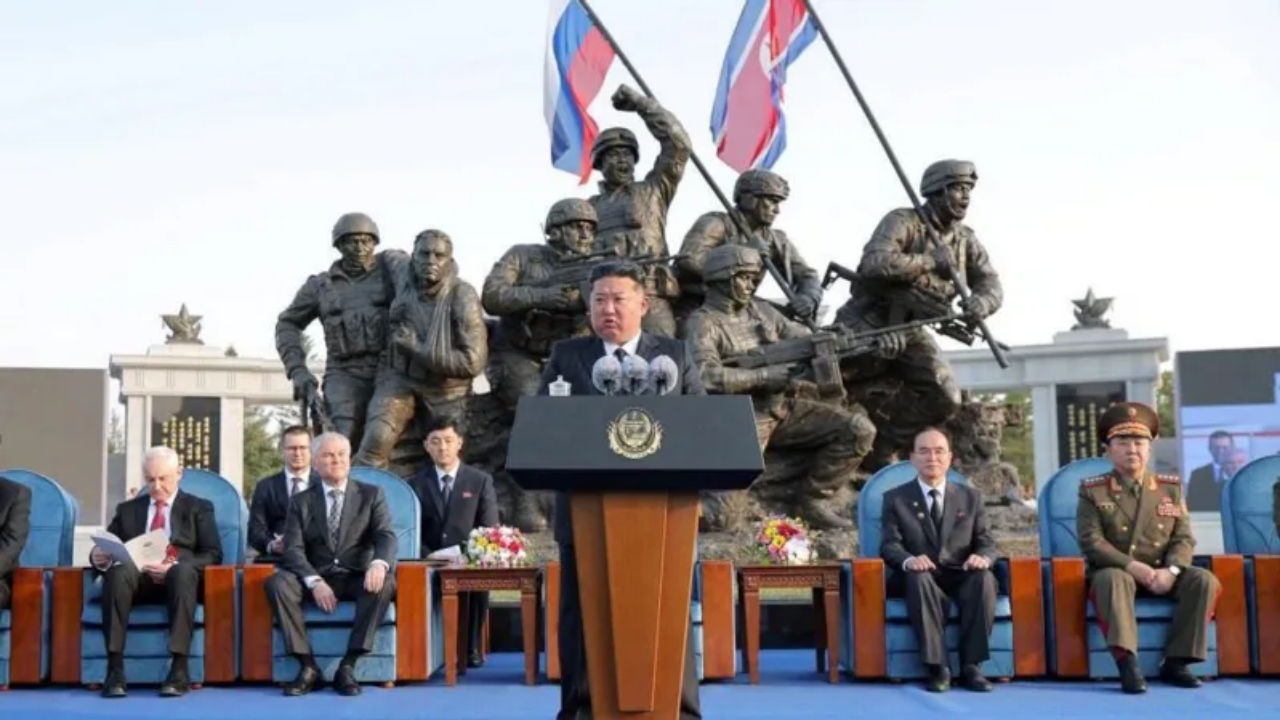
National News – North Korean leader Kim Jong Un has publicly praised soldiers who reportedly detonated grenades to avoid capture while fighting alongside Russian forces against Ukraine, according to state media reports from Pyongyang this week.
The speech, delivered on Monday at a memorial event for fallen troops, described the act as “heroic self-sacrifice” and framed it as loyalty to the state.
South Korean intelligence agencies estimate that thousands of North Korean troops have been deployed to support Russian operations in the Kursk region of western Russia near the Ukraine border, with several thousand casualties reported, though neither Pyongyang nor Moscow has confirmed figures.
Analysts in Seoul and beyond say the comments reinforce long-standing claims that North Korean forces are instructed to avoid capture at all costs, raising concerns over coercion and human rights violations.
Ukrainian and international observers view the practice as evidence of extreme battlefield control.
The development also underscores deepening military cooperation between North Korea and Russia under recent strategic agreements.
Experts warn that such rhetoric could intensify battlefield brutality and complicate prisoner-of-war protections under international law.
In South Korea, public reaction has ranged from alarm to condemnation, with families of defectors expressing fear over the treatment of conscripted soldiers.
The issue highlights growing geopolitical tensions in the region and the human cost of proxy warfare.
International security analysts say the remarks may serve both domestic propaganda and battlefield discipline reinforcement, while signaling tighter alignment between Pyongyang and Moscow under their recent mutual defence commitments.
The confirmation also raises questions for humanitarian organisations monitoring prisoner treatment, as well as concerns among neighbouring states about escalation and regional instability in Northeast Asia.
It further complicates diplomatic efforts to de-escalate the wider conflict and raises fresh concerns about escalation risks.