By Our Correspondent
National News – The Lagos Waste Management Authority (LAWMA) has emphasised that sustainable waste management in Lagos State can only be achieved through stronger collaboration among residents, government agencies, and private waste operators.
The agency urged all stakeholders to adopt responsible waste disposal habits and support the systems already established to manage the growing volume of refuse generated in the state.
Speaking at the annual conference of the Property and Environment Writers Association of Nigeria held at NECA House in Alausa, LAWMA Managing Director/Chief Executive Officer, Muyiwa Gbadegesin, said waste management remains a major urban governance challenge with direct implications for public health, flood prevention, and environmental sustainability.
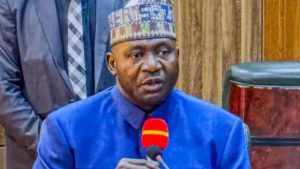
Represented by LAWMA’s Executive Director of Finance, Kunle Adebiyi, Gbadegesin explained that household waste collection across the state is handled by licensed Private Sector Participant operators under a structured area-based arrangement supervised by the agency.
According to him, more than 450 PSP operators currently serve communities across the metropolis.
He noted that while the system has been designed to improve waste collection efficiency, its success also depends heavily on residents cooperating with assigned operators and adhering to proper waste disposal practices.
The LAWMA boss warned that indiscriminate dumping of refuse and the continued use of illegal cart pushers undermine organised waste management efforts.
Such practices, he said, often result in blocked drainage systems and increase the risk of flooding in many parts of the city.
Gbadegesin further highlighted that as a coastal and densely populated urban centre, Lagos must embrace a more disciplined and forward-looking approach to environmental management.
Improperly disposed waste, he explained, frequently ends up in canals, lagoons, and other water bodies, worsening pollution and threatening marine ecosystems.
He added that the state government is gradually introducing sustainable waste management strategies, including waste sorting, recycling initiatives, and resource recovery programmes.
These efforts aim to transform waste from a disposal problem into an economic opportunity that can support environmental sustainability and job creation.
Gbadegesin also called on the media to provide more context in their reporting on waste management issues and to help educate the public on responsible environmental behaviour.