National News – A fresh political fault line has emerged in Nasarawa State as stakeholders of the All Progressives Congress (APC) in the southern senatorial zone openly rallied behind former primary healthcare chief Faisal Shuaib, urging him to pursue the 2027 governorship race despite Governor Abdullahi Sule backing Senator Ahmed Wadada as his preferred successor.
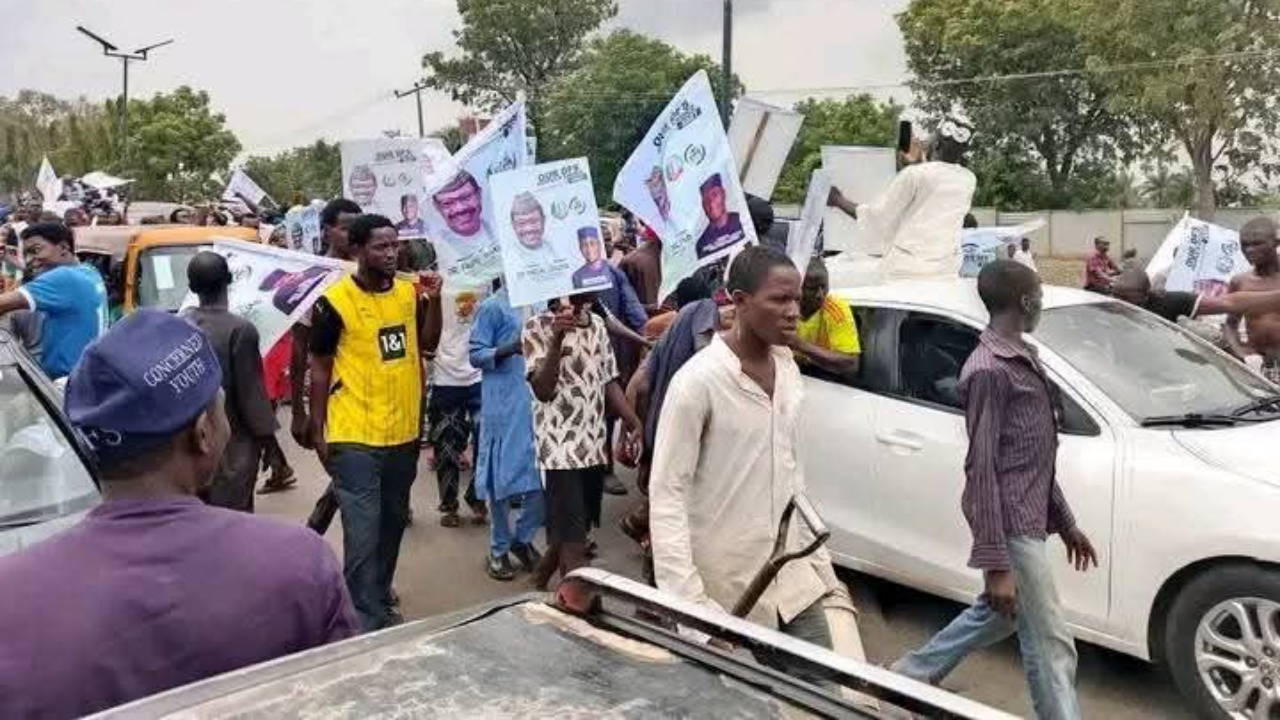
The call, made during a large rally in Lafia on Saturday, reflects a growing contest over who leads the party into the next election cycle.
With APC primaries scheduled for May 21, 2026, Shuaib now faces a defining choice: heed grassroots pressure or step aside for party unity.
Supporters argue that Shuaib’s track record at the National Primary Health Care Development Agency and his perceived accessibility make him a stronger grassroots candidate.
Youth leader Elayo Confidence framed the moment as a test of internal democracy, insisting that endorsement should not translate into imposition.
On the ground, reactions reveal a deeper sentiment.
Many residents, particularly younger voters, see the direct primary system as a rare opportunity to influence outcomes, while older supporters like community leader Amina Sani emphasise trust and long-term leadership over political alliances.
Their turnout—despite heavy rain—signals a motivated base willing to challenge established power structures.
Analysts say the development underscores a familiar pattern in Nigerian politics: the tension between party hierarchy and grassroots mobilisation.
If Shuaib joins the race, the APC could face a competitive and potentially divisive primary involving other heavyweights, including former police chief Mohammed Adamu.
The implications stretch beyond Nasarawa. A fractured primary could weaken the APC’s cohesion ahead of 2027, while a transparent contest may strengthen its democratic credentials.
For now, Shuaib’s measured response—acknowledging support without declaring intent—keeps the political landscape fluid.
Ultimately, the unfolding drama raises a broader question: will party loyalty outweigh popular demand, or will internal democracy redefine the path to power in Nasarawa?