By Jesse Ese
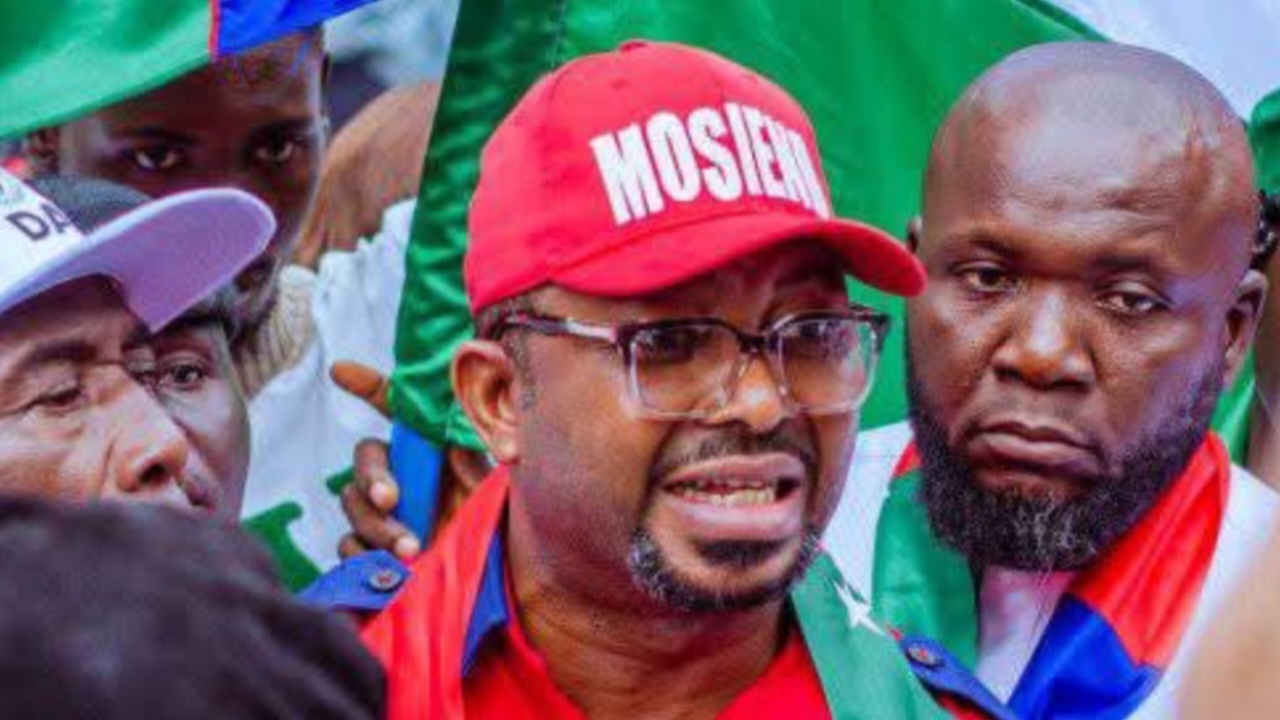
National News – The Movement for the Survival of the Izon Ethnic Nationality in the Niger Delta (MOSIEND) has called on President Bola Ahmed Tinubu to step down from his position as substantive Minister of Petroleum, insisting that effective governance requires institutional accountability, specialization, and transparent oversight.
The call was made by the President of MOSIEND, Amb. Kennedy West, during his speech at the 58th Boro Day Celebration held in Port Harcourt, the capital of Rivers State, on May 16, 2026.
Speaking at the event, West said the continued concentration of the offices of President and Petroleum Minister in one individual raises concerns about transparency, accountability, and effective supervision in Nigeria’s oil sector.
According to him, if direct presidential supervision is considered necessary for the petroleum sector, then by the same logic such oversight should also extend to other strategic sectors including defence and solid minerals.
“We respectfully call on Bola Ahmed Tinubu to critically review the practice of the President serving as substantive Minister of Petroleum,” he stated.
The MOSIEND president also called on the Federal Government to address longstanding issues of injustice, exclusion, and inequity in the Niger Delta, saying many of the concerns raised decades ago by Isaac Jasper Adaka Boro remain unresolved.
He described Boro as a visionary leader whose struggle transcended ethnic identity and represented the collective aspirations of minority nationalities across the Niger Delta.
According to him, Boro’s agitation was never solely for the Ijaw people but for the emancipation, dignity, justice, and equitable treatment of all oppressed peoples within the oil-rich region.
He warned against reducing the annual Boro Day celebration to “an Ijaw youth event alone,” stressing that such a narrative diminishes the wider significance of Boro’s sacrifice and the historic burden he carried for the entire Niger Delta.
West noted that 58 years after Boro’s historic declaration, issues such as environmental degradation, weak fiscal federalism, political exclusion, structural imbalance in resource ownership, and policies perceived as unfavourable to oil-producing communities continue to persist.
He also criticized the continued implementation of laws such as the Land Use Act, arguing that they have sustained what he described as the painful contradiction of the Niger Delta bearing the burden of oil exploration while receiving inadequate proportional development.
The MOSIEND president further expressed concern over what he described as the slow pace of marine and blue economy development in the Niger Delta despite the region’s enormous maritime potential.
West also urged the Federal Government to revisit policies that limit meaningful host community participation and to sincerely address demands for restructuring and true fiscal federalism, which he described as essential for national stability, justice, and fairness.
Addressing the Ijaw nation, he said disunity remains one of the greatest obstacles to collective progress, warning that internal divisions weaken advocacy efforts and create opportunities for manipulation.
He therefore called on Ijaw sons and daughters to embrace peace, unity, and purposeful engagement, while urging all Niger Deltans to rise above ethnic boundaries and work together for the advancement of their shared destiny.
The MOSIEND president further stated that Nigeria must confront unresolved questions surrounding justice, equity, constitutional balance, and national inclusion, noting that the strength of any federation lies in the fair accommodation of all groups.
He described Boro as “a man far ahead of his time,” insisting that his vision remains relevant because the issues he identified decades ago are still unresolved in contemporary Nigeria.
Boro Day is commemorated annually in honour of Isaac Jasper Adaka Boro for his role in championing the rights of the Niger Delta people and advocating resource justice and regional equity in Nigeria.