By Our Correspondent
National News – Dangote Petroleum Refinery exported about 1.66 billion litres of refined petroleum products in April 2026, according to the Nigerian Midstream and Downstream Petroleum Regulatory Authority (NMDPRA).
The surge occurred amid rising US-Iran geopolitical tensions that disrupted global energy supply chains and increased demand for alternative exporters.
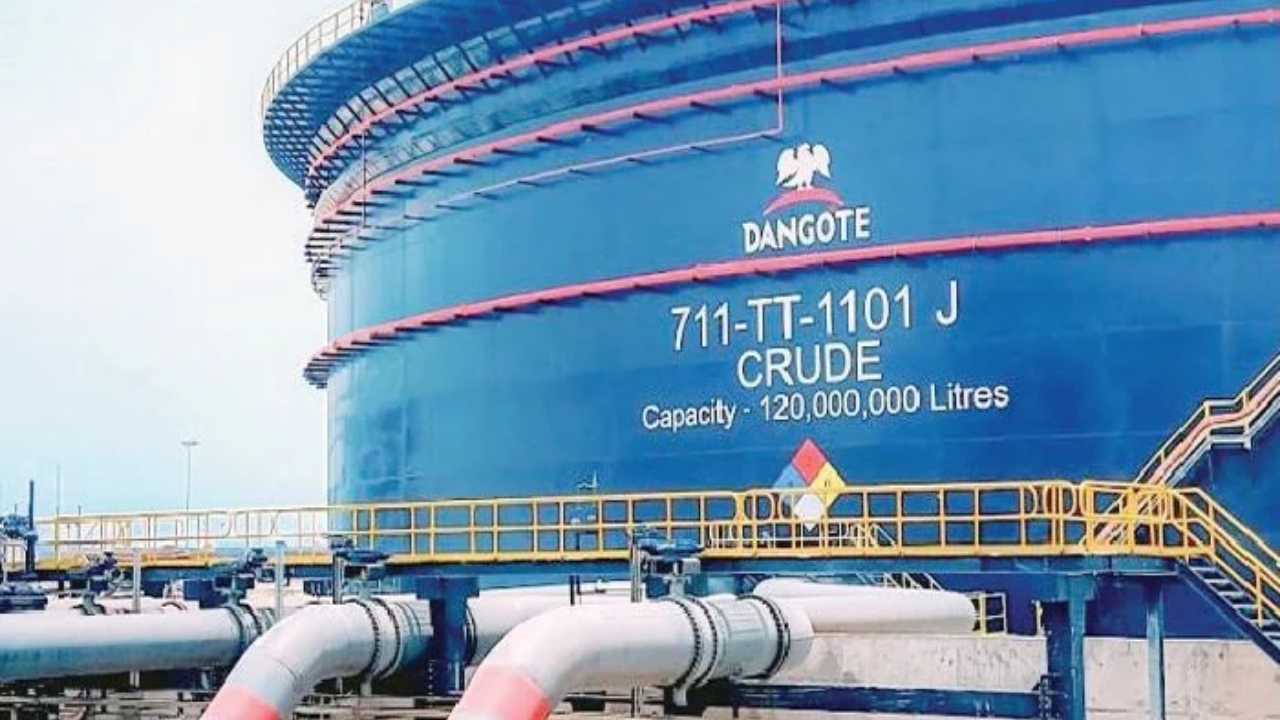
The products include petrol, diesel, and aviation fuel shipped from the Lekki-based refinery in Lagos, Nigeria.
This marks the first month the facility achieved such large-scale export performance. The 650,000-barrel-per-day refinery continues to expand Nigeria’s role in global fuel trade.
Data from NMDPRA revealed that the refinery exported 513 million litres of petrol, 534 million litres of diesel, and 615 million litres of aviation fuel within the month. This brings the combined daily average export to about 55.4 million litres.
The plant operated at an average capacity of 99.12 percent, achieving near full utilization on most production days.
It also received 18.37 million barrels of crude oil during the period under review.
Daily production included 53.6 million litres of petrol, with 40.7 million litres supplied locally while 17.1 million litres were exported.
Diesel and aviation fuel also recorded strong export ratios compared to domestic consumption levels.
Analysts noted that instability around the Strait of Hormuz increased international demand for secure supply sources.
Industry observers said the Middle East tensions pushed Europe, Africa, and parts of Asia to diversify fuel imports, boosting Nigeria’s refining relevance.
Aviation fuel exports rose sharply due to tightening global jet fuel supply. Despite strong exports, domestic petrol consumption averaged 51.1 million litres daily, reflecting sustained local demand pressures.
Diesel consumption stood at 17.3 million litres daily, while aviation fuel use averaged 2.5 million litres.
The development signals Nigeria’s transition from fuel importer to emerging net exporter.
However, import licenses remain active as the downstream sector adjusts to new market realities and pricing volatility.
The refinery’s performance strengthens foreign exchange earnings and positions Nigeria within shifting global oil trade routes affected by geopolitical uncertainty.
Overall, the export growth highlights strategic energy security gains and evolving global supply realignments.