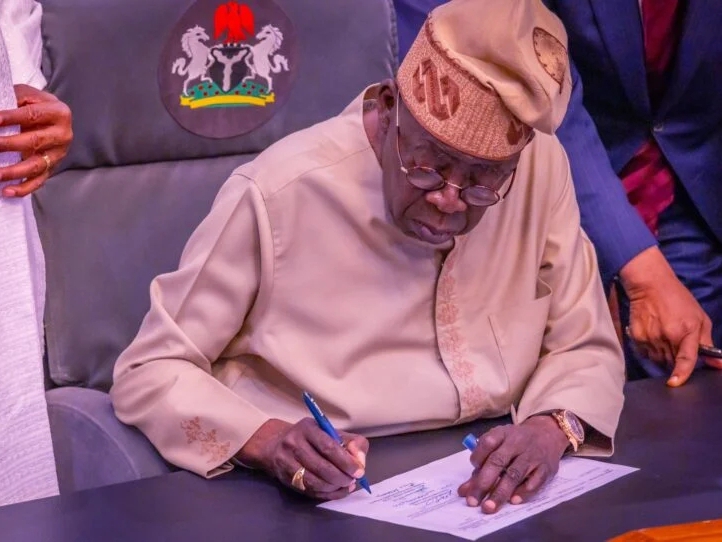
President Bola Tinubu has defended his decision to sign the Electoral Act 2026 (Amendment) into law, dismissing concerns that the changes could weaken electoral transparency ahead of the 2027 general elections.
The President assented to the bill at the Presidential Villa, Abuja, less than 24 hours after its passage by the National Assembly. Speaking at the ceremony, Tinubu questioned Nigeria’s broadband infrastructure and technical capacity to support full real-time electronic transmission of election results nationwide. He argued that credible elections rely more on proper human management and oversight than on technology alone.
However, opposition parties strongly criticised the move. The Peoples Democratic Party accused the ruling All Progressives Congress of rushing the amendment out of fear of losing in 2027, describing the development as “a dark day for democracy.”
The Labour Party caucus in the House of Representatives also condemned the swift assent, while the Coalition of United Political Parties (CUPP) argued that retaining a manual transmission clause alongside electronic uploads undermines Nigerians’ demand for mandatory electronic transmission of results.
Civil society groups are divided. YIAGA Africa called the amendment a missed opportunity for deeper electoral reforms, warning it could make the process vulnerable to manipulation. In contrast, the Civil Society Legislative Advocacy Centre urged stakeholders to work within the new law while continuing to advocate improvements.
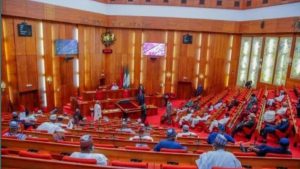
Senate President Godswill Akpabio said the amended Act mandates electronic transmission of polling unit results to INEC’s Result Viewing Portal (iREV), while allowing manual collation in areas with poor network coverage. He insisted the reform will ensure transparency and make it difficult to tamper with results after they leave polling units.
With the 2027 elections approaching, the Electoral Act 2026 Amendment has intensified political tensions over election integrity and the future of Nigeria’s democracy.