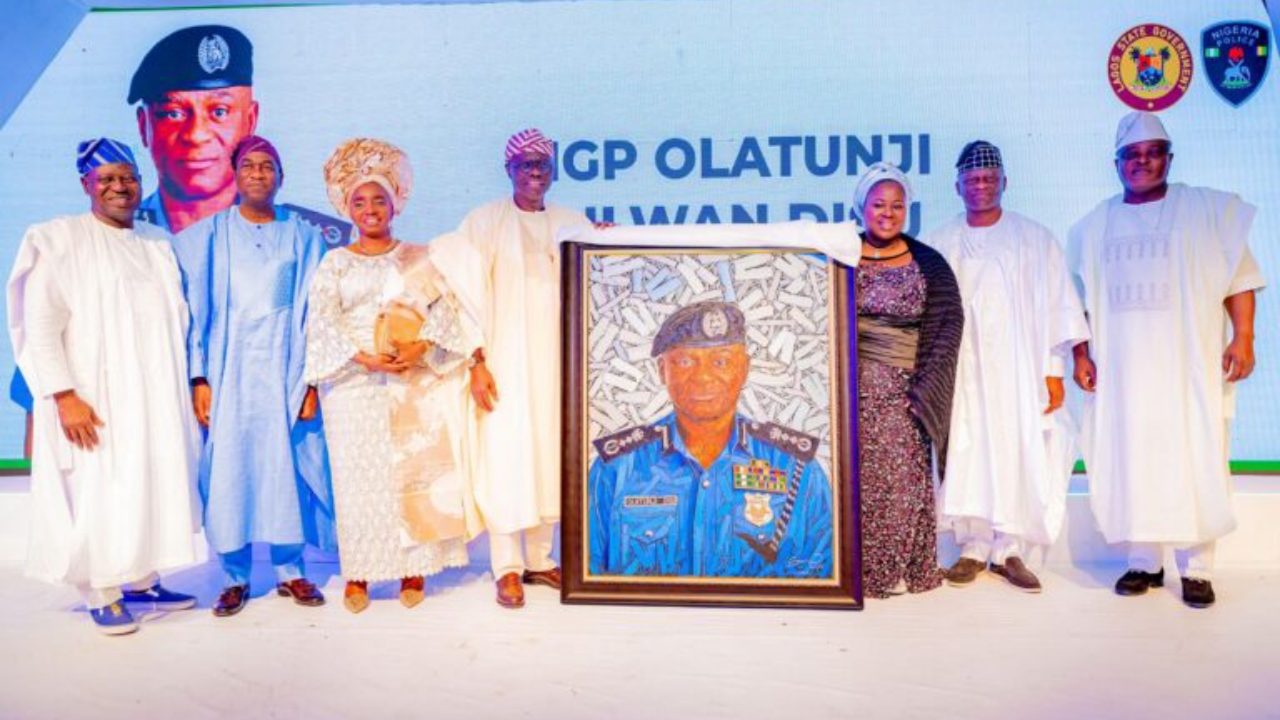
National News – Lagos State Governor Babajide Sanwo-Olu hosted a high-profile state banquet on Saturday night at the State House in Marina to honour the Inspector-General of Police, Olatunji Rilwan Disu.
The event brought together senior officials, security chiefs and community leaders, underscoring the significance of Disu’s rise and his deep ties to Lagos.
Sanwo-Olu used the occasion to highlight how Lagos shaped Disu’s early life, education and policing philosophy.
Born on Lagos Island and educated at Lagos State University, Disu’s journey from local streets to national prominence was framed as a reflection of discipline, resilience and service.
His previous leadership of the Rapid Response Squad between 2015 and 2021 was cited as a period that strengthened public confidence in policing within the state.
The banquet also served a political and symbolic purpose.
By celebrating Disu as “one of our own,” the Lagos government reinforced a narrative of local pride and ownership over national leadership roles.
Analysts say such gestures often aim to strengthen cooperation between state authorities and federal security leadership, particularly at a time when urban crime and public safety remain key concerns in Nigeria’s commercial capital.
Reactions from Lagos residents have been mixed but largely positive.
While some praised the recognition of merit and service, others questioned whether ceremonial events translate into tangible improvements in policing.
Civil society voices argue that beyond accolades, citizens expect reforms that address accountability, response times and trust in law enforcement.
The implications of the event extend beyond symbolism.
Disu’s leadership comes at a critical time for Nigeria’s security architecture, and his Lagos background may shape his approach to community policing nationwide.
Observers note that his familiarity with the complexities of Lagos—Nigeria’s busiest city—could influence reforms aimed at modernising the police force.
Ultimately, the banquet highlighted not just a personal achievement, but the broader expectation that leadership rooted in local experience can deliver national impact.