By Friday Temitope Eugenia | National News
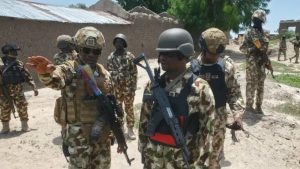
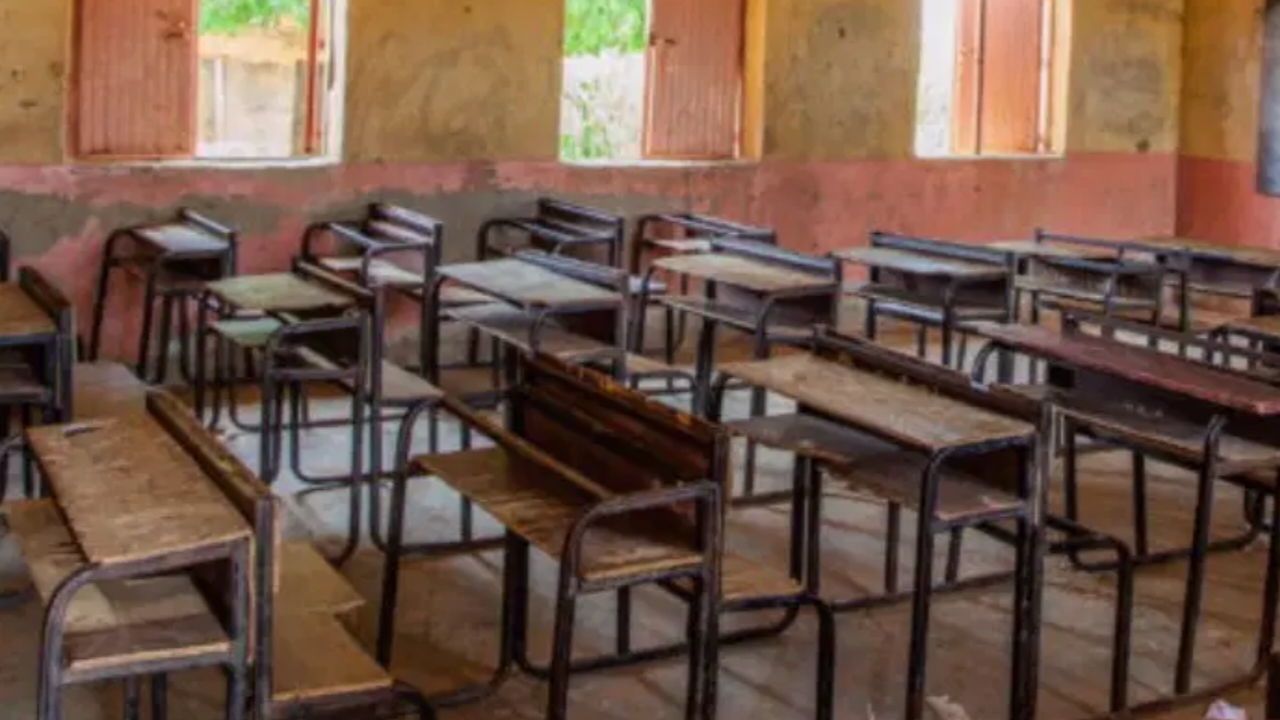
At least 65 primary and secondary schools across 40 local government areas in northern Nigeria have been shut or rendered non-functional following attacks, abductions, displacement and persistent fears over the safety of pupils, students and teachers.
The affected schools are located mainly in Sokoto, Benue, Plateau, Borno, Kaduna and Kebbi states, while insecurity has also disrupted academic activities in parts of Katsina, Adamawa and other northern states.
The closures have heightened concerns over Nigeria’s already severe out-of-school crisis, with education experts warning that prolonged disruption could expose children to child labour, early marriage, radicalisation and other social risks.
In some communities, schools have remained closed for extended periods, while authorities in other areas have merged affected schools with institutions in safer communities or relocated students to alternative learning centres.
The latest development comes more than a decade after the Federal Government, in partnership with the United Nations and private-sector organisations, launched the Safe Schools Initiative following the 2014 abduction of 276 schoolgirls from Government Girls Secondary School, Chibok, Borno State.
More than $30 million has reportedly been mobilised for the initiative since its establishment.
The Federal Government also introduced the National Plan on Financing Safe Schools for 2023–2026, with a projected investment of N144.86 billion.
Despite these interventions, attacks continue to force children out of classrooms in several communities.
Sokoto: Schools shut in 20 LGAs
Sokoto State has recorded one of the most extensive disruptions, with the state government confirming the closure of schools in 20 of the state’s 23 local government areas because of security concerns.
The Commissioner for Basic and Secondary Education, Prof. Ahmad Ladan Ala, said the closure followed a directive from the Federal Government.
He said all schools, including primary schools, had been shut indefinitely, except those located in Sokoto North, Sokoto South and Wamakko local government areas.
The President of the All Nigerian Conference of Principals of Secondary Schools, Muhammad Ikililu, said insecurity had disrupted boarding education in the state for several years.
According to him, boarding schools were moved to Sokoto metropolis during the administration of former Governor Aminu Tambuwal because of insecurity in the North-West.
Among schools identified as affected are Government Secondary School, Tureta; Government Secondary School, Tangaza; Government Girls Secondary School, Bodinga; Government Girls Secondary School, Tambuwal; Government Technical College, Goronyo; Government Secondary School, Gudu; Government Secondary School, Gwadabawa; Government Girls Secondary School, Illela; Government Secondary School, Yabo; Government Girls Secondary School, Rabah; Government Technical College, Binji; Government Secondary School, Kebbe; Government Secondary School, Dange; and Government Secondary School, Shagari.
The development has drawn concern from stakeholders, with the governorship candidate of the African Democratic Congress in Sokoto State, Manir Muhammad Dan’iya, describing the closures as a major setback to education and human capital development.
Benue records 35 affected schools
In Benue State, insecurity has forced the closure of numerous primary schools across Kwande, Gwer West, Guma and Logo local government areas.
Repeated attacks and the displacement of communities have made several areas unsafe for teaching and learning.
At least 35 schools have been identified as affected, including LGEA NKST Science Primary School, Anyiin; LGEA RCM Primary School, Anyiin; LGEA Primary School, Anyiin; LGEA RCM Primary School, Igbur; LGEA Primary School, Chembe; LGEA Primary School, Iorza; LGEA NKST Primary School, Abeda-Shitile; LGEA RCM Primary School, Abeda-Shitile; LGEA RCM Primary School, Mchia; Shisho Unity Nursery and Primary School, Mchia; and LGEA Primary School, Jootar.
Others include LGEA Primary School, Abiem; LGEA Primary School, Tyôgbihi; NKST Primary School, Azege; LGEA Primary School, Uzer; RCM Primary School, Ikyule; NKST Primary School, Mbakighir; NKST Primary School, Kurungu; NKST Primary School, Audu; NKST Primary School, Annakaa; LGEA Primary School, Abur-Kpera; NKST Primary School, Anungwa; NKST Primary School, Gwatse; LGEA Primary School, Aman; LGEA Primary School, Gbeleve; LGEA Primary School, Ugwe; RCM Primary School, Poovule; RCM Primary School, Ibôr; LGEA Primary School, Kwagh; LGEA Primary School, Vir; LGEA RCM Primary School, Akombo; LGEA Primary School, Ubver; LGEA Primary School, Ageraga; LGEA RCM Primary School, Shausu; and LGEA Primary School, Mou.
Residents said prolonged school closures had deprived many children of education, with some pupils moving to safer communities while others had dropped out completely after their families were displaced.
Borno: Abductions force schools to close
In Borno State, renewed attacks have disrupted education in Askira-Uba Local Government Area.
Two schools — Mussa Junior and Primary School and Lassa Secondary School — were recently shut following attacks and abductions.
Mussa Junior and Primary School was closed after more than 40 students and pupils were reportedly abducted, while Lassa Secondary School was also shut following the abduction of more than 30 students.
The situation reflects the longstanding threat posed by Boko Haram and other insurgent groups to education in Borno, where schools, teachers and students have repeatedly been targeted.
Authorities had previously ordered temporary closures in Mussa, Dille, Lassa and Chul communities, while students writing examinations were moved to Government Secondary School, Uba.
Plateau schools affected by attacks
In Plateau State, insecurity has disrupted schooling in Riyom and Barkin Ladi local government areas.
Affected institutions include Government Secondary School, Shonong; GSS Lwa; LEA Primary School, Hei-Gwe in Kwi District; GSS Fang; LEA Primary School Fang; GSS Sho; GSS Barkin Ladi; GSS Ropp; Dogo Primary School; and LEA Primary School Dogo-Gashish.
Berom Youth Moulders spokesman, Rwang Tenglong, said schools in affected communities were sometimes shut for more than a week following attacks.
He said insecurity had continued to undermine education in rural communities because schools could not function effectively when surrounding communities were unsafe.
Kaduna, Kebbi and Katsina affected
In Kaduna State, academic activities have largely continued across most of the 23 local government areas, although some communities remain vulnerable.
Two institutions in Chikun Local Government Area — Bethel High School and Greenfield University — have been associated with major school abduction incidents.
Communities in Birnin Gwari, Giwa, Chikun, Kajuru, Kauru and parts of Igabi also continue to experience occasional disruptions caused by attacks, displacement and fear.
In Kebbi State, Government Girls Secondary School, Maga, in Danko/Wasagu Local Government Area remains shut following a deadly attack and abduction of students by gunmen.
Katsina State has also experienced prolonged school closures in frontline local government areas including Batsari, Jibia, Kankara, Faskari, Sabuwa, Danmusa, Safana, Kurfi and Dandume.
Authorities previously closed schools in vulnerable communities as a precautionary measure and moved teachers to safer locations. Some affected schools were subsequently merged with institutions in safer communities.
Experts warn of wider consequences
Security experts have warned that the continued targeting of schools could have consequences beyond the immediate disruption of education.
Security analyst Sam Otoboeze said kidnapping and banditry were increasingly being used as instruments of intimidation, with criminal groups targeting schools and vulnerable communities capable of generating widespread fear.
Security consultant Alfred Ononugbo attributed the trend partly to weak intelligence coordination and inadequate protection of vulnerable communities.
Another analyst, Masara Kim, described the situation as a major humanitarian and educational crisis, noting that some schools in Plateau had been destroyed or abandoned following attacks and displacement.
He warned that the number of out-of-school children in some affected local government areas could rise significantly as more communities are displaced.
‘We will lose a generation’
Education stakeholders have also raised concerns over the long-term effects of prolonged school closures.
An educationist at the Delta State Institute of Continuing Education, Eloho Arhogho-Okeren, said school closures could permanently alter the lives of affected children.
She called for alternative learning platforms, including radio lessons and community learning centres, as well as school feeding, transport assistance, financial support and accelerated learning programmes.
She warned that children who leave school temporarily may never return, with some becoming involved in hawking, farming and other activities.
Out-of-school crisis may worsen
Professor of Security Governance at the Federal University, Lafia, Dr Al Chukwuma Okoli, warned that prolonged school closures could worsen Nigeria’s out-of-school crisis.
Okoli said children who miss foundational learning may struggle to develop basic literacy and numeracy skills, while prolonged disruption could reduce their future employment opportunities.
He also warned that girls face additional risks, including child labour and early marriage.
According to him, large numbers of unschooled young people could also become vulnerable to recruitment by terrorist groups, bandits and criminal networks.
He called for stronger early-warning systems, rapid response mechanisms, community-based protection, radio and television lessons, digital learning, conditional cash transfers and school feeding programmes for displaced families.
Psychological impact on children
The National President of the Association of Child and Learning Psychologists, Dr Sixtus Unigwe, said children require a safe and stable environment to learn effectively.
He warned that even after schools reopen, the psychological impact of attacks and prolonged closures could remain with affected pupils.
According to him, some children may struggle to concentrate, develop truancy or become reluctant to return to school because of fear.
He further warned that children deprived of stable education for prolonged periods could become vulnerable to criminal activities.
FG strengthens Safe Schools Initiative
The Federal Government says it is taking steps to strengthen the Safe Schools Initiative.
The Minister of Education, Dr Tunji Alausa, told the Senate Ad hoc Committee investigating the programme that the Ministry of Education had established a dedicated Safe Schools Department.
He said the ministry was working with the Office of the National Security Adviser, the Department of State Services, the Armed Forces, the Nigeria Police Force and other security agencies to develop a comprehensive national framework for school safety.
Alausa said the new strategy would go beyond physical security to include perimeter fencing, solar-powered lighting, water and sanitation facilities, security personnel, technology and monitoring systems.
He stressed that the Safe Schools Initiative had now been formally domiciled in the Federal Ministry of Education to improve coordination, implementation and monitoring.
N144.86bn Safe Schools plan under scrutiny
The continued closure of schools has also renewed scrutiny of funding for the Safe Schools Initiative.
The Federal Government’s National Plan on Financing Safe Schools for 2023–2026 projected an investment of N144.86 billion, comprising N32.58 billion in 2023, N36.98 billion in 2024, N37.15 billion in 2025 and N38.03 billion in 2026.
With attacks continuing to disrupt education, questions are being raised over the implementation and effectiveness of the programme.
The Senate has consequently opened an investigation into the financial and operational performance of the Safe Schools Initiative.
As insecurity continues to push children away from classrooms, education stakeholders are calling for urgent action to secure vulnerable communities and ensure that affected pupils can return to school.
They warned that every school forced to close represents not only a disruption to education but another setback to Nigeria’s efforts to develop the skilled and educated population required for economic growth and national security.