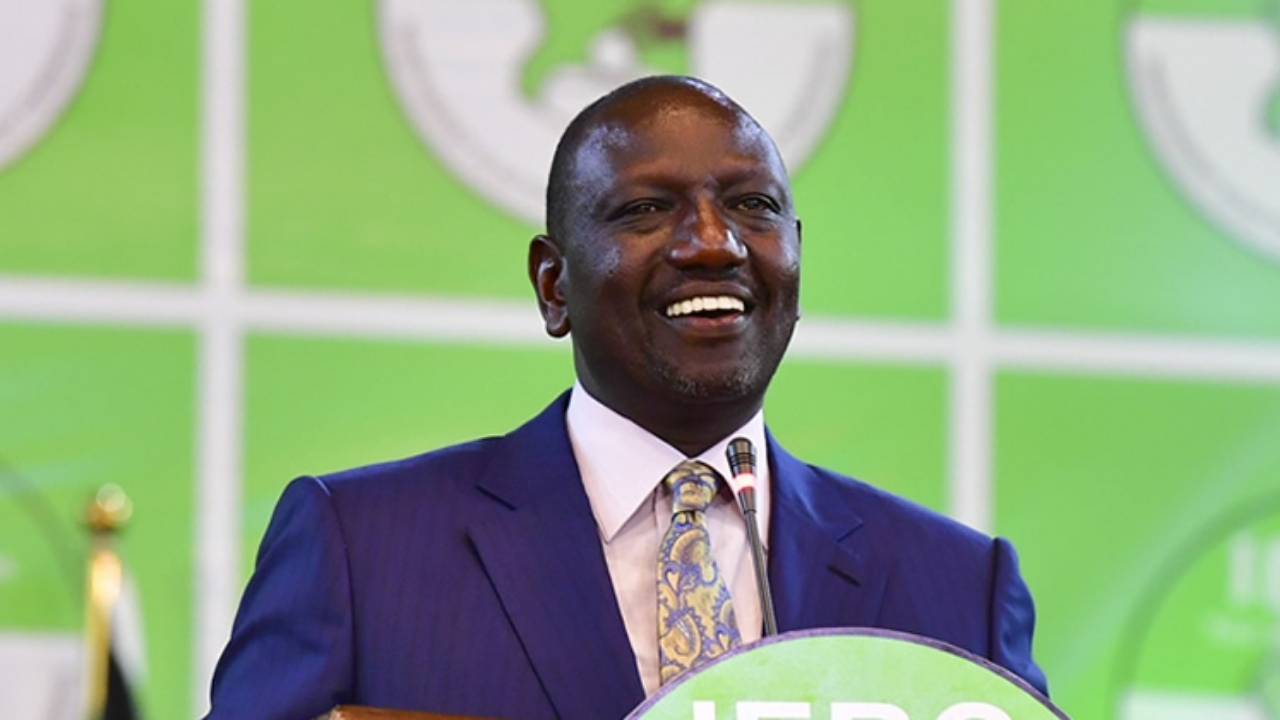
National News – Kenyan President William Ruto on Tuesday in Nairobi sought to clarify his comments on English proficiency and Nigeria, stating that his remarks were misinterpreted after a private conversation was leaked during the Mining Investment Conference and Expo.
The controversy emerged following a circulating video that triggered widespread reactions across Africa, particularly in Nigeria, over claims about comparative English standards and education quality.
He explained that the discussion, held on Tuesday in Nairobi, Kenya, involved comparisons of education standards across African countries, but insisted he did not intend to insult Nigerians, whom he referred to as “in-laws” in reference to diplomatic ties with President Bola Tinubu.
He said the viral video circulating online distorted the original context, adding that his comments were meant to highlight general English usage across Africa rather than single out Nigeria.
He maintained that Africa’s education systems produce strong English speakers and that his statement was taken out of proportion.
The remarks sparked mixed reactions in Nigeria, especially on social media platforms where some users viewed the comparison as disrespectful while others argued it was harmless political banter between friendly nations.
Analysts noted that such exchanges could strain diplomatic tone if not carefully managed.
Observers say the controversy highlights the sensitivity surrounding language, identity, and education in Africa, where English remains a colonial legacy and a key tool for international communication.
They argue that leaders must be cautious in public comparisons to avoid unnecessary tension.
Despite the backlash, diplomatic relations between Nigeria and Kenya remain stable, with officials emphasizing continued cooperation in trade and regional development.
The incident, however, has added to ongoing debates about political communication styles among African leaders.
While the clarification may ease immediate tension, communication experts suggest the episode underscores the growing influence of social media in amplifying political statements beyond their intended audience.
They warn that future diplomatic messaging between African leaders may require tighter media control and clearer context to prevent misinterpretation and reputational friction.
Ultimately, the incident reflects the delicate balance African leaders must maintain in public discourse, especially when national pride, education systems, and international perception intersect in a rapidly connected information environment.