By Our Correspondent
National News – The House of Representatives has passed for second reading a bill proposing a 50-year national economic development plan for Nigeria spanning 2026 to 2076.
The legislation, sponsored by Amobi Ogah, seeks to establish a long-term framework designed to guide economic policies across multiple administrations and reduce the frequent policy shifts that have slowed national progress.
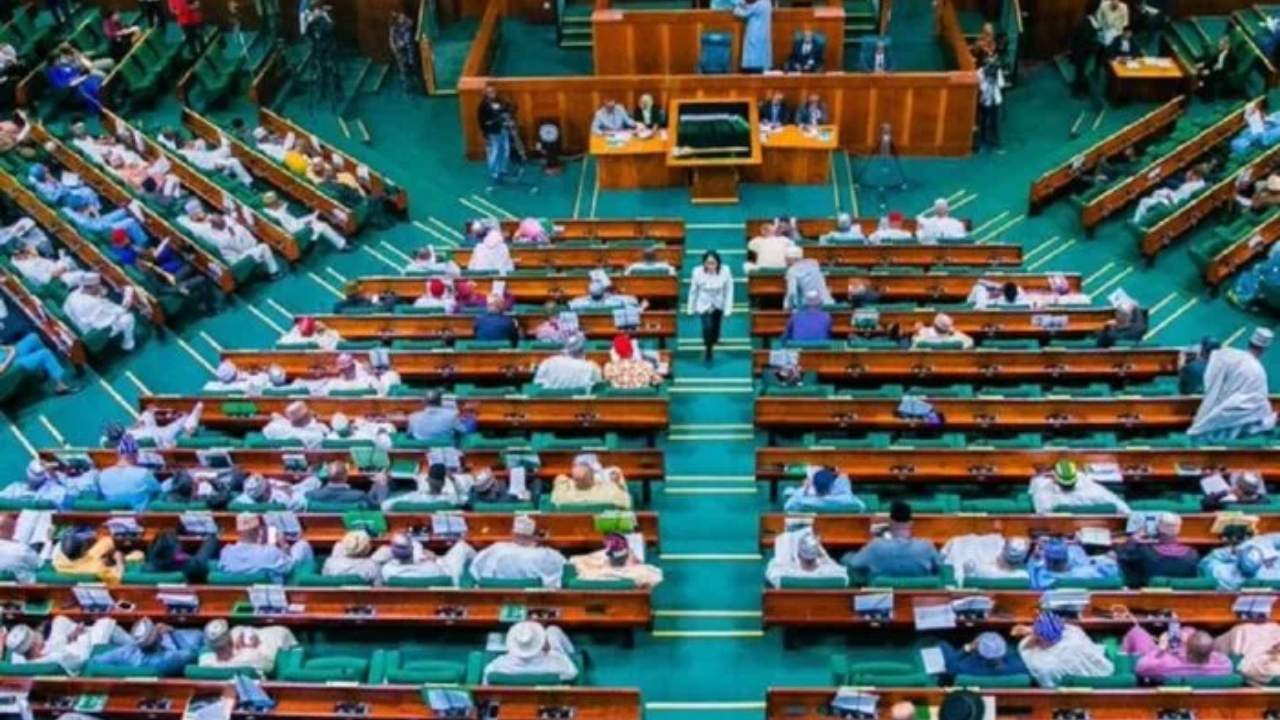
During plenary presided over by Deputy Speaker Benjamin Kalu, lawmakers described the proposal as a step toward strengthening national planning systems.
Ogah, while presenting the bill, stressed that Nigeria has historically struggled with implementation of development plans despite having ambitious frameworks such as Vision 2010 and Vision 2020.
He argued that the absence of enforceable continuity has resulted in abandoned projects, weak coordination, and inefficiencies in public spending.
The bill proposes a legally binding structure that would guide fiscal and economic decision-making over a 50-year period.
It also introduces mechanisms for monitoring, evaluation, and compliance across government institutions.
Supporters of the bill believe it could reduce uncertainty in economic policy, improve investor confidence, and provide a more stable environment for long-term investments in sectors such as infrastructure, manufacturing, and energy.
House Leader Julius Ihonvbere described the initiative as a discipline-driven framework that could help insulate national planning from political transitions.
Lawmakers also drew comparisons with countries like Rwanda, Botswana, and South Africa, which have adopted long-term development strategies to support consistent growth.
African Union’s Agenda 2063 was also referenced as a continental blueprint aligning with long-term economic thinking.
Legislators noted that Nigeria’s participation in such frameworks requires stronger domestic planning structures capable of sustaining policies beyond electoral cycles.
The bill will return for a third reading before potential transmission to the Senate for concurrence, marking a significant step in Nigeria’s legislative approach to economic planning reform.