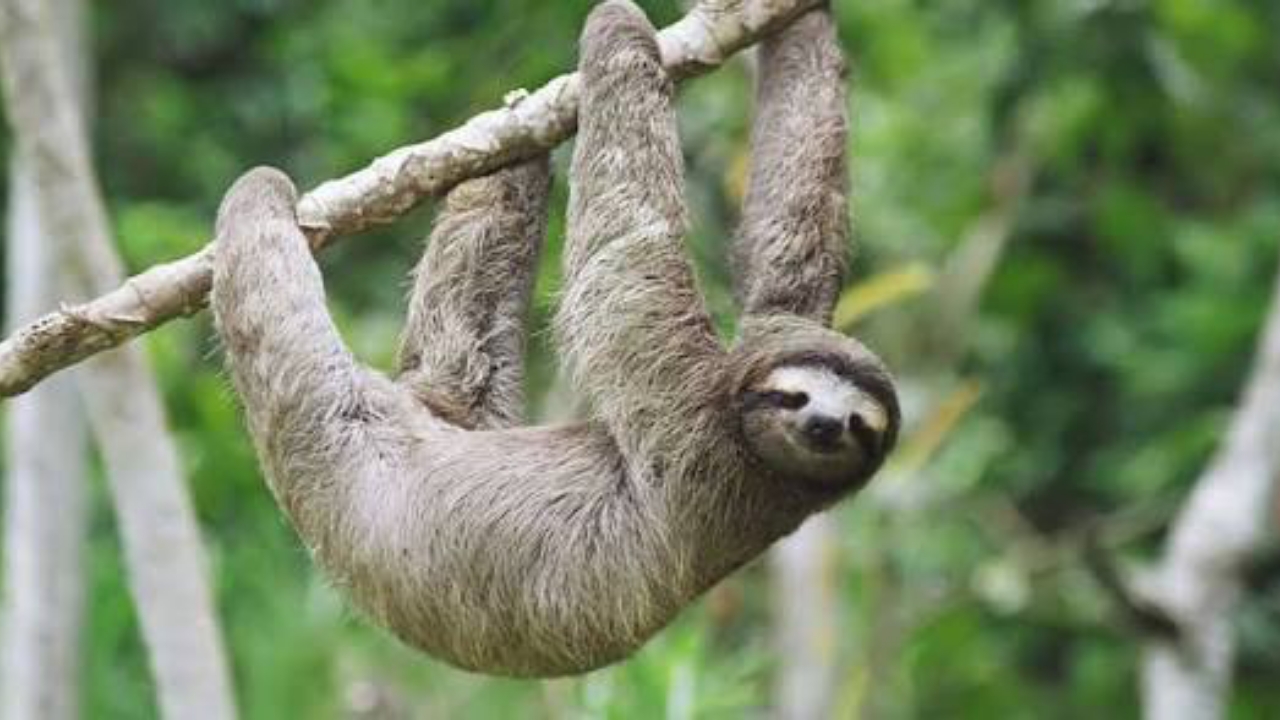
Did You Know?
Sloths are among the slowest-moving animals on Earth, but their unusual digestive system is what truly amazes wildlife experts.
These tree-dwelling mammals can take up to an entire month to digest a single leaf due to their extremely slow metabolism.
Found mainly in the rainforests of Brazil and other parts of Central and South America, sloths survive on a low-energy diet that includes leaves, buds, and tender shoots.
Wildlife researchers explain that sloths have a multi-chambered stomach designed to slowly break down tough plant materials.
Because leaves contain very little nutrition, the animals conserve energy by moving slowly and resting for long periods.
Some sloths sleep for nearly 15 hours daily while hanging upside down from tree branches.
Their calm lifestyle helps them survive despite their limited food intake.
Experts in animal behavior say the sloth’s slow digestion process is one of the most fascinating adaptations in the animal kingdom.
The digestive cycle allows bacteria inside the stomach to gradually process food without wasting energy.
In some cases, a sloth’s stomach can hold up to two-thirds of its body weight after feeding.
This remarkable survival strategy has made sloths popular subjects in wildlife documentaries and educational programs around the world.
Animal conservation groups also warn that habitat destruction threatens sloth populations across tropical forests.
Deforestation and climate change continue to reduce safe environments for these unique mammals.
Environmental advocates are calling for stronger rainforest protection measures to preserve sloths and other endangered wildlife species for future generations.
Now, you know.
National News