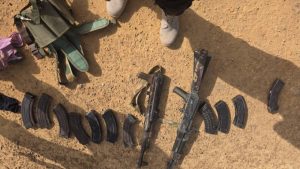
Guadalajara, Mexico — A tense calm has settled over the western Mexican state of Jalisco following a violent rampage by the Jalisco New Generation Cartel (CJNG) in retaliation for the killing of its powerful leader, Nemesio ‘El Mencho’ Oseguera.
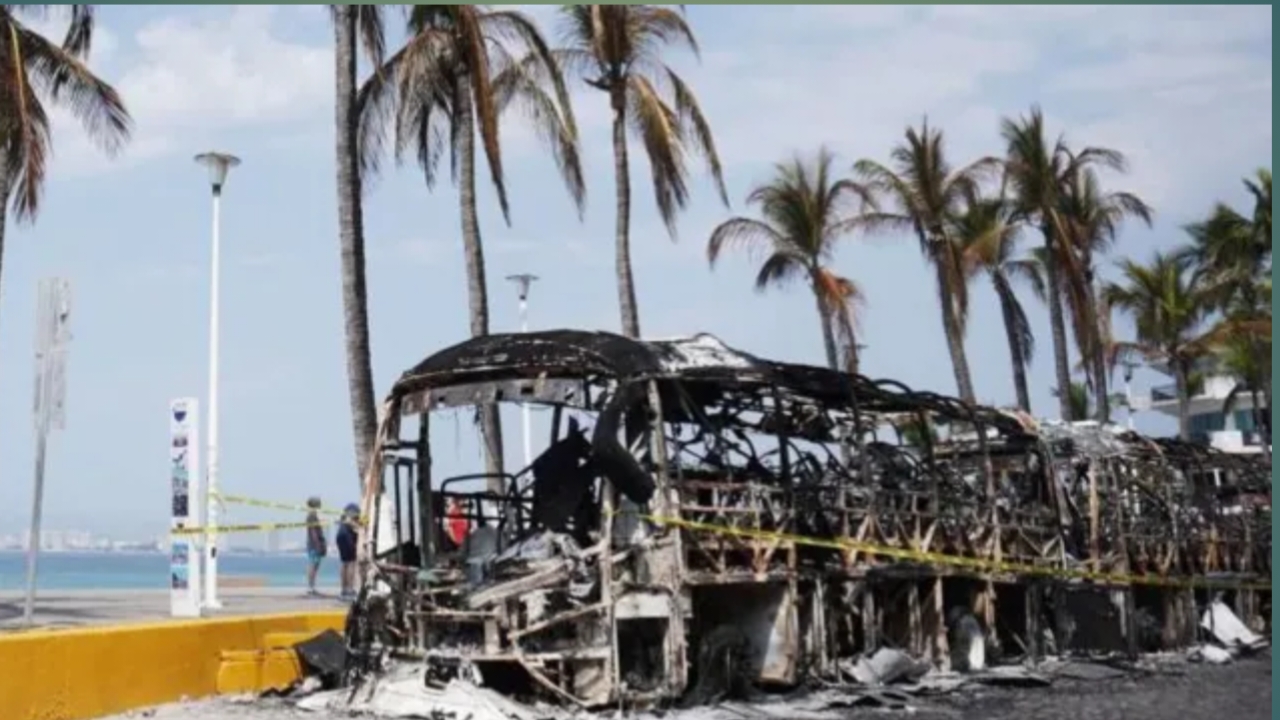
Burnt-out vehicles, ransacked stores, and charred patches of asphalt now scar the streets of Guadalajara and other cities, grim reminders of the cartel’s coordinated attacks.
The violence erupted after El Mencho’s death in a clash with Mexican security forces, prompting his loyalists to unleash widespread chaos intended to demonstrate that the CJNG’s influence endures despite the loss of its top commander.
President Claudia Sheinbaum, in her Monday morning address, attempted to project calm, asserting that “peace and tranquillity” were returning to much of the nation while commending the swift response of military and police units.
Convoys of troops continue to patrol Guadalajara’s streets, but their presence has done little to ease the unease among residents.
Most businesses and schools in the city remain closed as citizens shelter indoors, wary of renewed attacks.
“It was a strange and difficult day—everybody was scared,” said café owner Anwar Montoya, who decided to open his Severo Café despite the risks.
“We’re a new business and I have a lot of things to pay for. I thought maybe this place could feel like a secure spot for friends.”
Among his patrons was local lawmaker Mariana Casillas, a left-wing deputy who has openly criticized both the cartel’s brutality and the government’s long-standing security strategy.
“This is not a new scenario,” she said. “The government keeps repeating the same model—taking down high-profile cartel leaders without addressing the violence and poverty that feed organized crime.”
Casillas argues that the so-called “kingpin strategy” has perpetuated Mexico’s 20-year cycle of bloodshed.
Since former President Felipe Calderón launched the “war on drugs” in 2006, more than 60,000 people have disappeared, many believed to have been forcibly recruited or murdered by criminal organizations.
Security analysts echo Casillas’s concerns. “The killing or capture of a major cartel leader like El Mencho always creates a power vacuum that leads to further violence,” said Deborah Bonello, an expert on Mexico’s drug war. “Every time the state takes down a boss, rival factions scramble for control—and civilians pay the price.”
The violence comes at a delicate moment for Mexico, which is preparing to host several matches of the FIFA World Cup 2026 in Guadalajara this June.
Despite government assurances that “there is no risk” to visiting fans, many locals remain sceptical. “I don’t think this is a safe place for the World Cup,” Montoya said.
Even as Gianni Infantino voiced confidence that the games would be “spectacular,” Casillas insists that Jalisco’s priorities lie elsewhere.
“The people here don’t want the World Cup. They want safety, clean water, and the return of their disappeared relatives,” she told reporters.
For now, the burnt vehicles and empty streets of Guadalajara stand as stark symbols of a nation once again caught between a government promising stability and cartels determined to prove their dominance.