
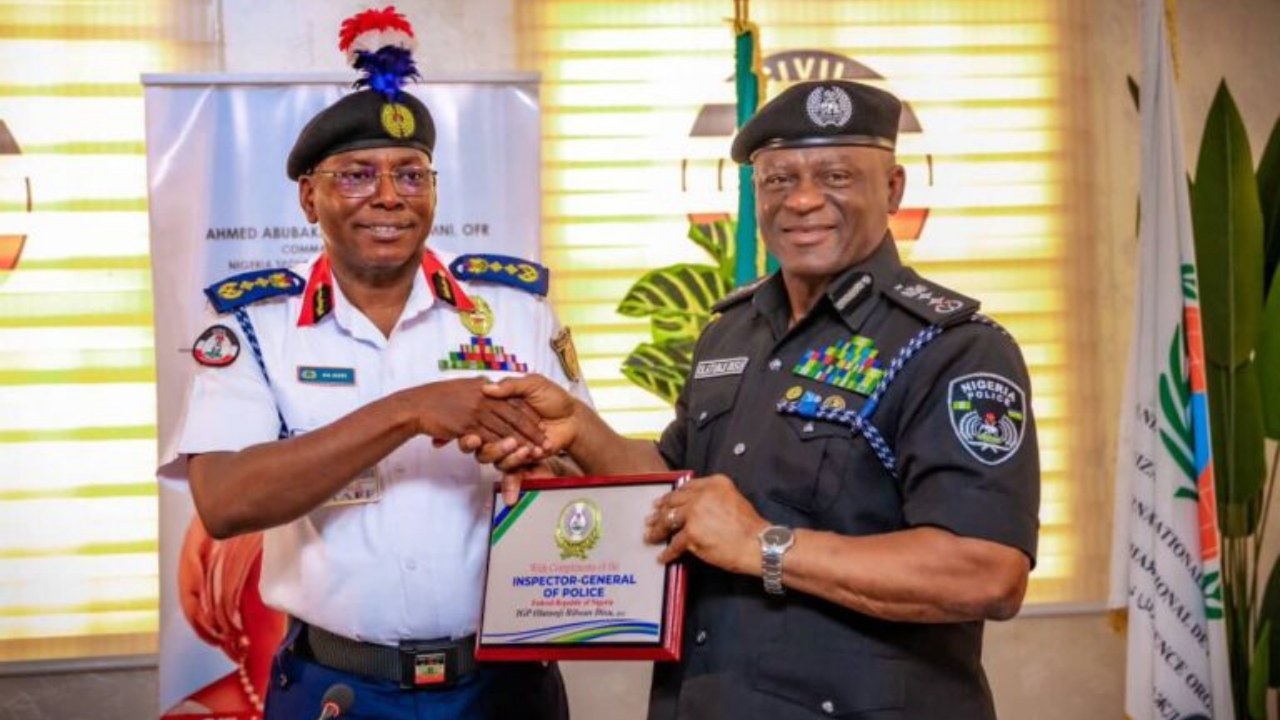
National News – The Inspector-General of Police, Olatunji Disu, on April 21, 2026, in Abuja, called for stronger intelligence sharing and operational synergy with the Nigeria Security and Civil Defence Corps (NSCDC) as both agencies move to confront Nigeria’s evolving security challenges.
The visit to the NSCDC National Headquarters, Abuja, led by Commandant General Ahmed Audi, marked the first of its kind by a sitting IG.
The meeting addressed how police and civil defence personnel, who share the constitutional mandate of protecting lives and property, can deepen collaboration, close communication gaps, and improve coordinated responses to insecurity.
Disu emphasized that fragmented intelligence has often weakened operations, stressing the need for a unified front.
The engagement highlighted concerns over rising security threats nationwide and the importance of real-time information sharing, joint planning, and synchronized field operations to strengthen national safety architecture.
He further noted that both agencies must align operational strategies to ensure efficiency in combating crime.
According to him, security personnel often operate in difficult terrains, making cooperation essential.
The IG’s visit was also symbolic, reflecting renewed leadership commitment to inter-agency harmony under his tenure.
He urged officers to see themselves as partners rather than separate institutions, especially in tackling organized crime, banditry, and urban insecurity.
In response, NSCDC Commandant General Ahmed Audi reaffirmed the Corps’ readiness to strengthen existing ties with the police.
He described collaboration, coordination, and cooperation as key pillars for effective security delivery.
Audi also called on Nigerians to support security agencies by providing timely and credible intelligence, noting that public participation remains critical in addressing emerging threats.
He assured that the Corps would continue to work closely with other agencies to safeguard critical infrastructure and communities nationwide.
Analysts view the visit as a positive step toward reducing rivalry and duplication among security agencies, a long-standing challenge in Nigeria’s security sector.
Local observers in Abuja welcomed the move, saying improved intelligence sharing could enhance response times to crime and terrorism threats.
However, they cautioned that implementation, rather than statements of intent, will determine success.