By Our Correspondent
National News – Concerns over a potential fuel monopoly are intensifying as the Dangote Petroleum Refinery now dominates Nigeria’s petrol supply following the Federal Government’s decision to halt petrol import licences.
Industry experts warn that the development could reshape the country’s N14.4 trillion petrol market while raising questions about pricing power, supply security, and competition.
Data released by the Nigerian Midstream and Downstream Petroleum Regulatory Authority shows that local refineries supplied about 36.5 million litres of petrol daily in February 2026, while imports contributed roughly three million litres per day.
This means local refining accounted for about 92 percent of Nigeria’s petrol supply, a dramatic shift from years of heavy dependence on imported fuel.
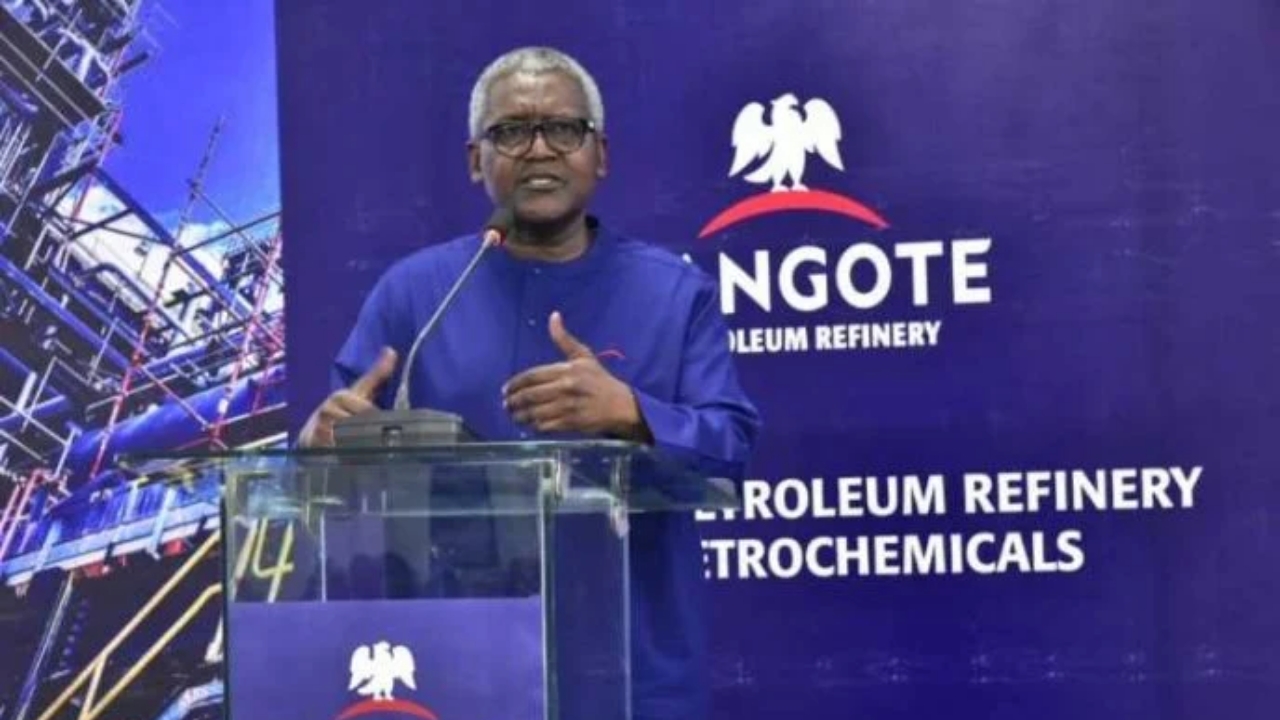
At the centre of this transformation is the massive refinery owned by Aliko Dangote, which currently produces the bulk of petrol consumed in the country.
With an estimated daily consumption of 39.5 million litres, analysts calculate that Nigeria’s petrol market is worth over ₦14.4 trillion annually based on an average price of ₦1,000 per litre.
Energy experts say the dominance of a single refinery could pose risks if competition does not increase soon.
Some analysts argue that relying on one major supplier exposes the country to potential supply shocks if technical disruptions occur at the refinery.
Labour groups, including the Nigeria Labour Congress, have called on the government to introduce temporary price regulation to protect consumers from possible exploitation.
The union warned that monopolies in essential sectors such as fuel could give one supplier the power to determine prices and supply levels.
However, some economists oppose price controls, insisting that market liberalisation introduced after fuel subsidy removal should remain intact.
They argue that excessive regulation could distort the market and discourage investment in Nigeria’s downstream petroleum sector.
Officials at the Nigerian Midstream and Downstream Petroleum Regulatory Authority insist the policy aims to strengthen domestic refining and reduce dependence on imports.
The agency says Nigeria has entered a new phase of energy independence driven by local refining capacity.
Analysts say the long-term solution lies in encouraging more refineries to operate in Nigeria, including the rehabilitation of state-owned facilities and the entry of additional private refiners.
Increased competition, they argue, will stabilise prices and ensure a balanced fuel supply for Africa’s largest economy.