
Did You Know?
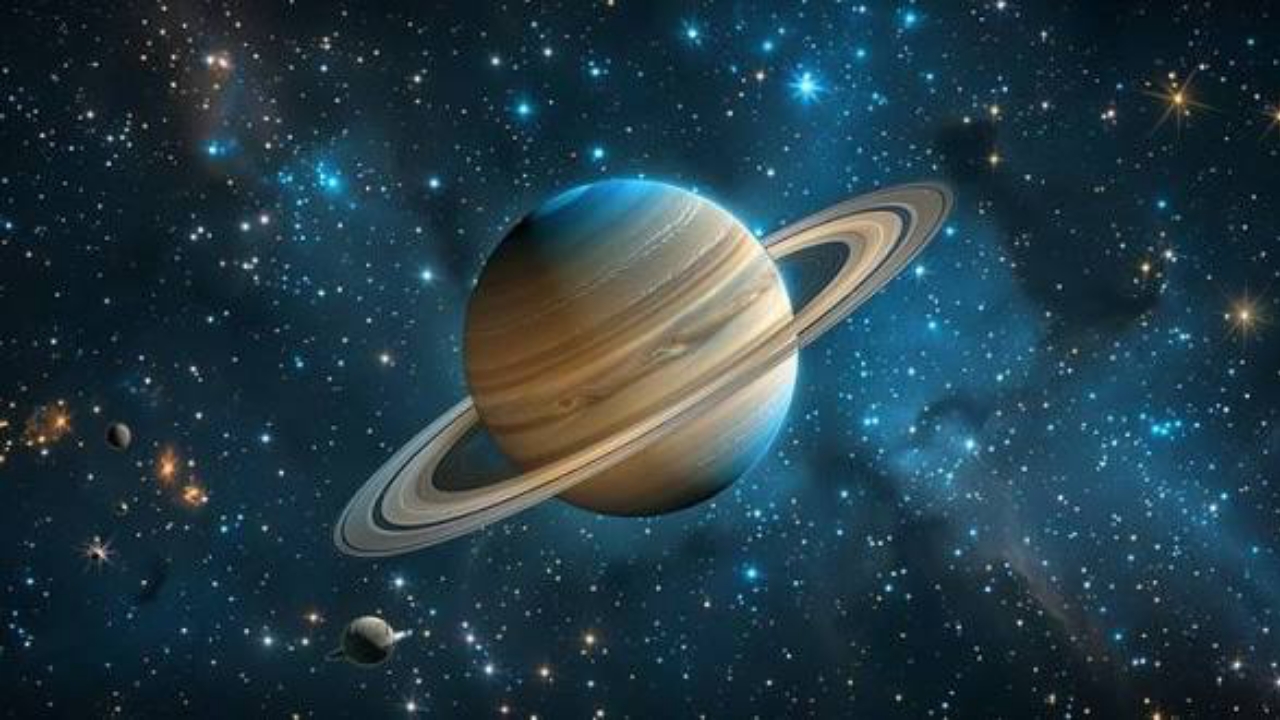
Saturn, the second-largest planet in our solar system, is famous for its spectacular rings and enormous size.
However, one of the most fascinating facts about the gas giant is its extremely low density. Scientists explain that Saturn is so light relative to its size that, theoretically, it could float in water if a container large enough existed.
This remarkable characteristic has made Saturn a popular example in astronomy lessons when explaining planetary composition and density.
Saturn’s ability to “float” comes down to science. The planet is composed mainly of hydrogen and helium gases, which are lighter elements compared with the rocky materials that form planets like Earth.
According to astronomers studying planetary density, Saturn has an average density of about 0.69 grams per cubic centimetre, which is less than the density of water at 1 gram per cubic centimetre.
Because objects with lower density than water float, Saturn would theoretically remain on the surface rather than sink.
The idea of Saturn floating has fascinated both scientists and students for decades.
Researchers and astronomy educators often use the comparison to help explain how density works and why gas giants differ from rocky planets.
Saturn formed billions of years ago during the early development of the solar system when massive clouds of gas and dust collapsed under gravity.
The planet eventually grew into a massive sphere of gas with a core believed to contain heavier materials surrounded by thick atmospheric layers.
Although the concept sounds amusing, experts clarify that it is purely theoretical. There is no ocean large enough to hold a planet the size of Saturn.
With a diameter of about 120,536 kilometres, Saturn remains one of the most massive objects orbiting the Sun.
Nevertheless, the floating analogy helps people better understand planetary science and highlights how unique Saturn is among the planets.
Astronomers continue to study Saturn to learn more about its rings, atmosphere, and moons.
Space missions and telescopic observations have revealed storms, complex ring systems, and dozens of moons orbiting the giant planet.
These discoveries continue to deepen scientific understanding of the solar system and its formation.
Now, you know.
National News