Did You Know?
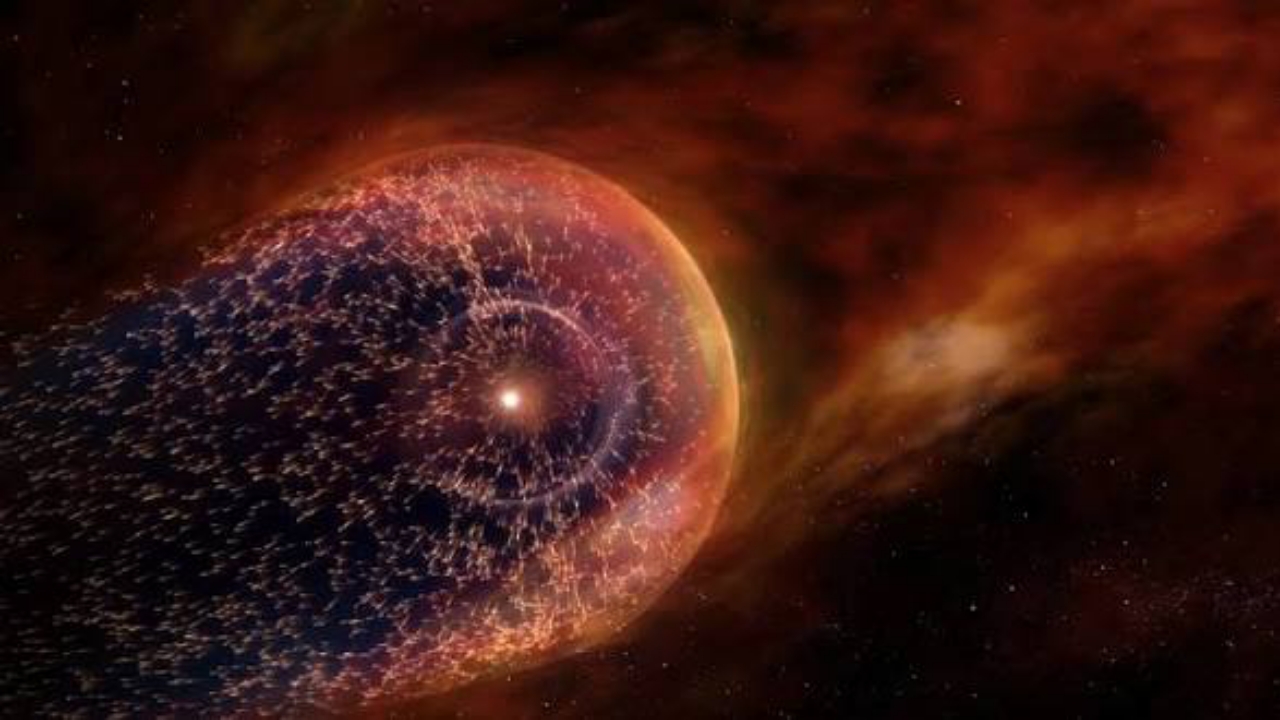
Scientists are drawing fresh attention to a little-known but critical feature of our cosmic neighborhood: a distant boundary that effectively marks the edge of the Solar System.
Known as the heliopause, this region represents the point where the Sun’s influence weakens, and interstellar space begins to take over.
Rather than a physical wall, the heliopause is a dynamic boundary formed by the collision of solar wind—charged particles streaming from the Sun—and opposing forces from deep space.
It is here that the Sun’s ability to push outward fades, allowing particles from other stars to dominate.
This invisible frontier sits billions of kilometers away, far beyond Pluto, and continues to shift based on solar activity.
Experts say understanding this boundary is more than just academic curiosity.
It provides insights into how our Solar System interacts with the wider galaxy, including how cosmic radiation is filtered before reaching Earth.
Some researchers argue that the heliopause acts as a protective shield, reducing the intensity of harmful interstellar particles that could disrupt satellites or pose risks to astronauts.
In Nigeria, space enthusiasts and science educators have expressed growing interest in such discoveries, noting that they highlight humanity’s limited yet expanding knowledge of the universe.
A Lagos-based physics teacher described the heliopause as “a reminder that even our Solar System has borders we are only beginning to understand.”
The implications extend to future space exploration.
As missions aim to travel farther into interstellar space, crossing the heliopause becomes a key milestone.
It represents the transition from being under the Sun’s influence to entering a broader cosmic environment, with entirely different conditions.
Ultimately, the heliopause challenges the traditional idea of space as empty and uniform.
Instead, it reveals a complex, ever-changing boundary—one that underscores both the reach and the limits of our star’s power.
Now, you know.
National News