
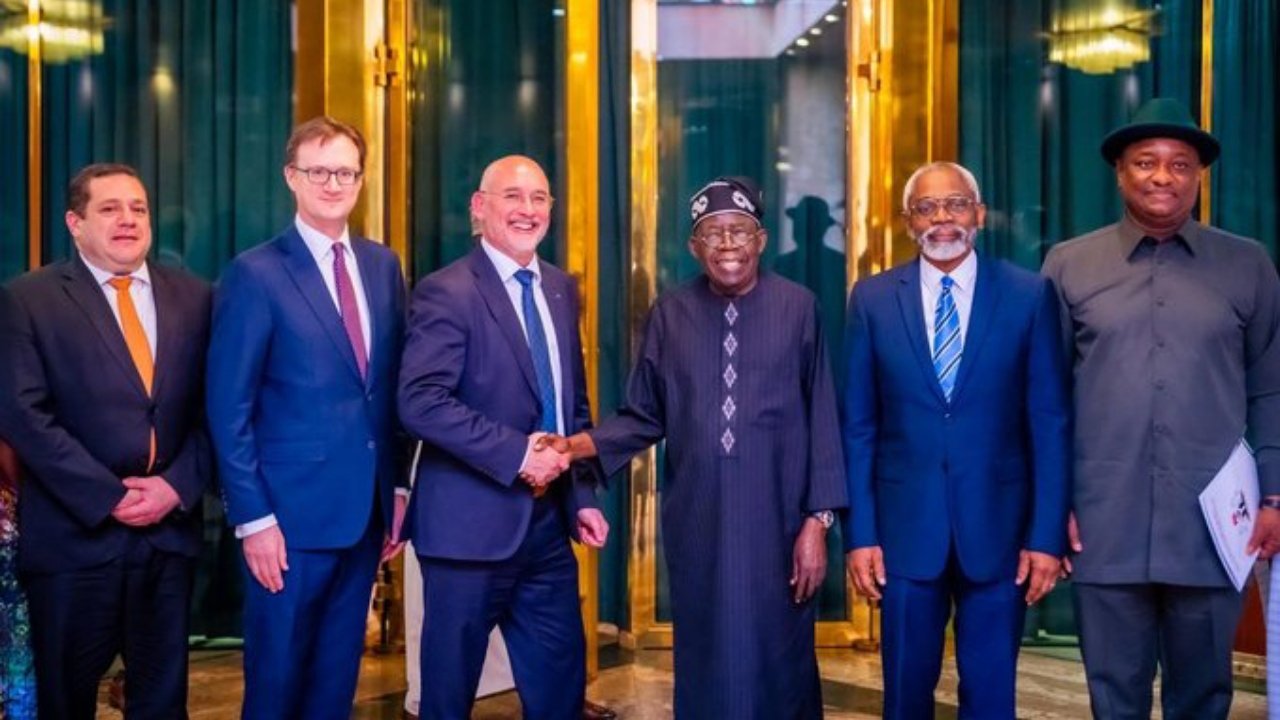
National News – President Bola Ahmed Tinubu has renewed Nigeria’s commitment to strengthening aviation and economic ties with the United Kingdom, using a high-level meeting in Abuja to signal a broader push for global partnerships.
The engagement, held on Wednesday at the Presidential Villa, brought together officials from British Airways, including the British High Commissioner to Nigeria, Richard Montgomery, and the airline’s commercial leadership.
The discussion comes at a time when Nigeria is repositioning its aviation sector to align with international standards.
Tinubu emphasised that reforms currently underway are not just administrative but strategic—designed to attract investment, ease operational bottlenecks, and deepen cross-border connectivity.
According to him, resolving longstanding financial obligations through the Central Bank of Nigeria has already begun restoring confidence among foreign carriers.
From the airline’s perspective, Nigeria remains a critical market.
Executives highlighted decades of sustained operations and pointed to increasing demand driven by business travel, education, and tourism.
Recent operational adjustments, including newer aircraft deployment on the London–Nigeria route and compliance with local aviation policies, were presented as evidence of renewed commitment.
Industry observers in Lagos say the renewed focus on aviation could have ripple effects across sectors.
Travel agencies and logistics operators believe improved air connectivity may lower costs over time and boost trade flows.
However, some analysts caution that infrastructure gaps, high ticket prices, and regulatory consistency remain key challenges that must be addressed to fully unlock the sector’s potential.
Public sentiment appears cautiously optimistic. Frequent international travellers and business owners see the move as a step toward easing travel constraints, though many are waiting to see tangible reductions in fares and improved service reliability.
Looking ahead, the strengthened Nigeria–UK aviation relationship could serve as a model for broader bilateral cooperation.
If sustained, it may not only enhance mobility but also deepen economic integration, positioning Nigeria as a more competitive hub in West Africa’s aviation landscape.