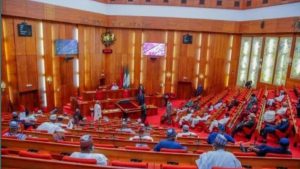
National News – A fresh wave of defections shook Nigeria’s House of Representatives on Tuesday, as lawmakers switched allegiances across major parties in Abuja during plenary, signalling early political manoeuvring ahead of the 2027 general elections.
The movement, announced by Deputy Speaker Benjamin Kalu, involved members of the Peoples Democratic Party (PDP), All Progressives Congress (APC), African Democratic Congress (ADC), and Labour Party (LP), reflecting shifting alliances driven by internal crises and electoral calculations.
The PDP emerged as the hardest hit, losing five lawmakers including Abubakar Abdul (Niger) to the APC and Yakubu Noma (Kebbi) to the ADC, while Ibrahim Mohammed also joined the APC.
In Osun, Mudashiru Alani and Adetunji Olusoji defected to the Accord Party.
Meanwhile, the APC recorded losses, with David Fuoh moving to the PDP and Bashir Zubair joining the ADC. From Lagos, Thaddeus Attah exited the LP for the ADC, citing leadership disputes within his former party as the primary reason for his decision.
Kalu downplayed fears of a looming one-party state, arguing that the two-way defections demonstrate democratic freedom rather than dominance. However, analysts view the trend differently.
Political observers in Lagos say the fluidity exposes weakening party structures and ideological inconsistencies, where loyalty is often tied more to electoral viability than policy direction.
On the streets of Lagos, reactions remain mixed. Some residents see the defections as “normal politics,” while others express concern that constant switching undermines voter trust.
A civil society advocate noted that frequent defections without clear ideological grounding risk deepening political apathy among young voters.
The implications are significant. With less than two years to the elections, parties are quietly rebuilding coalitions, testing alliances, and consolidating regional strength.
The current wave suggests that the battle for 2027 may be less about party dominance and more about strategic positioning and survival.
Ultimately, while defections are not new in Nigeria’s democracy, their increasing frequency raises a critical question: are politicians responding to public interest—or simply recalibrating for power?