
Did You Know?
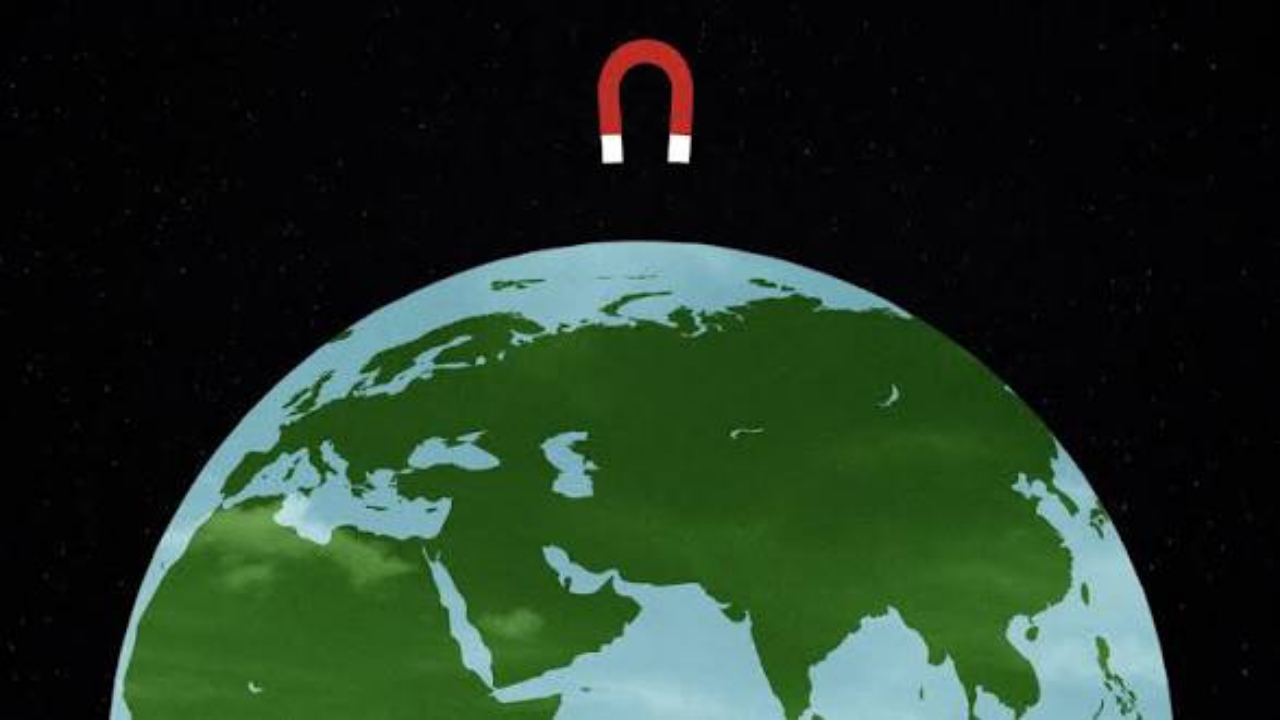
Earth’s poles are not fixed and continue to shift gradually due to complex geophysical processes involving the Earth’s core, mantle dynamics, ice mass redistribution, and ocean circulation.
This phenomenon, known as polar motion or geographic pole drift, causes the planet’s rotational axis to move slightly over time.
Scientists have observed that both the North and South Poles shift by several meters each year, influenced by changes in mass distribution on Earth’s surface and beneath it.
One major factor contributing to this movement is the melting of glaciers and ice sheets, which redistributes water across the globe and affects the planet’s balance.
Additionally, seismic activity such as earthquakes and volcanic eruptions can also alter the Earth’s internal structure, leading to subtle changes in pole positioning.
The movement of Earth’s poles does not mean the planet is tipping over, but rather that it is adjusting its rotational equilibrium.
Researchers use satellite technology and precise geodetic measurements to track polar drift with high accuracy.
Understanding moving poles is important for navigation systems, climate studies, and long-term mapping accuracy.
It also helps scientists predict changes in sea level distribution and Earth’s rotational behavior.
Over decades, the cumulative shift of the poles can influence timekeeping systems and require periodic adjustments like leap seconds.
As climate change accelerates ice melt, scientists expect polar motion patterns to become more pronounced, making continuous monitoring essential for global scientific research and infrastructure planning.
Experts also note related phenomena such as the Chandler wobble, a small deviation in Earth’s rotation axis that contributes to short-term pole movement.
These combined motions require continuous updates to global positioning systems and aviation navigation frameworks to maintain precision.
Without such corrections, even minor pole shifts could introduce measurable errors in long-distance travel and satellite tracking.
Ongoing research continues to refine models of Earth’s interior to better understand the long-term behavior of polar movement.
This makes polar motion a critical focus in modern geoscience and climate monitoring efforts worldwide.
It also supports improved forecasting of Earth’s dynamic systems.
Now, you know.
National News