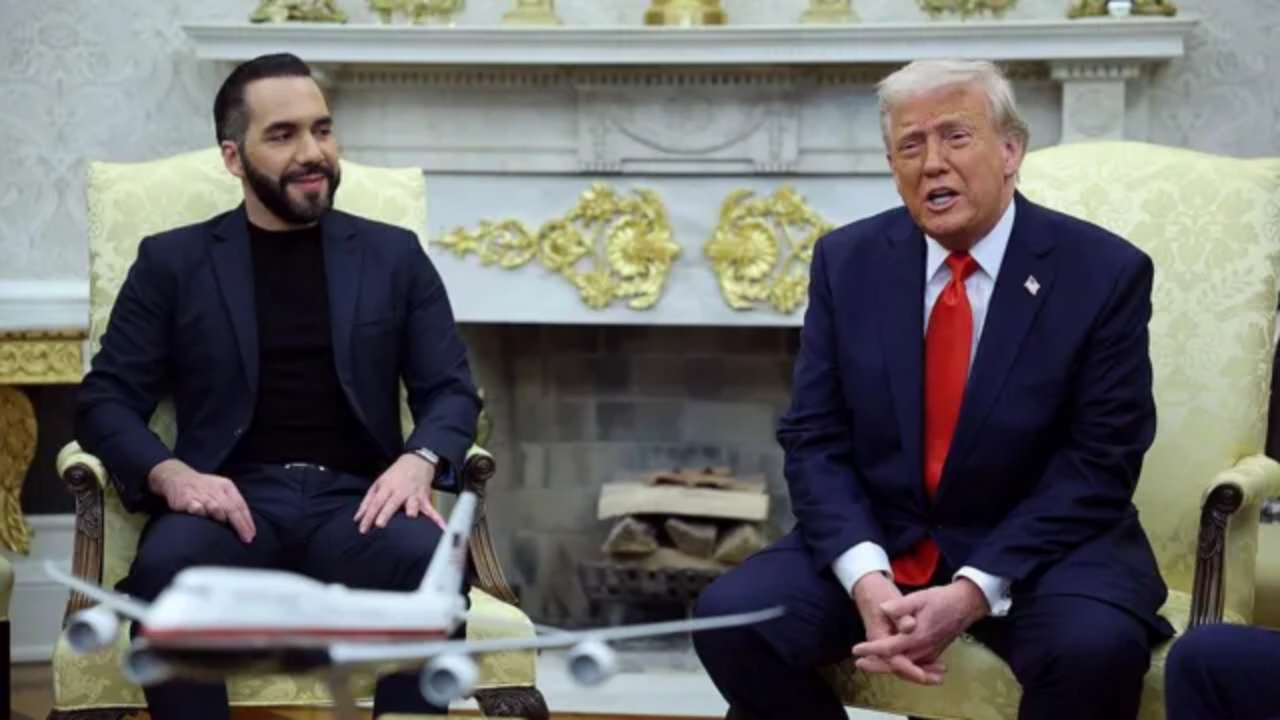
Donald Trump is set to host Latin American and Caribbean leaders at his golf club for the Shield of the Americas Summit, aiming to strengthen US alliances and counter China’s growing influence in the region.
This move comes after decades in which China emerged as Latin America’s top lender and trading partner, financing major projects like Peru’s $3.5bn Chancay megaport and Colombia’s Bogotá metro.
Leading the US diplomatic effort is Kristi Noem, recently appointed as special envoy for the summit following her dismissal as Secretary of Homeland Security.
She will meet conservative leaders from eight nations, including El Salvador, Argentina, Chile, and Ecuador, while Colombia, Mexico, and Brazil are absent.
The summit is expected to focus on drug trafficking, migration, counter-terrorism, and limiting Beijing’s regional influence, according to Evan Ellis, Latin American studies professor at the US Army War College.
China’s presence in Latin America has grown steadily through loans, investments, and trade agreements. From 2014 to 2023, China provided roughly $153bn in financial assistance, nearly triple the US contribution.
Beijing has also invested heavily in infrastructure projects under the Belt and Road Initiative, including hydroelectric dams in Argentina, transmission grids in Brazil, and port facilities across the region.
These investments are strategically focused on critical resources like lithium, vital for renewable energy technologies.
Experts warn that US efforts to compete with China must go beyond military displays and tariffs.
Enrique Dussel Peters of UNAM notes that policies like “America First” and foreign-aid cuts have driven regional governments closer to China, which maintains a long-term strategic vision in Latin America.
The US can only regain influence by offering large-scale investments, technology, and competitive trade options while respecting local priorities.
As the rivalry for influence intensifies, many Latin American nations aim to balance economic ties between China and the US, preserving strategic flexibility.
Trump’s upcoming trip to China to meet Xi Jinping may influence this dynamic, but experts emphasize that diversification of partners and sustainable investment are key for smaller countries navigating great-power competition.