Spain has firmly denied claims from the United States that it agreed to cooperate with American military operations targeting Iran, highlighting a growing diplomatic dispute between two NATO allies.
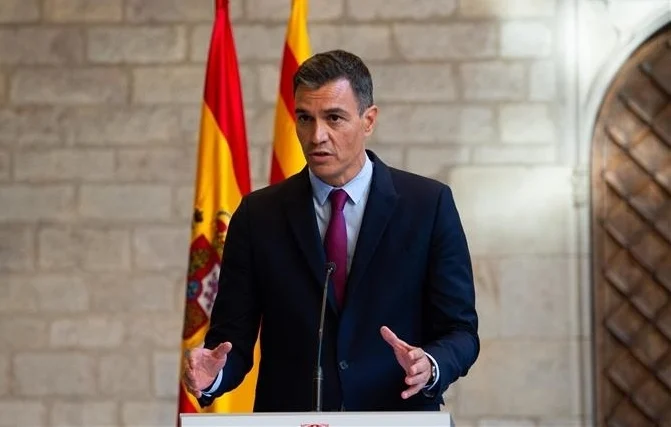
Spanish Prime Minister Pedro Sánchez reiterated his government’s position against involvement in the conflict following recent US-Israeli strikes on Iran.
Speaking in a televised address, Sánchez emphasized that Spain would not support actions that could escalate tensions in the Middle East.
“Our position can be summed up in four words: no to the war,” Sánchez said, stressing that Spain would not take part in actions that contradict its national interests or international values.
The disagreement intensified after White House Press Secretary Karoline Leavitt stated that Madrid had agreed to cooperate with the US military.
However, Spain’s Foreign Minister José Manuel Albares quickly rejected the statement, insisting that Spain’s stance on the war and the use of its military bases “has not changed at all.”
The dispute also follows criticism from US President Donald Trump, who described Spain as a “terrible ally” and threatened possible trade retaliation.
Analysts note that any attempt to impose trade restrictions would be complicated because Spain is part of the European Union, where goods move freely among member states.
Despite the tension, several European leaders have voiced support for Madrid.
French President Emmanuel Macron and European Commission President Ursula von der Leyen expressed solidarity with Spain, while European Council President António Costa pledged that the EU would protect the interests of its member states.
The disagreement comes amid wider debate over NATO defense commitments and the Middle East conflict involving Iran.
Spain has also resisted calls from Washington to increase defense spending significantly.
Spain hosts US military facilities, including the Rota naval base and Morón air base, which have historically supported NATO operations.
However, Madrid’s current government maintains that these bases should not be used for actions that could deepen regional instability.
Political analysts suggest the issue may also carry domestic implications in Spain, where public opinion has historically been cautious about foreign military interventions.