
Since Russia’s full-scale invasion of Ukraine, the conflict has evolved into one of the most technologically advanced wars in modern history.
Swarms of spy drones and lethal aerial vehicles dominate the skies, while uncrewed boats disrupt naval operations in the Black Sea.
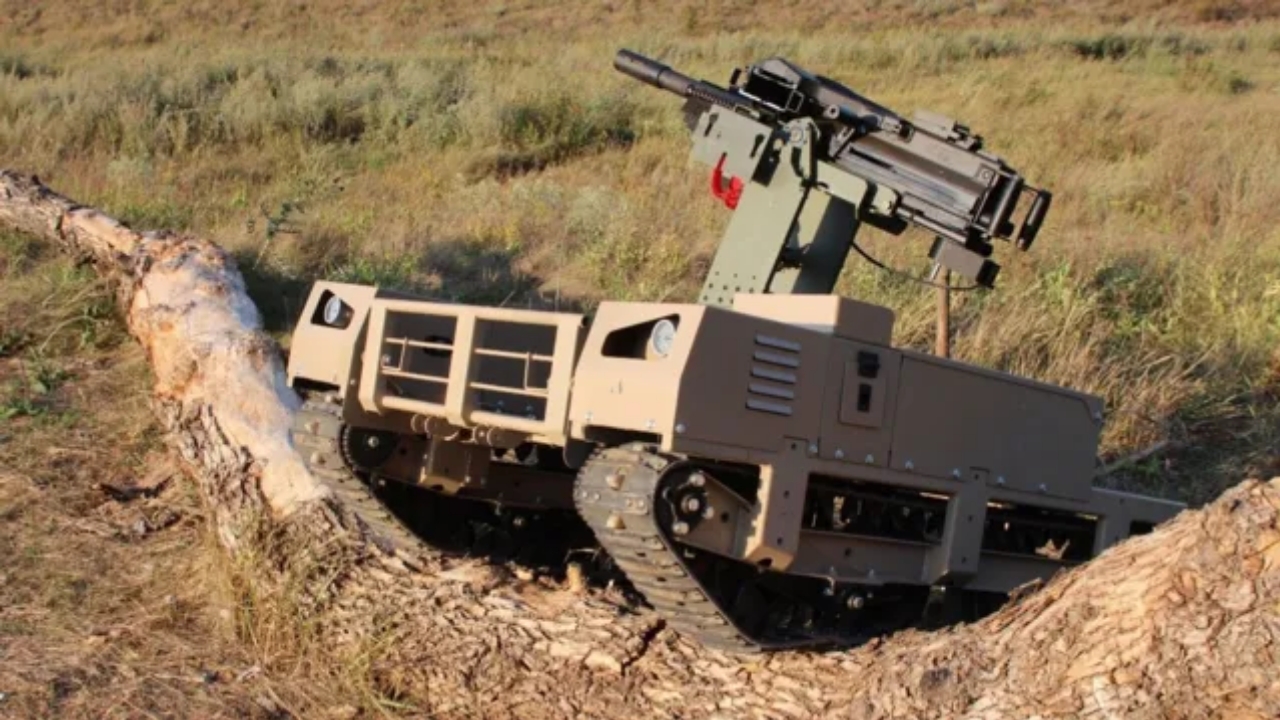
Now, Ukraine is expanding its use of armed robots on land to bolster defenses and reduce risks to human soldiers.
Uncrewed ground vehicles (UGVs), often called ground robot systems by the Ukrainian military, are increasingly deployed for both offensive and defensive missions.
These robots have reportedly repelled Russian attacks, captured enemy soldiers, and even engaged in autonomous combat scenarios without humans on site.
Maj. Oleksandr Afanasiev, commander of Ukraine’s K2 UGV battalion—the first of its kind in the world—explains that armed UGVs can carry Kalashnikov machine guns, grenade launchers, or explosive payloads.
“They enter battlefields too dangerous for infantry, performing missions where human soldiers would be at extreme risk,” he says.
Battery-powered kamikaze robots can strike silently, surprising enemy positions without warning.
Most UGVs, however, remain remotely operated, ensuring human oversight for ethical and legal compliance.
Operators decide when to engage targets to prevent civilian casualties and misidentification, highlighting the blend of autonomy and control on modern battlefields.
Ukraine’s reliance on UGVs is also driven by manpower shortages. Valerii Zaluzhnyi, Ukraine’s former commander-in-chief, envisions future combat involving AI-powered swarms of ground and aerial robots, attacking from multiple angles simultaneously.
Manufacturers like Devdroid and Tencore are rapidly expanding production, with thousands of UGVs already in service and plans to scale to tens of thousands in the coming year.
Russia is also developing its own armed UGVs, including the Kuryer and Lyagushka (“Frog”) kamikaze robots, making clashes between autonomous machines an imminent reality.
Experts predict that robotic warfare will become a permanent feature of Ukraine’s “kill zone,” supporting infantry while minimizing human casualties and redefining the future of ground combat.