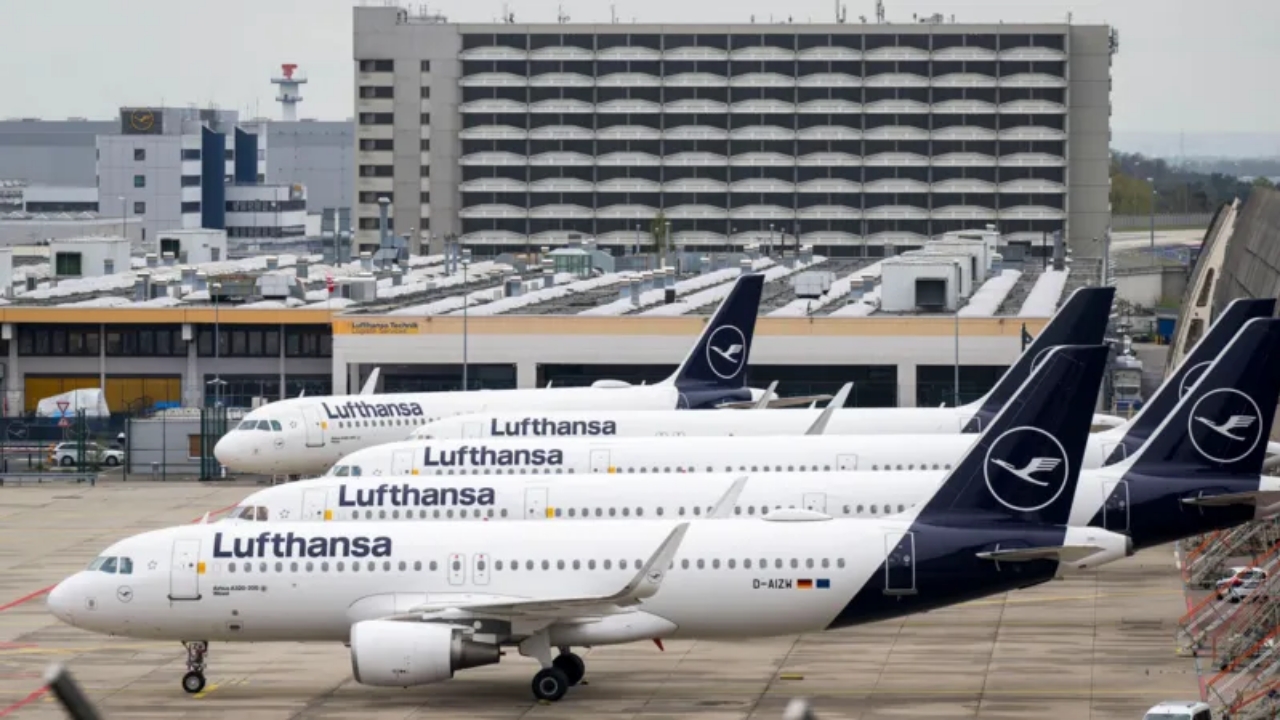
National News – Europe’s largest airline group, Lufthansa, has announced a sweeping reduction of 20,000 short-haul flights across its summer schedule, a move triggered by surging jet fuel costs tied to escalating tensions in the Middle East.
The cuts, confirmed this week, primarily affect routes within Europe, including departures from Frankfurt to parts of Poland and Norway, with the first wave already underway.
The decision comes as the ongoing conflict involving Iran, the United States, and Israel disrupts fuel production and transport routes, particularly through the Strait of Hormuz—a critical corridor for global energy supplies.
Industry estimates suggest jet fuel prices have doubled since the crisis began, putting intense financial pressure on airlines.
For Lufthansa, the strategy is clear: reduce unprofitable routes while preserving long-haul operations that generate stronger revenue.
The airline says the cuts could save up to 40,000 metric tons of fuel.
However, the move also signals a broader industry shift, as carriers like Air France-KLM and Delta follow similar paths—either scaling back flights or increasing ticket prices.
Analysts warn the ripple effects will be felt globally. Travelers are likely to face higher fares, fewer route options, and potential delays throughout the summer.
The International Energy Agency has even cautioned that Europe could face a jet fuel shortage within weeks, though airlines insist supply chains remain stable for now.
From a Nigerian perspective, the impact may not be immediate but is far from distant.
International travel costs—especially for students, business travelers, and diaspora families—could rise sharply as airlines pass on operational expenses.
Travel agencies in Lagos report early signs of fare increases on Europe-bound routes, hinting at a challenging peak travel season ahead.
Ultimately, Lufthansa’s move reflects a fragile aviation sector caught between geopolitical instability and economic survival.
If the crisis persists, more airlines may be forced into similar decisions, reshaping global travel patterns in the months ahead.