Did You Know?
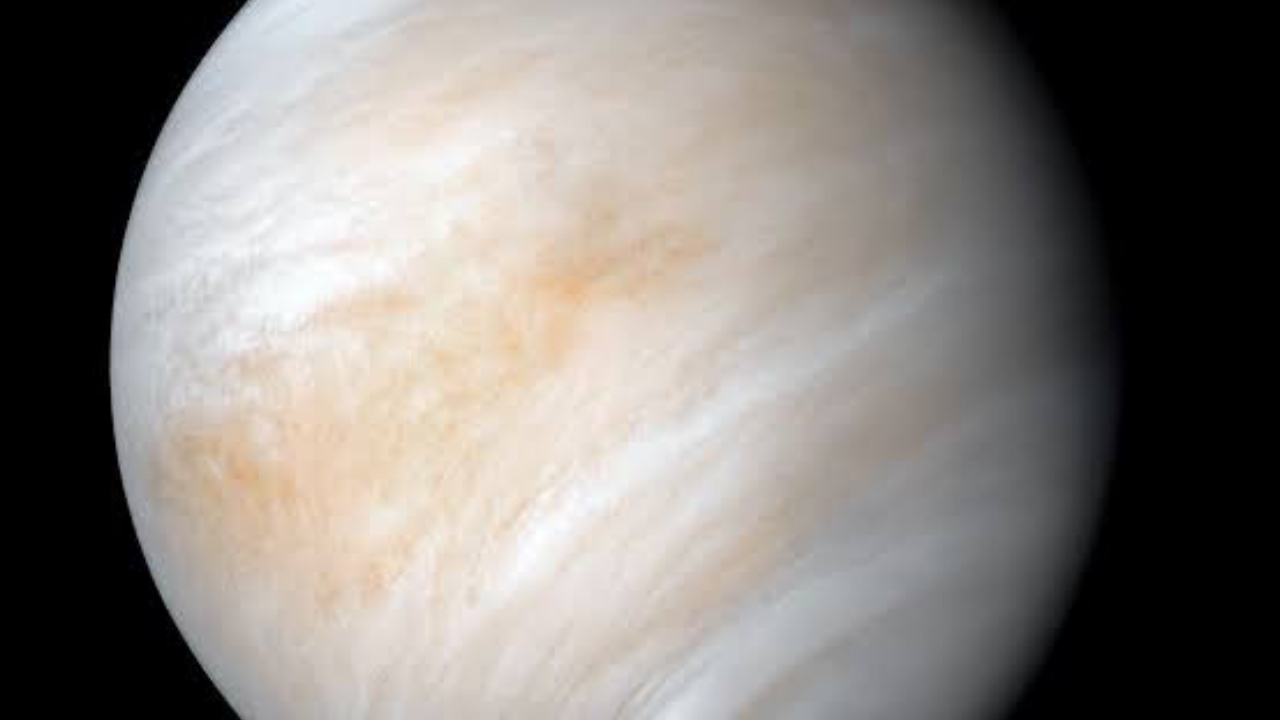
Venus, often called Earth’s “sister planet,” holds one of the most fascinating mysteries in space science: a single day on Venus lasts longer than an entire year on the planet.
Scientists studying planetary rotation and orbit explain that Venus rotates extremely slowly on its axis.
While Earth completes a rotation in about 24 hours, Venus takes approximately 243 Earth days to complete just one full spin.
Meanwhile, the planet finishes its orbit around the Sun in 225 Earth days, meaning its year ends before its day does.
Astronomers say this unusual phenomenon occurs because of Venus’ slow retrograde rotation.
Unlike most planets in the solar system, Venus rotates backwards, or in the opposite direction of its orbit around the Sun.
Researchers believe this strange motion may have been caused by massive collisions with asteroids or planetary bodies billions of years ago, dramatically altering the planet’s spin.
The discovery of Venus’ unusual rotation was confirmed through radar observations by scientists studying planetary movements.
These measurements helped determine how long the planet takes to rotate and orbit.
According to planetary scientists, understanding Venus’ rotation helps researchers learn more about how planets form and evolve in the solar system.
Venus’ extreme environment also adds to the intrigue. The planet has crushing atmospheric pressure, thick clouds of sulfuric acid, and surface temperatures hot enough to melt lead.
These conditions make direct observation difficult, forcing scientists to rely on radar technology and spacecraft missions to gather data.
Experts say learning about Venus’ long days and shorter years provides key insights into planetary dynamics and atmospheric science.
The knowledge gained could also help scientists understand similar rocky planets beyond our solar system.
In simple terms, the answer to the question of why a day on Venus is longer than a year lies in its extremely slow rotation and faster orbital movement around the Sun.
This rare planetary behavior continues to attract the attention of astronomers and space researchers worldwide.
Now, you know.
National News